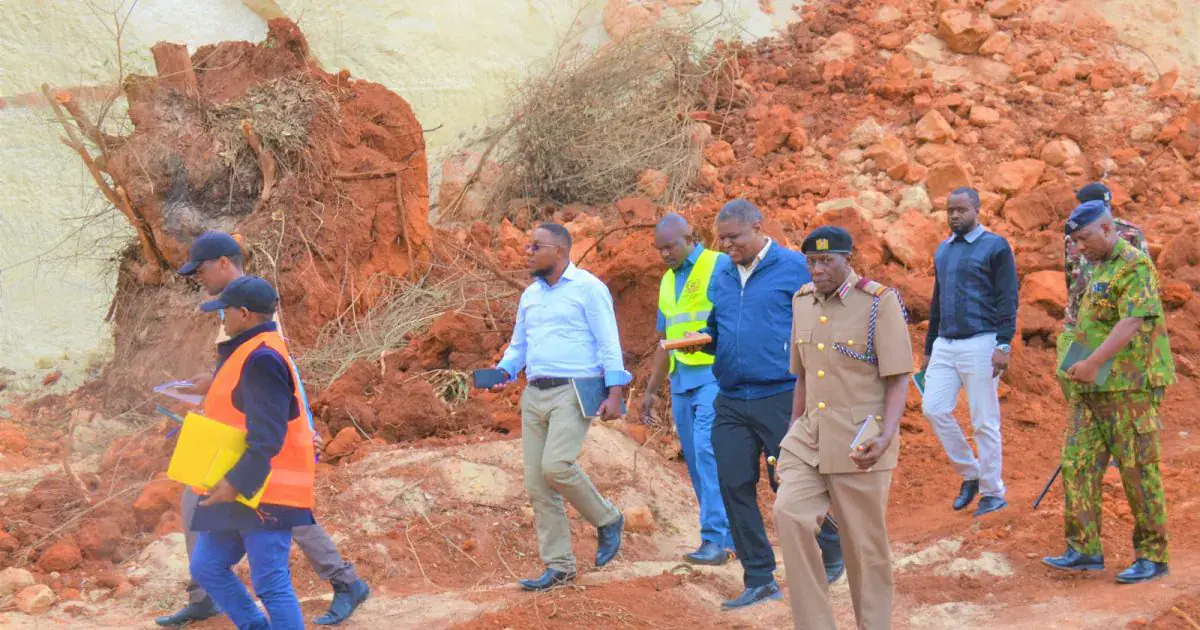
The Kenyan government has shut down eight illegal sand harvesting and quarrying sites in Machakos County as part of a multi-agency crackdown aimed at curbing environmental destruction, protecting lives, and dismantling criminal networks involved in the illegal sand trade. The operation, which included the National Environment Management Authority (NEMA), the Deputy County Commissioner’s office, the Ministry of Mining, the Machakos County Government, and NGAO, targeted illegal extraction sites in Mua, Kasinga, and Ngela.
Machakos Deputy County Commissioner, Machira Gathugu, warned that the government would take firm action against illegal miners and transporters, emphasizing that all players in the sand supply chain must comply with the law. The crackdown aims to protect residents from environmental degradation and criminal activities associated with illegal sand harvesting. Gathugu stressed that investigations had established that some operators lacked valid environmental and mining licenses, while lorries transporting sand did not have the required permits and statutory documentation.
NEMA Director, Vincent Oloo, stated that the eight sites had violated the Environmental Management and Coordination (Sand Harvesting) Regulations 2024 under CAP 387. He noted that uncontrolled excavation had caused severe soil erosion, destruction of riverbeds and underground water systems, as well as the creation of deep, hazardous pits that had resulted in loss of lives among workers and members of the public. Oloo emphasized that illegal sand transportation was also an offense and called for sustainable sand harvesting practices.
Local administrators raised concerns over the involvement of organized youth gangs, who had allegedly taken control of some illegal mining sites, extorting transporters and intimidating residents opposed to the activities. They warned that continued illegal sand harvesting poses serious long-term risks to communities, including weakening riverbanks, accelerating soil erosion, and altering natural river channels, increasing the risk of flooding during heavy rains.
The destruction of fertile land and river ecosystems could further undermine agricultural production, reduce biodiversity, and threaten the livelihoods of communities dependent on farming and other natural resources. Uncontrolled excavation also threatens groundwater recharge by damaging riverbeds and disrupting the natural processes that sustain underground water reserves, which could worsen water shortages for households, livestock, and farmers.
NEMA Director, Vincent Oloo, disclosed that deep excavation pits left abandoned after mining also remain a danger to children, livestock, and unsuspecting residents. He noted that over time, the damage could increase the cost of restoring degraded land, repairing affected infrastructure, and securing alternative water sources. NEMA and the Ministry of Mining are expected to conduct environmental audits and oversee restoration measures in the affected areas.
The government emphasized that enforcement would continue to ensure that sand harvesting is conducted within the law and in ways that safeguard the environment and protect community livelihoods. The crackdown is part of a broader effort to promote sustainable environmental practices and prevent further degradation of natural resources in Machakos County and beyond.
Key points
- The Kenyan government has shut down eight illegal sand mining sites in Machakos County.
- The crackdown aims to curb environmental destruction, protect lives, and dismantle criminal networks involved in the illegal sand trade.
- The government warns that continued illegal sand harvesting poses serious long-term risks to communities, including environmental degradation and water shortages.