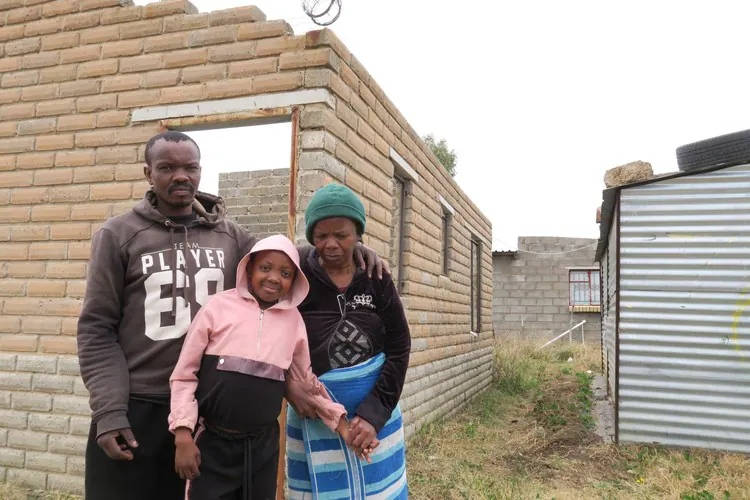
Emily Lepota, a 62-year-old resident of Morolong, east of Bloemfontein, has been living in a two-roomed shack for 16 years. According to the Housing Subsidy System, Lepota was granted an RDP house, which was completed and handed over to her. However, when GroundUp visited Lepota, she was found living in an incomplete house, without windows or a roof. The house has been in this state since 2012, with Lepota claiming that the contractor, Mr. Tshabalala, abandoned the project due to a lack of funds.
The housing project, launched in 2009, was aimed at replacing damaged houses in the area, including Lepota's, which was destroyed by a mini tornado. The Free State Department of Human Settlements initiated the project, but it was marred by corruption and mismanagement. The Zondo Commission later found that the scheme was unlawful and labeled the R1-billion housing drive a "dismal failure." The department's head at the time was convicted of corruption, and at least 20,000 houses were left unfinished.
Lepota shares her shack with seven people, including her children and grandchildren. The household's living conditions are dire, with water leaking through the roof during rain and no access to proper sanitation. The family's main income comes from social grants, including Lepota's old-age grant, her grandchild's child support grant, and her son's Social Relief of Distress grant. Her daughter is the only one with some form of employment, doing odd jobs.
According to the Free State Department of Human Settlements spokesperson, Zimasa Mbewu, Lepota's house is not on the list of incomplete houses. Mbewu claimed that the system shows the house was completed on December 4, 2009. However, GroundUp's findings suggest otherwise. Mbewu did acknowledge that about 450 incomplete houses were completed in the 2025/26 financial year, and 532 are set to be completed this year.
In a follow-up conversation with GroundUp, Mbewu stated that officials had visited Lepota's house and promised that she would not be left out. Lepota, however, remains skeptical, saying she just wants a proper house for her children and grandchildren before she dies. The case highlights the discrepancies between the government's records and the actual state of housing delivery in South Africa.
The incident raises concerns over the effectiveness of the government's housing program and the potential for corruption and mismanagement. With many houses marked as complete on the system but still unfinished, it is clear that there are systemic issues that need to be addressed. Lepota's case is just one example of the many challenges faced by South Africans in need of adequate housing.
As the government continues to work on completing outstanding housing projects, residents like Lepota are left to endure substandard living conditions. The Department of Human Settlements has a responsibility to ensure that all beneficiaries receive the homes they were promised, and it is crucial that they take immediate action to rectify the situation.
Key points
- The Free State Department of Human Settlements has reported completing 450 incomplete houses in the 2025/26 financial year and aims to complete 532 more this year.