At the Agriculture and Food Security Transformation Summit, Deputy President Kithure Kindiki emphasized Kenya's move towards smart and precision agriculture. He highlighted the role of technology in improving production, service delivery, and market access. Kindiki cited increased investment in research that has led to new crop varieties, improved animal breeds, and more efficient farming technologies. This shift aims to transform the agricultural sector, which is a significant contributor to Kenya's economy. The summit was held at Nairobi's Jamhuri Park ASK Showground. Kindiki's call for smart farming is part of a broader effort to modernize agriculture.
Deputy President Kindiki urged Kenyan farmers to adopt digital tools to enhance their productivity. He noted that data and technology are crucial in improving agricultural services and market access. The government has expanded the national farmer register, which now includes 7.2 million crop farmers and three million livestock keepers. This database provides a broader platform for delivering agricultural services and support. The expanded register is part of a broader effort to increase agricultural productivity and improve farmer livelihoods.
The use of drones and precision-farming practices is becoming more widespread in Kenya. These technologies enable farmers to apply fertilizer and pesticides only where needed, reducing waste and environmental impact. Kindiki highlighted the benefits of these approaches, including increased efficiency and reduced costs. The government is promoting the adoption of these technologies to improve agricultural productivity and sustainability. Precision farming is seen as a key component of smart agriculture.
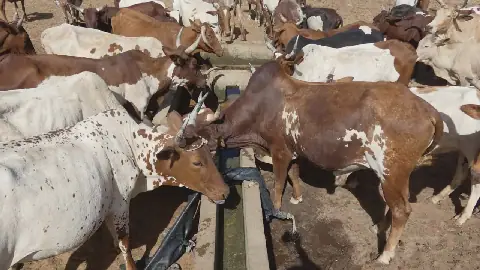
A livestock identification and tracking program is being rolled out to improve animal health monitoring and curb cattle rustling. The program also aims to trace animals from birth to slaughter. So far, 8.9 million cattle have been vaccinated as part of a target to treat 22 million cattle and 50 million small stock. This program is expected to enhance animal health and improve the export potential of Kenyan livestock. The program is also seen as a way to improve the livelihoods of livestock keepers.
The government has implemented measures to lower the cost of key inputs, including fertilizer, maize seed, and dairy cow semen. A 50-kg bag of fertilizer now costs Sh2,000, down from Sh7,000. Certified maize seed costs Sh150 per kilogram, down from Sh300. Sexed dairy cow semen costs Sh1,400 per dose, down from Sh8,000. These interventions have helped increase milk production from 4.6 billion to 5.2 billion liters. The reduced input costs have made farming more affordable and profitable.
The increased milk production reflects a more productive and commercially organized agricultural sector. Kindiki attributed this growth to government interventions and the adoption of new technologies. He emphasized the need for continued investment in research and development to sustain this growth. The government is committed to supporting farmers and improving the agricultural sector. The growth in milk production is seen as a positive indicator for the sector.
Stronger disease control is expected to open up international markets for Kenyan livestock, enhancing export potential. The government is working to improve animal health monitoring and disease control. This effort is part of a broader strategy to increase agricultural productivity and improve farmer livelihoods. Kindiki emphasized the importance of continued investment in the agricultural sector to sustain growth and improve livelihoods. The expansion of digital agriculture is seen as a key component of this effort.
Key points
- The national farmer register has grown from 300,000 to 7.2 million crop farmers and three million livestock keepers.
- The cost of key inputs, such as fertilizer and maize seed, has been lowered through government interventions.
- Milk production has increased from 4.6 billion to 5.2 billion liters, reflecting a more productive agricultural sector.