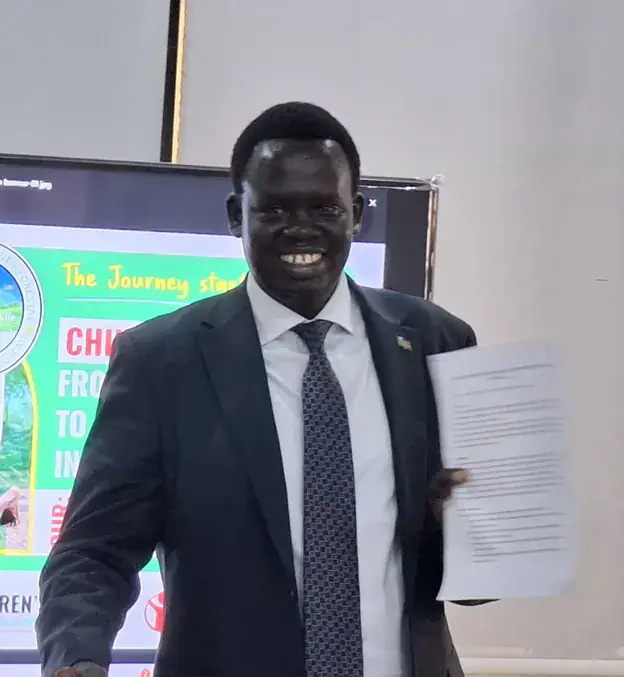
South Sudan's Ministry of Environment has pledged to prioritize children in national climate policies as the country prepares for the 31st United Nations Climate Change Conference (COP31). Young people are set to present their demands and recommendations, calling for action to protect them from climate change effects like floods, droughts, and displacement. The Ministry's Director of Climate Change, Payai Manyok John, emphasized the need for commitment to implementing climate policies that protect vulnerable communities.
Manyok John stressed that COP31 is a conference focused on implementation, beyond mere promises. He highlighted that climate change is not only an environmental concern but also a development, humanitarian, and intergenerational justice issue, with children being among the most vulnerable. South Sudan experiences recurrent flooding, droughts, food insecurity, and displacement, threatening children's access to education, healthcare, and basic necessities.
To address these challenges, Manyok outlined government priorities, including integrating children's needs into national climate policies, promoting climate-resilient schools, and strengthening early-warning systems. He also called for greater protection for children affected by climate-related displacement, increased access to climate finance for vulnerable communities, and greater participation of children and young people in climate decision-making.
Manyok said the government will work with relevant ministries, education authorities, and development partners to strengthen climate resilience in schools, particularly in flood- and drought-affected areas. Plans include strengthening climate education and public awareness, as well as establishing a climate change centre at the University of Juba to support training in climate science and policy.
Eva Hegedus, Strategic Partnership and Influence Director at Save the Children, stated that climate change is increasingly threatening children's rights and access to essential services. She urged governments, communities, and development partners to work together to turn climate commitments into practical action, emphasizing that children should have a meaningful role in shaping their future.
Siama Santino, a member of the Children's Parliament, highlighted the importance of climate negotiations for children, as decisions made at such conferences can affect their access to basic necessities like water, food, and education. She emphasized that children directly experience the consequences of environmental changes and should not be excluded from climate discussions.
The discussions aim to ensure that children's perspectives are reflected in national climate priorities and broader efforts to strengthen resilience against climate change. The Children's COP31 dialogue will provide a platform for young people to share their experiences, present demands, and contribute to climate action through activities like tree planting and influencing government programs.
Key points
- South Sudan's Ministry of Environment prioritizes children in national climate policies ahead of COP31.
- The government aims to integrate children's needs into national climate policies and promote climate-resilient schools.
- Children and young people are set to play a meaningful role in shaping climate action and decision-making in South Sudan.