A governance crisis has erupted at Pele Energy Group, a rapidly growing South African renewable energy business, bringing to the forefront the challenge of balancing entrepreneurial agility with independent oversight required by institutional finance. The crisis has sparked concerns about the coexistence of founder control, black ownership, and institutional oversight in the country's expanding renewable energy sector. Pele Energy Group has confirmed that an independent investigation was conducted by an external legal firm following the identification of a governance-related matter.
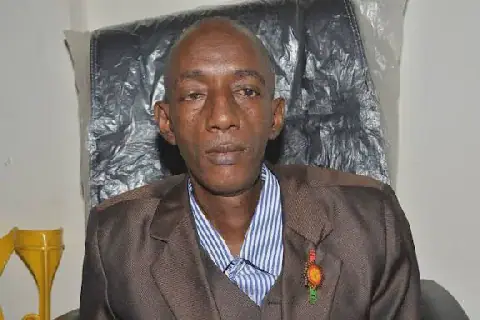
According to information obtained by EE Business Intelligence, group CEO Gqi Raoleka and CFO Matt Wainwright stepped aside from executive duties in August 2026 while the matter was examined, with interim executive appointments made. Independent board chairperson Brenda Martin, appointed in March 2025, resigned in the week commencing 26 October 2026, although the circumstances of her departure have not been publicly disclosed. Gqi Raoleka resigned as CEO last week, while remaining a director and shareholder of Pele, and Fumani Mthembi and Obakeng Moloabi, both co-founders and shareholders, have been appointed acting CEO and acting deputy CEO respectively.
Pele Energy Group was founded in 2009 by five young South African entrepreneurs and has grown into a notable developer, investor, owner, and operator of renewable energy assets. The company's business connects project finance, power-purchase contracts, grid access, local employment, and community development. Through Knowledge Pele, the wider group also pursues social and economic development initiatives. Pele has participated in the public Renewable Energy IPP Procurement Programme and secured participation as the B-BBEE partner of Infinity Power Holding SA in six solar PV projects awarded preferred-bidder status under REIPPPP Bid Window 7.
The wider public has a legitimate interest in the reliability of electricity infrastructure, the security of long-term financing, the use of capital subject to contractual restrictions, and the credibility of South Africa's transformation objectives. Although Pele is not listed on the JSE and does not face the same continuous market-disclosure obligations as a listed company, its public significance and expectations reasonably attached to projects financed by banks, development finance institutions, and long-term electricity purchasers remain.
In March 2025, Norfund reported that Pele's platform had 980 MW in operation, 670 MW under construction, and a development pipeline exceeding 5 GW at that time. The company has confirmed to EEBI that all its institutional investors and financiers have been notified of the issues arising in the governance inquiry, as well as the leadership changes and pending changes. A defensible explanation of the governance process and assurance that the company's projects and obligations remain appropriately managed are required.
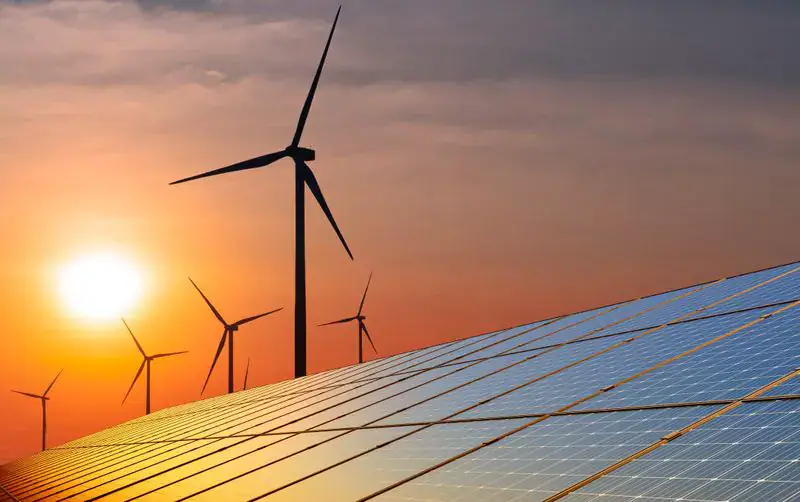
The renewable energy sector is under pressure, with instructions by the System Operator to curtail wind and solar output rising sharply in 2026 as electricity supply, demand, and network constraints became harder to reconcile. Curtailment is a legitimate system-operation measure, but reimbursement is not always immediate, and the National Transmission Company South Africa acknowledged a significant backlog of claims earlier in 2026. The South African Photovoltaic Industry Association reported that claims under verification had fallen from about R2-billion in June to R1.5-billion in July.
The changing macroeconomic environment and new project delays between bid award and financial close create separate pressures, including grid-connection uncertainty and changing CPI, interest rates, exchange rates, equipment prices, delivery times, and transportation costs. These sector-wide risks do not explain Pele's governance matter, and the company's specific financial exposure, any relationship between curtailment and the inquiry, and the effects on particular projects remain unverified.
Key points
- The governance crisis at Pele Energy Group raises questions about balancing entrepreneurial agility with institutional oversight in South Africa's growing renewable energy sector.
- Pele Energy Group's projects and obligations must be managed appropriately despite the governance crisis.
- The renewable energy sector faces pressure from curtailment and changing macroeconomic conditions.