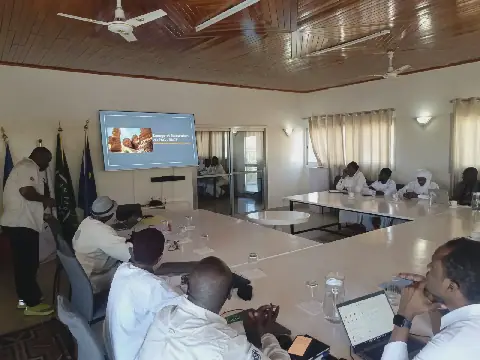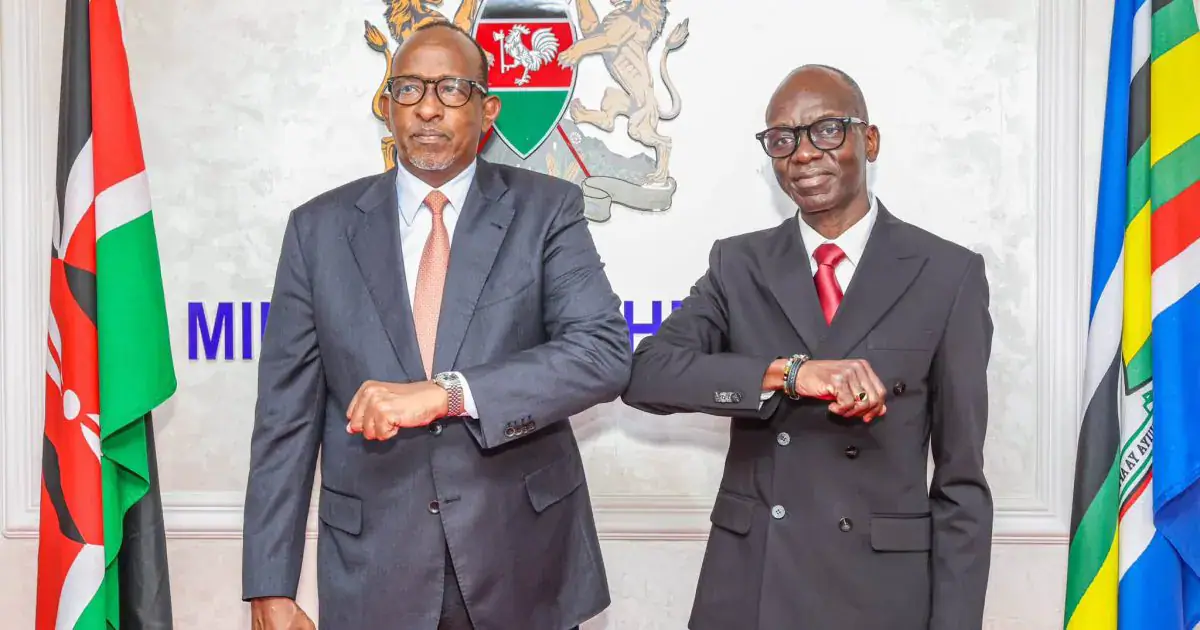
Kenya and the World Health Organization (WHO) have reviewed their response to the Ebola outbreak in the country, with a focus on strengthening cooperation on health security and broader health sector priorities. The review was conducted during bilateral discussions between Cabinet Secretary for Health, Aden Duale, and a WHO delegation led by Regional Director for Africa, Prof. Yakub Janabi. The discussions aimed to assess progress in the national response and identify areas for improvement.
The Ebola outbreak in Kenya, caused by the Bundibugyo Ebola Virus Disease, has recorded nine cases linked to a single transmission cluster, with no evidence of community transmission. Six patients have recovered and been discharged, two have died, and one remains under treatment. The government has screened over 772,000 travellers at 28 points of entry, tested 736 samples across five designated laboratories, and trained over 7,300 healthcare workers.
WHO has provided significant technical and operational support to Kenya's Ebola response, including essential response supplies, personal protective equipment, and validation of Kenya's Filovirus Surveillance Standard Operating Procedures. The organization has also donated 12 portable PCR systems and a 28-bed Ebola Treatment Unit, which will strengthen diagnostic, isolation, and treatment capacity.
With the 42-day countdown expected to commence following the discharge of the last patient, CS Duale emphasized the need to maintain vigilance through active surveillance, rapid investigation of alerts, and continued screening at points of entry. He requested additional WHO support for diagnostic supplies, technical training, isolation, and treatment infrastructure in high-risk counties and frontline response operations.
The discussions also covered joint monitoring of the countdown, an After-Action Review, and a coordinated declaration of the end of the outbreak once the required public health criteria are met. CS Duale expressed concern over blanket travel bans and visa restrictions imposed by some countries, calling for WHO's engagement to ensure that public health measures are guided by scientific evidence and the International Health Regulations.
The meeting reviewed cooperation on Universal Health Coverage through the Social Health Authority, strengthening the Kenya National Public Health Institute and International Health Regulations core capacities, local manufacturing of health products, sustainable health financing, and digital health transformation. The engagement concluded with an agreement to develop a joint Kenya–WHO action plan covering operationalization of the donated diagnostic equipment and broader health sector priorities.
The Cabinet Secretary was accompanied by WHO Kenya Country Director, Dr. Neema Kimambo, and other senior government officials during the discussions. The joint action plan aims to enhance Kenya's health security and response capacity, ensuring that the country is better prepared to respond to future health emergencies.
Key points
- Kenya and WHO have strengthened cooperation on health security and broader health sector priorities.
- The Ebola outbreak in Kenya has recorded nine cases with no evidence of community transmission.
- WHO has provided significant technical and operational support to Kenya's Ebola response.
Reporting sources
- Kenya, WHO review Ebola response, strengthen cooperation · Kenya News Agency