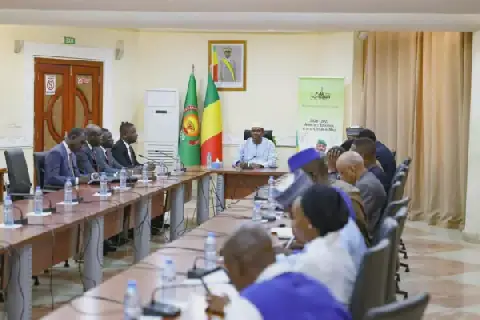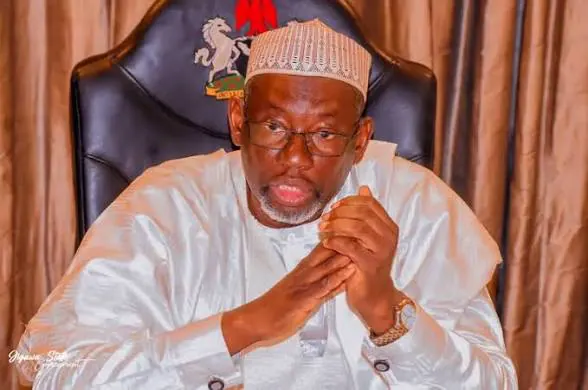
Jigawa State Governor Umar Namadi has called on newsroom leaders across Nigeria to strengthen their verification systems and build robust fact-checking capacity to curb the growing threat of artificial intelligence-generated disinformation. He made this appeal in Enugu at the 2026 All Nigeria Editors Conference, organised by the Nigerian Guild of Editors. The conference theme was “The Ballot, the Media and the Task of Keeping Democracy Alive,” with a subtheme of “When Lies Look Real…”
Governor Namadi stressed that the media's responsibility in the digital era should go beyond being the first to break news, emphasizing that accuracy, responsible publishing, and public understanding must remain central to journalism. He noted that emerging AI tools and digital platforms had made it easy to produce convincing false text, audio, and video capable of mimicking reality and manipulating public perception. This development poses a serious threat to electoral integrity, requiring citizens to have access to accurate information.
Namadi warned that credible elections depend not only on the ballot box but also on well-informed citizens who can make their choices free from deceptive narratives. He described editors as the final line of defence for accuracy, fairness, balance, ethics, and national responsibility, despite the growing role of technology in news production. The governor urged media organisations to invest in institutional verification tools and train journalists in digital literacy.
To effectively combat disinformation, Namadi called for fair and rights-respecting enforcement of existing laws against deliberate and malicious falsehoods, without undermining press freedom or legitimate public discourse. He cited Section 24 of the Cybercrimes Act, as amended in 2024, and Section 123 of the Electoral Act 2022, in support of the need to address harmful falsehoods within the framework of the law.
Governor Namadi also advocated for sustained collaboration between governments and media organisations on public education campaigns aimed at helping citizens identify and reject manipulated content. He cited Jigawa’s Gwamnati da Jama’a programme as an example of efforts to strengthen public trust through direct engagement. The programme involved government officials visiting all 27 local government areas of the state to present scorecards and respond to citizens’ questions.
Jigawa State is building on this momentum with a new Digital Social Responsibility Programme, which aims to enhance digital literacy, promote civic responsibility, and strengthen democratic resilience against digitally manufactured falsehoods. This initiative complements the recently signed Mass Mobilisation for Societal Reorientation Executive Order No. 2 of 2026. The governor paid tribute to the Nigerian Guild of Editors’ founding pioneers and former leaders during the conference.
Reflecting on the NGE’s 65-year history since its establishment in 1961, Namadi acknowledged the contributions of pioneers such as Alhaji Lateef Jakande and former leaders like Prince Tony Momoh, Chris Okolie, Ray Ekpu, Garba Shehu, Oluremi Oyo, and Bala Dan Tiye, during whose tenure the ANEC was inaugurated in 2004. The governor's remarks underscored the importance of collaboration between governments and media organisations in addressing the challenges of AI-generated disinformation.
Key points
- Governor Namadi urges Nigerian media to enhance fact-checking and verification systems.
- AI-generated disinformation poses a serious threat to electoral integrity in Nigeria.
- Governor Namadi advocates for sustained collaboration between governments and media organisations on public education campaigns.