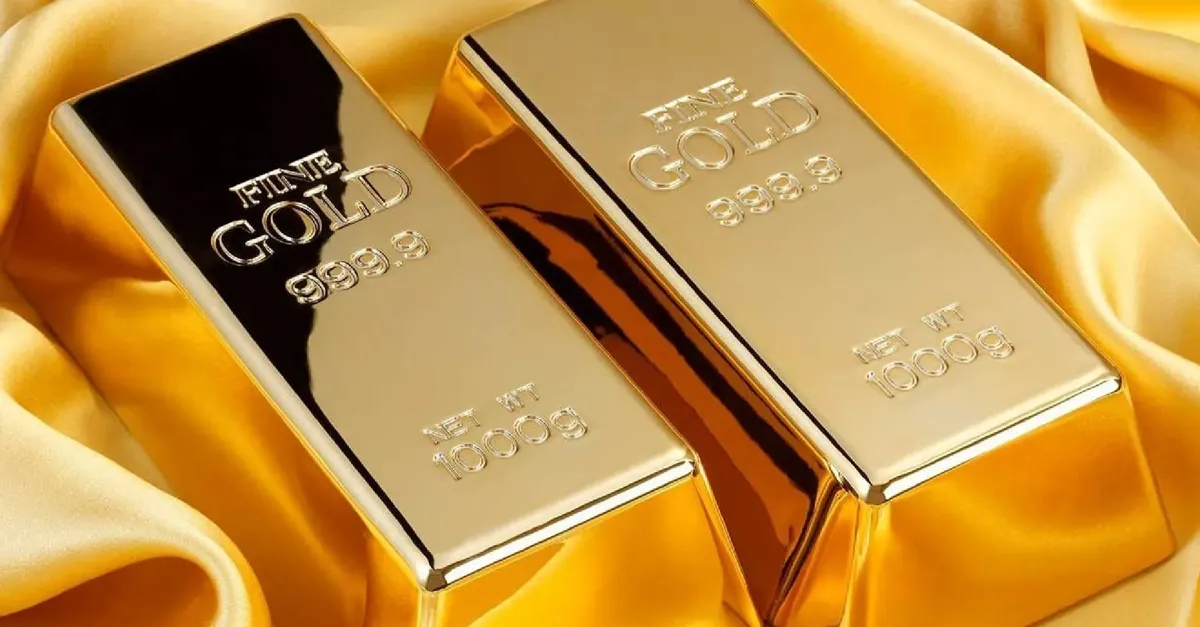
Gold prices saw a slight increase on Tuesday, but remained near their lowest level in over seven weeks. This trend is attributed to concerns that the US Federal Reserve may maintain high interest rates for an extended period. Investors are currently awaiting a series of US economic data releases. As of 0407 GMT, gold prices in spot transactions rose by 0.4% to $4,130.58 per ounce. This comes after the metal hit a seven-week low in the previous session.
The US economic data that investors are eagerly awaiting includes reports on consumer confidence, job openings, and the Personal Consumption Expenditures (PCE) index. These releases are expected to provide insights into the US economy's performance and potentially influence the Federal Reserve's interest rate decisions. According to Christopher Tahir, a market analyst at Exness, geopolitical developments will continue to play a crucial role in determining gold prices.
Tahir noted that ongoing tensions may keep energy prices and yields elevated, while any progress toward de-escalation could alleviate pressure on gold prices. In related news, US and Iranian officials have reportedly engaged in separate talks with mediators in an effort to end the conflict that began seven months ago. This development may have implications for gold prices, as investors seek safe-haven assets during times of uncertainty.
The price of oil has also been a focus, rising for the second consecutive session amid ongoing concerns about supply disruptions in the Middle East. Higher oil prices can fuel inflation by increasing costs across various sectors of the economy, potentially prompting central banks to raise interest rates to control price pressures. Although gold is often seen as a hedge against inflation, it tends to struggle in a high-interest-rate environment.
As investors weigh the potential impact of interest rate hikes on gold prices, they are currently favoring assets that generate returns. According to the CME's FedWatch tool, the market expects a 72.5% chance of the Federal Reserve raising interest rates in October, up from 57.6% the previous week. This expectation has contributed to gold's recent price movements.
In addition to gold, other precious metals have also seen price fluctuations. Silver prices declined by 0.9% to $60.42 per ounce, while platinum dropped by 1.3% to $1,697.71 per ounce. Palladium prices fell by 0.8% to $1,205.27 per ounce. These changes reflect the complex interplay of factors influencing the prices of precious metals.
As the week progresses, investors will continue to monitor US economic data releases and assess their potential impact on interest rates and gold prices. The upcoming reports, including the ADP employment report and non-farm payroll data, will provide valuable insights into the US economy's performance and help shape market expectations.
Key points
- Gold prices are near a 7-week low due to concerns about high US interest rates.
- Investors are awaiting US economic data releases to gauge the impact on interest rates and gold prices.
- The Federal Reserve's interest rate decisions are expected to influence gold prices in the near term.