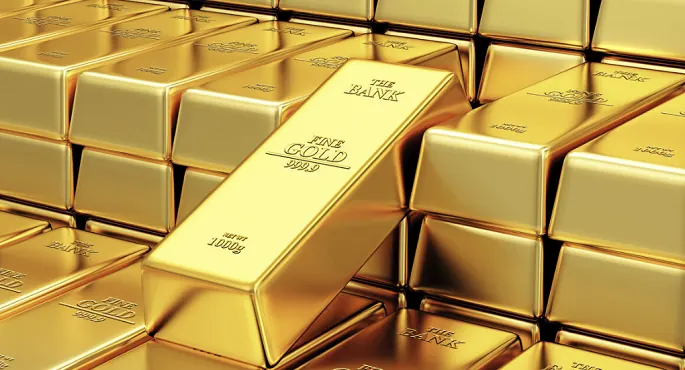
Gold prices experienced a decline on Wednesday, as investors evaluated the potential for major central banks to keep interest rates elevated for an extended period in their efforts to curb ongoing inflation. The price of gold decreased by 0.2% to $4,345.99 per ounce in spot transactions, while December U.S. gold futures rose by 0.2% to $4,382.70 per ounce.
The U.S. dollar remained near its two-month high, increasing the cost of gold for buyers holding other currencies. This development affected the price of other precious metals, with silver dropping by 0.4% to $66.78 per ounce, platinum decreasing by 0.8% to $1,818.21, and palladium falling by 0.4% to $1,302.61 per ounce.
Economic analysts noted that short-term fluctuations in gold prices are significantly influenced by oil price movements and developments in the Middle East. However, they emphasized that the long-term structural drivers of gold remain extremely strong. Despite gold being viewed as a hedge against inflation, its appeal tends to diminish when high interest rates lead to higher returns on interest-bearing assets.
Susan Collins, President of the Federal Reserve Bank of Boston, expressed support for the U.S. central bank's decision to raise interest rates last week in response to the risk of inflation exceeding the 2% target. She did not specify whether she would advocate for another rate hike. The Federal Reserve raised its benchmark interest rate by 25 basis points to a range of 3.75% to 4.00% last week, indicating the possibility of further increases before the end of the year.
The Bank of Japan and the European Central Bank have also recently raised interest rates. Analysts at BMI maintained their forecast for an average gold price of $4,400 per ounce in 2026, citing ongoing geopolitical risks and continued central bank gold purchases as providing a strong support base for prices near $3,800 per ounce.
The recent interest rate decisions by major central banks have contributed to the decline in gold prices. Investors are closely monitoring the situation, as changes in interest rates can significantly impact the price of gold. The precious metal is often seen as a safe-haven asset, but its price can be affected by various factors, including interest rates and currency fluctuations.
Looking ahead, the gold market is likely to remain volatile, with investors closely watching for any changes in interest rates and geopolitical developments. The ongoing tensions in the Middle East and the trajectory of oil prices will also be closely monitored, as they can have a significant impact on the price of gold.
Key points
- Gold prices declined on Wednesday due to the potential for prolonged high interest rates.
- The U.S. dollar's high value has increased the cost of gold for buyers holding other currencies.
- Analysts expect gold prices to remain supported near $3,800 per ounce due to ongoing geopolitical risks and central bank gold purchases.