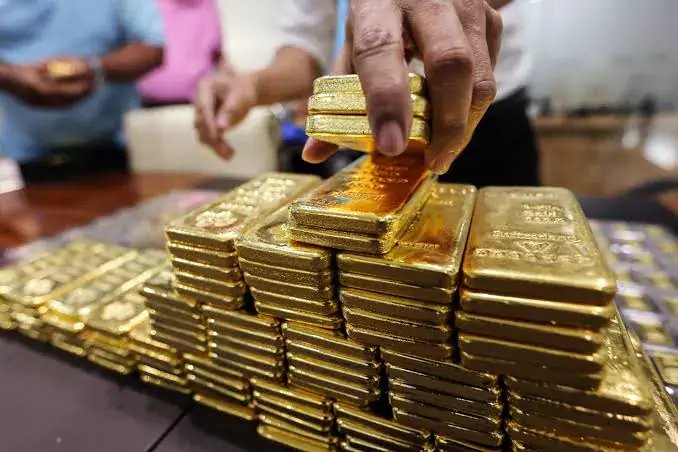
Ghana's gold sector has generated significant foreign exchange, with the Ghana Gold Board (GoldBod) reporting US$1.011 billion in earnings from artisanal and small-scale gold trading operations in October 2026. The amount was sold to authorised commercial banks through the GoldBod GoFX platform. This development is part of efforts to improve dollar liquidity in the domestic market and support the accumulation of Ghana's international reserves. The GoldBod is targeting US$1.2 billion in foreign exchange generation for November.
The GoldBod's Spot Foreign Exchange Sales and Intermediation Framework provides for dollar sales to authorised commercial banks twice weekly. The framework aims to improve transparency and ensure that foreign exchange is channelled towards genuine market demand. Where demand exceeds available supply, allocations are made on a pro-rata basis. This move is expected to ease pressure on the local currency by improving foreign exchange supply and reducing competition for limited dollar resources.
The Ghanaian cedi has shown some improvement in recent weeks, with the dollar's interbank selling rate declining from GH¢11.6708 on October 19 to GH¢11.66 on October 26. The Bank of Ghana's October 2026 Investor Bulletin reported that the cedi traded at GH¢11.50 per US dollar at the end of September, compared with GH¢12.42 in September 2025. However, these improvements cannot be attributed solely to GoldBod's efforts, as other factors such as export earnings and monetary policy also influence the exchange rate.
The availability of more dollars in the domestic market could help ease pressure on the local currency. Nevertheless, currency stability depends on several factors, including export earnings, foreign investment, monetary policy, international reserves, and overall demand for foreign exchange. The GoldBod's efforts are a positive step, but the bigger economic test will be whether these earnings translate into sustainable currency stability and improved access to dollars for businesses.
For Ghanaian businesses, improved access to foreign exchange could lead to reduced operating costs and increased certainty in planning. Importers can plan with greater certainty, manufacturers can better manage production costs, and consumers may eventually benefit from more stable prices. The real measure of Ghana's gold earnings should be reflected in the everyday experiences of businesses and ordinary Ghanaians.
The GoldBod's target for November is US$1.2 billion in foreign exchange generation, with US$800 million expected to be made available to commercial banks. If achieved, this could further improve dollar liquidity in the domestic market and support the accumulation of Ghana's international reserves. The impact on the cedi and the broader economy will be closely watched in the coming weeks.
As Ghana continues to turn its gold resources into billions of dollars in foreign exchange, the focus will shift to ensuring that the benefits reach the wider economy. The government's efforts to improve transparency and channel foreign exchange towards genuine market demand are crucial in this regard. The coming months will be critical in determining whether Ghana's gold earnings will translate into lasting stability for the Ghanaian cedi and improved economic prospects for businesses and ordinary Ghanaians.
Key points
- Ghana's gold earnings surged to US$1.011 billion in October 2026.
- The Ghanaian cedi has shown some improvement in recent weeks.
- The impact of gold earnings on the cedi and the broader economy will be closely watched in the coming weeks.