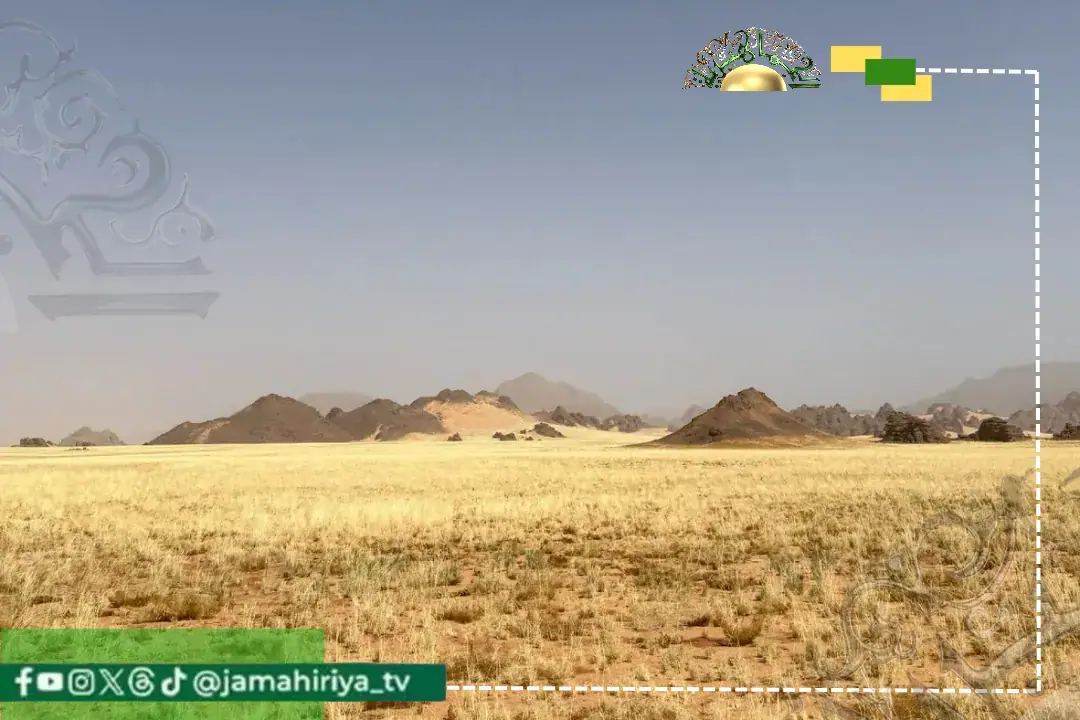
A recent report by the British website Middle East Eye has shed light on the escalating conflict over gold mines in the Masiki region of Chad's Tibesti province. The dispute has transformed from a local issue into a complex web of regional tensions and arms smuggling routes stretching across Libya, Chad, and Sudan. The Tibesti mountains, which span across northern Chad and southern Libya, are rich in gold and antimony reserves. However, the local Tuareg population complains about the lack of basic services despite the export of vast mineral wealth.
Clashes erupted on October 14 between the Chadian army and the local self-defense committee of the Tuareg community. The violence was sparked by allegations of breaching a peace agreement and expanding mining activities within grazing areas. The confrontations resulted in dozens of fatalities, with the army conducting drone strikes. According to a Tuareg leader, Chad exported gold worth over $1 billion and more than 15,000 tons of antimony last year, primarily sourced from the Tibesti mountains. Most of the gold was destined for the Dubai market, while the region lacks essential infrastructure such as hospitals and paved roads.
The report indicates that the region has become a critical route for transporting arms, fuel, and fighters from the United Arab Emirates (UAE) through Libya and Chad to the Rapid Support Forces (RSF) in Sudan. This is based on UN investigations and media reports. The UAE has denied supporting the RSF. A team of UN experts documented 458 military cargo flights between October 2024 and December 2025, with 239 of them landing in the Libyan town of Kufra. Kufra has been converted into a fortified logistical hub, particularly after the RSF took control of El Fasher in October 2025.
The UAE has also utilized the Am Jirs airport in eastern Chad for air shipments, as per the report. Tensions have spilled over into southern Libya, where the "Room of Operations for the Liberation of the South" led by Mohamed Wardougou is engaged in clashes with forces loyal to Khalifa Haftar. The group accuses Chad of sending troops to support Haftar, aiming to drive his forces out of the southern region.
The report highlights a growing economic and military partnership between the UAE and the Chadian government of President Idriss Deby. The UAE has pledged significant financial and operational support for Chad's development projects under the "Chad Connection 2030" plan, valued at $30 billion. The UAE has committed approximately $20.5 billion to this initiative. This strategic alliance is part of a broader regional dynamic.
Algeria has responded to these developments by deploying troops to Niger in late October. A former Algerian diplomat described this move as an effort to counter what he perceives as a destabilization strategy involving the UAE, Morocco, Israel, and French parties. The situation remains volatile, with multiple actors vying for influence.
The conflict over gold mines in Masiki has far exceeded local boundaries, becoming entangled with arms supply lines to Sudan and the struggle for influence in Libya and the African Sahel region. The report warns that the future escalation will not be confined to the Tibesti mountains alone but will be influenced by decisions made in Abu Dhabi, Benghazi, and Paris.
Key points
- The conflict in Chad's Tibesti region has become a regional struggle involving Libya and Sudan.
- The UAE has denied supporting the Rapid Support Forces in Sudan despite evidence suggesting otherwise.
- The situation in Chad is linked to broader regional dynamics, including the struggle for influence in Libya and the Sahel.
Reporting sources
- تقرير| ذهب تشاد يشعل صراعًا إقليميًا يمتد من ليبيا إلى السودان · Aljamahiriya TV