The Goethe-Institut in Egypt has been a driving force in promoting the German language and culture for over six decades. Since its establishment in 1958, the institute has undergone significant transformations, expanding its mission to encompass language learning, cultural dialogue, education, and artistic exchange. Generations of Egyptians have benefited from its programs, including language studies, library resources, cultural events, and exchange initiatives, all while maintaining cooperation with Egypt's education system.
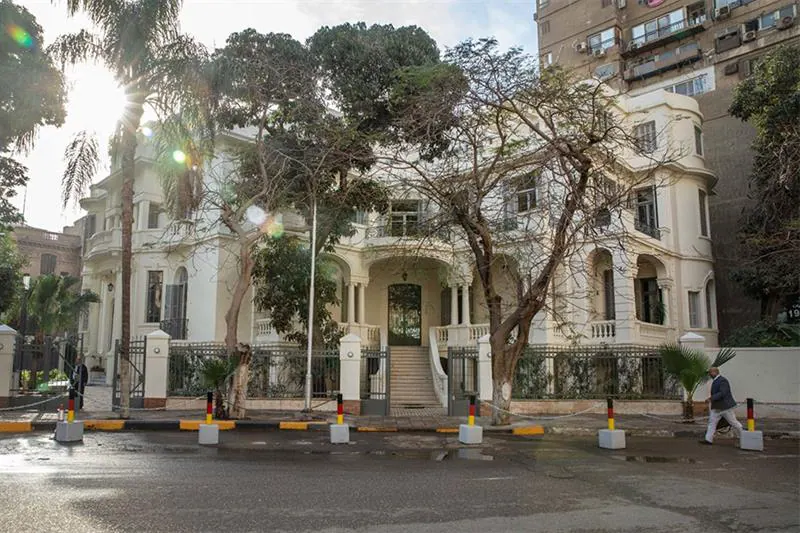
The institute's history is deeply intertwined with its physical presence in Egypt. The "White Villa" in Dokki, built in 1930-31, currently serves as the administrative headquarters of the Goethe-Institut Cairo. This building, along with the Bustan Villa in downtown Cairo, holds significant historical value, having been associated with prominent Egyptian families and architects. According to Lilli Kobler, regional director of the Goethe-Institut-MENA Region, these buildings are more than just premises; they represent places where memories, experiences, and relationships are formed, connecting Germany and Egypt.
The Bustan Villa, acquired by the Goethe-Institut in 1957, has played a pivotal role in German-Egyptian cultural exchange. Following the 1959 cultural agreement between Egypt and Germany, the Federal Republic of Germany purchased the villa in 1961. This building has served as a hub for cultural activities, hosting various events and exhibitions. Similarly, the White Villa, initially a residence for Public Prosecutor Pasha Mahmud Al-Margushi, was later acquired by the German Democratic Republic and eventually became part of the Goethe-Institut's facilities.
In 2016, the Goethe-Institut Cairo inaugurated its modern learning and cultural hub, "Beit El Nakhil" (Palm Courtyard), in Dokki. This state-of-the-art facility houses most of the institute's classrooms, library, and creative maker space. Kobler highlights the significance of this new building, which has enabled the institute to expand its programs and enhance its services. The institute's commitment to cultural exchange is reflected in its collaborative projects with Egyptian artists, cultural organizations, and Germany's cultural sector.
The Goethe-Institut's cultural department, led by Frederike Berje, develops its programs through continuous dialogue with artists and cultural organizations in Egypt. The department's approach involves evaluating projects, identifying relevant topics, and engaging with Germany's cultural sector. This exchange is not one-directional; rather, it fosters mutual learning and joint creativity. The institute presents films, musicians, dancers, and visual artists at festivals in Germany and brings artistic works from Germany to Egypt.
The institute's partnerships with Egyptian institutions, experts, and communities enable it to understand local realities, reach diverse audiences, and connect them with professional networks in Germany and Europe. The selection approach for projects varies, with some initiatives using open calls and independent juries, while others involve direct invitations to established artists and experts. This inclusive approach encourages dialogue across generations and provides opportunities for emerging and established practitioners.
The Goethe-Institut's impact extends beyond Cairo, with a focus on reaching young people and communities outside major cities. The institute supports young learners, emerging artists, educators, and cultural professionals, while encouraging girls' and young women's participation. Its partnerships with universities in Mansoura and Sohag, mobile maker spaces in Upper Egypt, and training programs across different governorates reflect this approach.
Key points
- The Goethe-Institut in Egypt has been promoting German language and culture for 60 years.
- The institute has a long history of cultural exchange and collaboration with Egyptian artists and institutions.
- The Goethe-Institut's programs extend beyond Cairo, targeting young people and communities in other parts of Egypt.