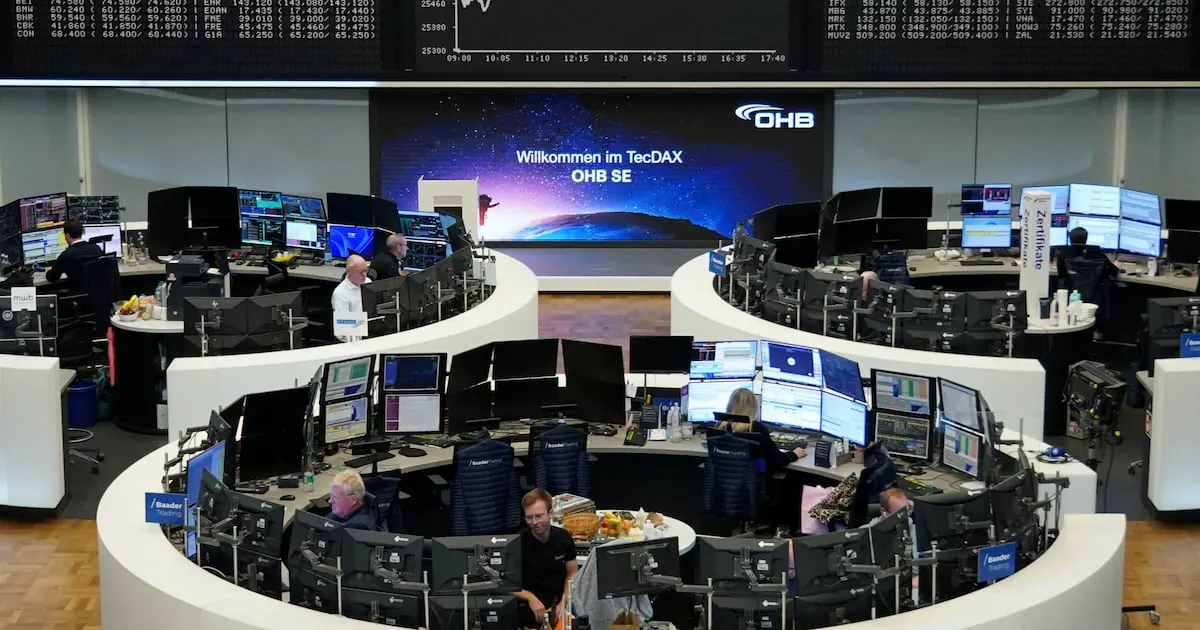
Global shares experienced a significant rally on Tuesday, driven by renewed optimism over artificial intelligence and a decline in oil prices. The surge in investor sentiment was fueled by comments from a senior Iranian official, who stated that Tehran could reopen the Strait of Hormuz within seven days if the US eases military pressure and lifts its blockade on Iranian ports. This development contributed to a decline in oil prices, which fell as much as 3% before recovering modestly to around $97.6 a barrel.
The rally in global shares was also driven by the viral popularity of Meta Platforms' Muse AI assistant, which launched two weeks ago. The company's stock soared on Monday, reviving enthusiasm for the tech sector after grim warnings from AI bosses a week earlier. Semiconductors were among the top gainers in Europe, with the Stoxx 600 up 0.5%, extending the previous day's 1% rally. Meta shares jumped by more than 11% on Monday, their biggest one-day rise since April 2024.
The resurgence of optimism over AI has led to a surge in AI-linked stocks, such as AMD, which hit a $1-trillion valuation, while Intel and Arm Holdings jumped 12.2% and 17%, respectively. According to Kathleen Brooks, research director at XTB, the demand for costly AI tools appears robust and worth the hundreds of billions of capital expenditure spent by hyperscalers. If there is widespread adoption of Muse, it could add to demand for other AI tools, lifting the AI sector after a rough few months.
Attention is turning to a meeting between US President Donald Trump and Chinese President Xi Jinping later this week, with investors watching for indications that the leaders of the world's two biggest economies can prevent a further deterioration in relations. Xi arrives in Washington on Wednesday for the first time in more than a decade, fueling optimism that a trade truce between the two countries will be extended and potentially leading to co-operation over AI.
Global bond yields reversed an earlier rise and fell in line with the oil price, with US 10-year Treasury yields down 3 basis points on the day to 4.93%, falling further below the 5% threshold. This decline in bond yields cut support for the dollar, pushing it below a seven-week high against a basket of currencies reached earlier in the day. The dollar weakened 0.15% to 157.14 against the yen, backing off a three-week high.
The Bank of Japan raised rates last week to a 31-year high, but two dissenting votes and a lack of explicit hawkish guidance disappointed investors, leaving the yen vulnerable and keeping traders on alert for signs of official intervention. In contrast, the Federal Reserve raised rates last week and warned its fight against inflation was not over, keeping the door open to further tightening. According to Matthew Ryan, head of market strategy at Ebury, FX intervention remains a blunt tool to prop up currencies.
The meeting between US and Chinese leaders and potential co-operation on AI and trade will be closely watched by investors. While the general tone remains positive, there still isn't an agreement yet, according to Deutsche Bank strategist Jim Reid. The outcome of the meeting could have significant implications for the global economy and markets, particularly with regards to the trade truce between the two countries, which is set to expire in November.
Key points
- Global shares rally on AI optimism and signs of improving oil supply
- Oil prices dip below $100 as supply shows signs of improving in the Middle East
- Investors watch US-China meeting for trade truce and AI co-operation indications