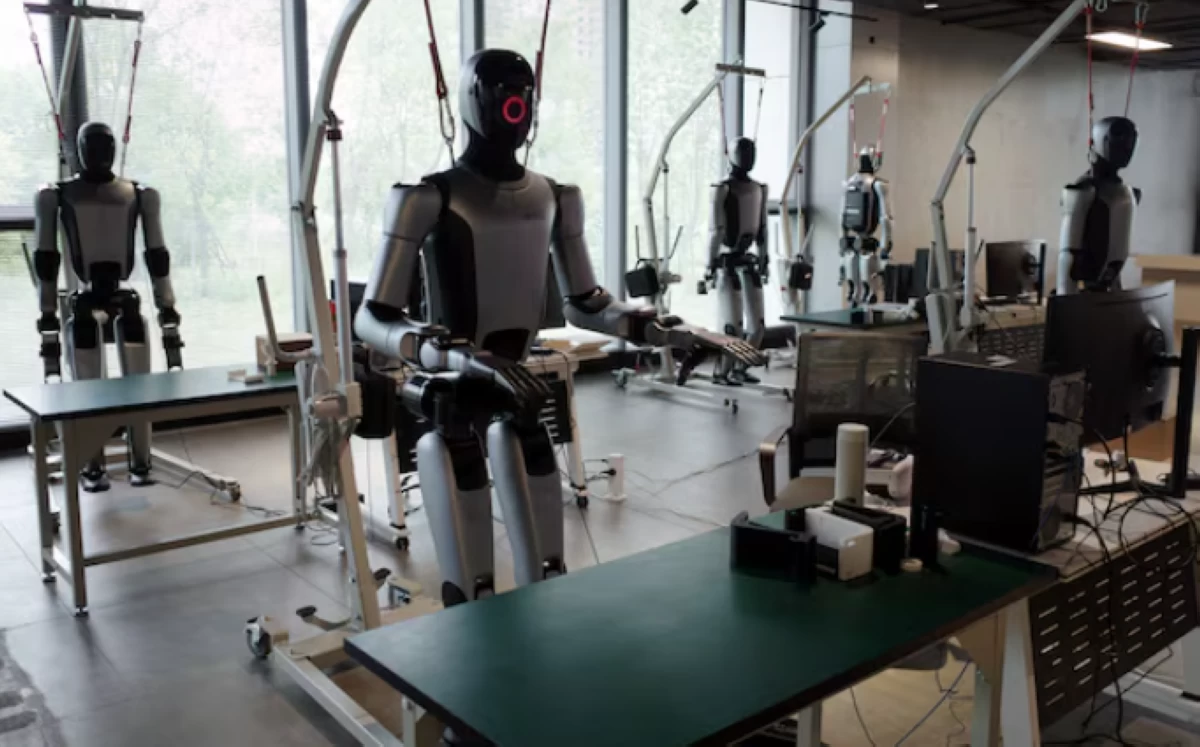
The International Federation of Robotics (IFR) has reported that approximately 7,000 humanoid robots were sold worldwide in 2025. These robots are designed to resemble humans and operate independently in environments intended for human interaction. The IFR's data provides one of the first comprehensive industry benchmarks for this technology, which has attracted significant investments and showcased impressive capabilities.
The 7,000 humanoid robots sold in 2025 represent a small fraction of the total number of robots in use globally. In comparison, around 542,000 traditional industrial robots were installed in 2024, and an estimated 199,000 service robots were sold in the same year for use in transportation, hospitality, and cleaning. The IFR's data highlights the relatively limited presence of humanoid robots in the market so far.
According to Susan Beeler, Secretary-General of the IFR, many of the humanoid robots sold in 2025 were not yet performing productive tasks, but were instead purchased by research institutions or companies to generate data aimed at improving artificial intelligence models. Some companies, such as automakers, are conducting pilot tests using small numbers of humanoid robots in their factories.
The IFR has been collecting robotics statistics for three decades and began gathering data on humanoid robots in addition to its larger datasets on industrial and service robots. The organization's data is based on information from suppliers and national industry associations, and excludes humanoid robots designed for consumer or military use.
The global market for humanoid robots is expected to grow significantly in the coming years. A report by Bank of America's Global Research unit estimates that 90,000 humanoid robots will be shipped this year, and 1.2 million units will be shipped by 2030. China, the world's largest market for industrial robots, has already showcased humanoid robots capable of running and boxing.
The IFR's data provides a snapshot of the current state of the humanoid robotics market, which is attracting significant investments and attention. While the number of humanoid robots sold in 2025 is relatively small, the market is expected to experience rapid growth in the coming years. The IFR will publish its 2025 data on industrial and service robots on September 24.
As the humanoid robotics market continues to evolve, it is likely to have a significant impact on various industries, including manufacturing, healthcare, and services. The development of more advanced humanoid robots could lead to new applications and opportunities, but it also raises questions about the potential risks and challenges associated with these technologies.
Key points
- The global sales of humanoid robots reached 7,000 units in 2025.
- The market for humanoid robots is expected to grow significantly, with an estimated 1.2 million units to be shipped by 2030.
- Humanoid robots are designed to resemble humans and operate independently in environments intended for human interaction.