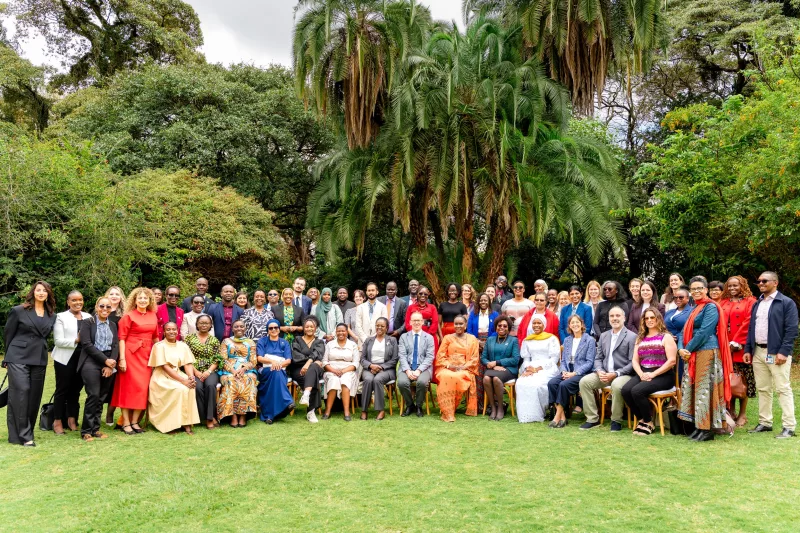
Global leaders and organisations working to protect girls have called for stronger political commitment, increased funding, and greater accountability in efforts to end female genital mutilation/cutting (FGM/C) and child marriage. The call was made during the Justice for Girls: Leadership and Collective Action to End FGM/C and Child Marriage event in Nairobi. The meeting brought together leaders from Africa, Asia, and the wider global movement to strengthen collaboration among governments, communities, and civil society.
British High Commissioner to Kenya Matt Baugh urged governments, civil society, and communities to work together to end FGM/C and child marriage. He emphasized that progress made in addressing these practices is under threat from declining commitment and setbacks in the rights of women and girls. Baugh stressed that the lives and futures of millions of girls are at stake, and that collective action is necessary to prevent harm and abuse.
Principal Secretary in the State Department for Gender Affairs and Affirmative Action Anne Wang’ombe highlighted the need to protect gains made in the fight against harmful practices. She noted that stakeholders must safeguard progress and build on it to achieve equality. Wang’ombe also emphasized the link between FGM/C and health, citing the high number of maternal deaths among women and girls who have undergone FGM/C or been forced into early marriage.
Survivor leaders and grassroots organisations called for greater involvement in shaping policies, priorities, funding, and accountability mechanisms. African Women’s Rights Advocates co-founder and West Africa Coordinator Mamlisa Camara said Africa has the leadership and knowledge required to address FGM/C and child marriage but needs greater political support. She emphasized that efforts to advance justice for girls should be African-led, survivor-centred, and rooted in community realities.
The meeting also focused on the distribution of resources to organisations working directly with affected communities. Equality Now East and Central Africa Associate Director Judy Gitau said governments have a responsibility to translate laws into practice and strengthen investment in community-led solutions. She emphasized that governments should allocate resources, strengthen multisectoral action, and invest in survivor leadership and community-led solutions.
The Her Horizon Fund was highlighted as a key initiative to support frontline organisations working to end FGM/C. The fund aims to mobilise $100 million from bilateral, philanthropic, and corporate donors, with survivors and activists playing a role in shaping its strategic direction and grantmaking. The Justice for Girls programme brought together survivors, grassroots organisations, governments, funders, activists, researchers, and other partners to focus on movement building, funding, accountability, and collective action.
The leaders emphasised that ending FGM/C and child marriage will require sustained collaboration between governments, diplomatic missions, survivor-led organisations, funders, UN agencies, and civil society. Orchid Project CEO Anush Aghabalyan said the “Unstoppable: Our Movement-led Collective Vision for Ending FGM/C” roadmap was developed to give the movement a shared direction and strengthen collective action. The roadmap brings together the experiences and ambitions of survivors, activists, frontline organisations, funders, and policymakers.
Key points
- Global leaders call for stronger commitment to end FGM/C and child marriage
- Stakeholders emphasise need for increased funding and accountability
- Africa has leadership and knowledge to address FGM/C but needs greater political support