The recent Ebola outbreak has highlighted the importance of pandemic preparedness, with global health advocates urging governments to take immediate action. The crisis has exposed the cost of delay, and the need for stronger commitments to prevent, detect, and contain future pandemics. The UN has adopted a new Political Declaration on pandemic prevention, preparedness, and response, which aims to translate renewed commitments into measurable action.
The declaration was adopted at the second High-Level Meeting on Pandemic Prevention, Preparedness, and Response (PPPR) held in New York on September 25. The meeting brought together UN Member States to renew political commitment to preventing future pandemics through international cooperation. The Friends of the UN High-Level Meeting on PPPR had urged Member States to take action, citing the devastating toll of COVID-19, which caused at least 22 million excess deaths.
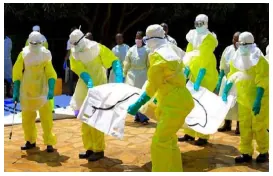
The Ebola outbreak has infected approximately 7,600 people and killed around 3,600, underscoring the human cost of inadequate preparedness. Global health advocates argue that the Political Declaration should represent only a starting point for a stronger global pandemic-prevention architecture. Helen Clark, Co-Chair of the Independent Panel for Pandemic Preparedness and Response, emphasized that the declaration should be regarded as the "floor, and not the ceiling" of measures required to make the world safer from pandemic threats.
The stakes extend beyond the containment of individual outbreaks, with pandemic preparedness involving the ability of countries to detect emerging threats early, maintain functioning health systems during emergencies, and protect health workers. The UN process has placed renewed emphasis on collective action, equity, and solidarity. The 2026 meeting was designed to build on the first HLM held in 2023 and advance national, regional, and international action on pandemic prevention, preparedness, and response.
For developing countries, the preparedness question carries implications for access to health technologies, financing, research, manufacturing capacity, and the ability to respond rapidly when a new pathogen emerges. The G77 has called for timely international cooperation, equitable access to medical countermeasures, and stronger capacities in developing countries. The central challenge now is moving from declarations to implementation.
The message from the global health community is increasingly focused on preparedness before crisis, investing in surveillance, laboratories, health workers, vaccines, medicines, resilient health systems, and coordinated response mechanisms. The Political Declaration adopted at the UN meeting provides a renewed framework for that effort. Its lasting test will be whether governments convert the commitments into sustained investments and measurable preparedness at national, regional, and global levels.
The experience of the Ebola outbreak has reinforced the consequences of waiting until an outbreak is already spreading before mobilizing resources. The global health community is urging governments to take action now, rather than waiting for the next health emergency to strike. The adoption of the Political Declaration is a step in the right direction, but its impact will depend on the actions that follow.
Key points
- The UN has adopted a new Political Declaration on pandemic prevention, preparedness, and response.
- Global health advocates are urging governments to translate renewed commitments into measurable action.
- The declaration aims to strengthen pandemic preparedness and response, with a focus on collective action, equity, and solidarity.