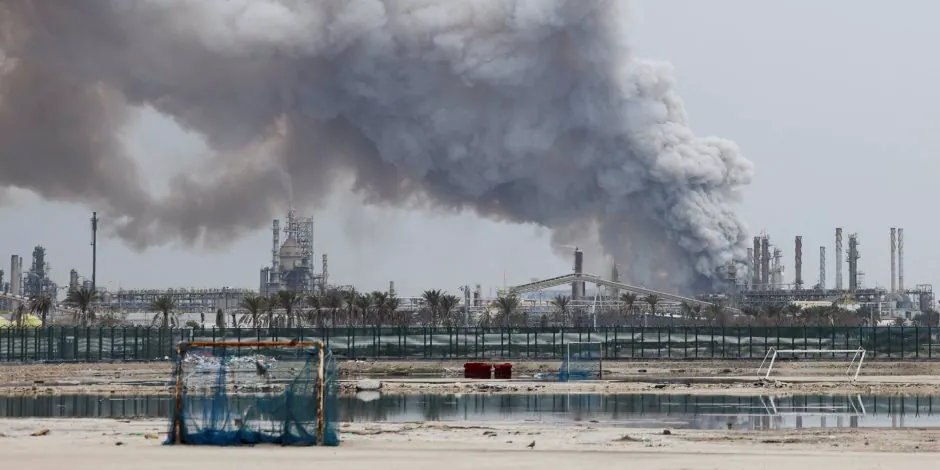
The ongoing military escalation in the Gulf region has led to a significant shift in the global liquefied natural gas (LNG) market. With the closure of the Strait of Hormuz and damage to Qatar's energy infrastructure, governments and major energy companies are rapidly reworking their strategies to diversify their supply sources. This move comes as the US-Iran war has resulted in a sharp decline in LNG shipments from the Gulf region, leading to a loss of around 36 million metric tons of Middle Eastern supplies.
The crisis has forced Asian governments and energy companies to scramble for alternative supplies in the spot market, often at higher prices. Companies such as PetroChina and GAIL India have had to secure emergency shipments to meet their energy demands. Despite the significant supply disruption, industry estimates suggest that the entry of new production capacities and the addition of 70-80 new LNG carriers per year have helped mitigate the impact of the crisis, limiting global losses to around 5 million tons, or 1-1.5% of total global supplies.
The current energy landscape has prompted countries such as Bangladesh, which previously relied heavily on Qatar for its LNG supplies, to diversify its sources. Bangladesh has started to secure imports from Indonesia, Australia, and China, while state-owned company PTTEP is exploring new supply routes from Oman, North America, and West Africa. Industry experts note that governments are now focusing not only on diversifying their suppliers but also on securing alternative transportation routes to ensure uninterrupted supply chains.
The current crisis has created new opportunities for emerging LNG producers outside the traditional Qatar-US axis. East Timor is planning to establish two new LNG production facilities, with a combined capacity of 6.5 million tons, while Indonesia's Inpex is developing the Abadi gas field with a planned capacity of 9.5 million tons. The company aims to make an investment decision by mid-2027 and is also exploring opportunities in the Americas and Brazil.
The global LNG market is undergoing a significant transformation, driven by the need for supply security and diversification. The emerging trends suggest that the market will become more geographically diverse, with new producers and suppliers emerging in East Africa, the Americas, and other regions. Projects such as the Rovuma LNG project, led by ExxonMobil and TotalEnergies, and upcoming projects in Saudi Arabia and Argentina, are expected to play a significant role in shaping the future of the global LNG market.
The ongoing crisis has underscored the importance of flexibility and security in the global LNG market. As countries and companies adapt to the new energy landscape, they are prioritizing strategies that ensure the resilience of their supply chains. This shift towards a more diverse and flexible market is likely to have far-reaching implications for the global energy sector, with a greater emphasis on cooperation and investment in new production and transportation infrastructure.
As the global energy landscape continues to evolve, one thing is clear: the era of traditional LNG supply routes and producers is giving way to a more complex and dynamic market. With emerging producers and suppliers set to play a greater role, the global LNG market is poised for a significant transformation in the years to come.
Key points
- The US-Iran war has triggered a global energy shock, prompting importers to seek alternative LNG supply routes amid rising tensions in the Gulf region.
- The crisis has forced Asian governments and energy companies to scramble for alternative supplies in the spot market, often at higher prices.
- The global LNG market is undergoing a significant transformation, driven by the need for supply security and diversification.