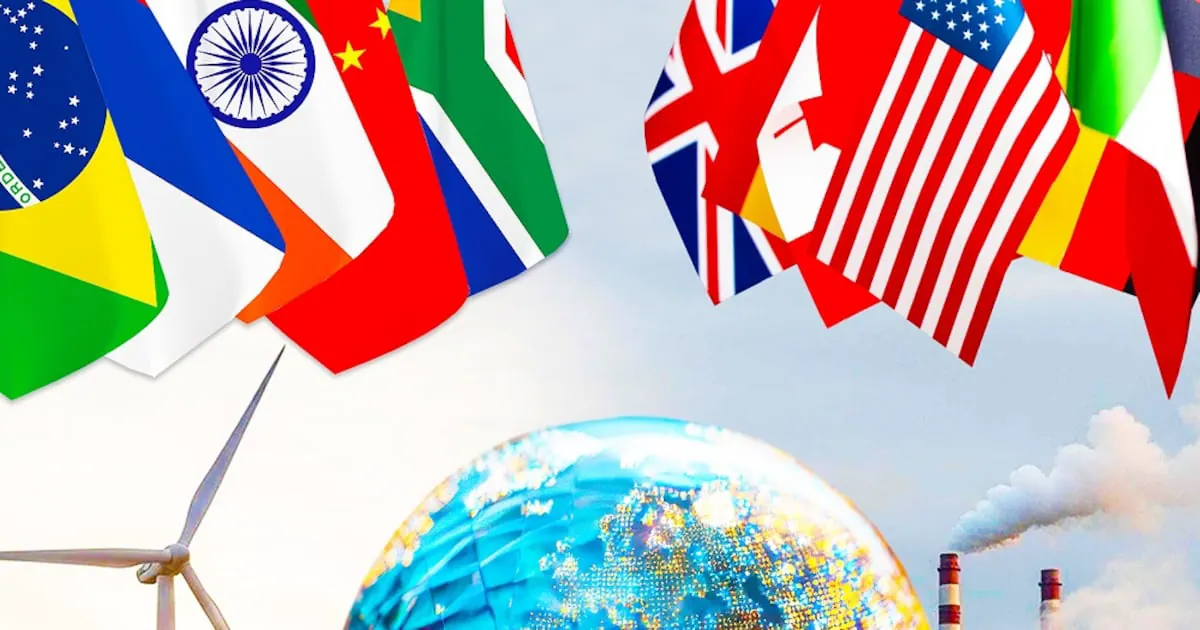
The ongoing global conflicts, the shift towards renewable energy sources, and sanctions on Russian fossil fuels are creating significant disruptions in global energy markets. These changes are affecting various economies in distinct ways, depending on their energy import and export dynamics. For instance, countries within the Brics bloc, which includes Brazil, Russia, India, China, and South Africa, are experiencing a mix of challenges and opportunities. While Brics nations that are energy importers may face higher prices, those that are exporters could see their revenues decline.
The G7 countries, comprising major advanced economies, appear to be facing a deeper crisis due to these energy market disruptions. Sanctions on Russian fuel supplies have led to a substantial increase in energy prices across Europe, negatively impacting the continent's economic competitiveness. In contrast, China and India continue to import Russian energy at discounted rates. Despite initial losses in oil revenues due to sanctions, Russia has managed to offset these through higher natural gas prices. Furthermore, Russia's strategic expansion of its Arctic sea routes and oil fields is likely to ensure a secure supply of energy to its Brics allies in the long term.
Russia plays a crucial role in the global energy market, particularly as a major supplier of enriched uranium. It supplies over 20% of the United States' needs, despite existing sanctions. Additionally, Russia is actively involved in constructing nuclear power plants in Brics countries such as Egypt and India. Meanwhile, China plans to build dozens of new nuclear reactors, highlighting the growing importance of nuclear energy in the Brics nations. With strong economic growth, advancements in artificial intelligence, and an increasing number of electric vehicles, energy demand in Brics countries is expected to rise significantly.
The surge in energy demand has made nuclear power an attractive option for decarbonized baseload power. Moreover, batteries are essential for the competitiveness of renewable energy sources, and the Brics countries, particularly China, are leading in battery production. China has become the world's largest battery producer and recently surpassed Australia as the country with the second-largest lithium reserves. This development enhances China's structural advantages in the global battery manufacturing industry. The shift towards cheaper and less flammable sodium-ion batteries is also underway, which could reduce energy storage costs and accelerate the transition to renewable energy.
Interestingly, the biggest threat to Russia's energy exports does not come from Western sanctions but from the advancements in Chinese renewable energy technology. As the world's leading manufacturer of renewable energy technology, China stands to gain significantly from this transition, as it reduces energy imports, boosts exports, and increases energy security for its manufacturing industries. Most Brics countries are well-positioned to adopt wind and solar power, with countries like South Africa, the United Arab Emirates, India, and Egypt possessing immense renewable energy potential. This transition could largely benefit these nations, although it may lead to a decline in coal and oil exports.
In contrast, G7 countries such as Germany and Japan have been shutting down their nuclear power plants, while France's aging fleet of nuclear reactors has required extensive refurbishment, leading to power shortages. The combination of reduced nuclear output, sanctions on Russia, and the ongoing conflict in the Middle East has driven up energy prices, leading to higher production costs, inflation, and debt servicing expenses. This situation has resulted in the evaporation of historical trade surpluses in Germany and Japan, with G7 bond yields reaching multidecade highs.
The structural shifts in the global energy market could permanently impair the economic competitiveness of several advanced economies, especially when compared to nations like India and China. With access to cheaper energy sources and better positioned to benefit from renewables, Brics nations may gain a significant advantage. The ongoing conflicts and their impact on energy markets could have immediate political consequences, particularly in the United States, as inflationary pressures pose a big threat to financial markets until these conflicts are resolved.
Key points
- Sanctions on Russian fossil fuels have driven up energy prices in Europe, impacting economic competitiveness.
- The transition to renewable energy and advancements in battery technology are benefiting Brics countries like China and India.
- The global energy market disruptions could permanently affect the economic competitiveness of G7 countries compared to Brics nations.