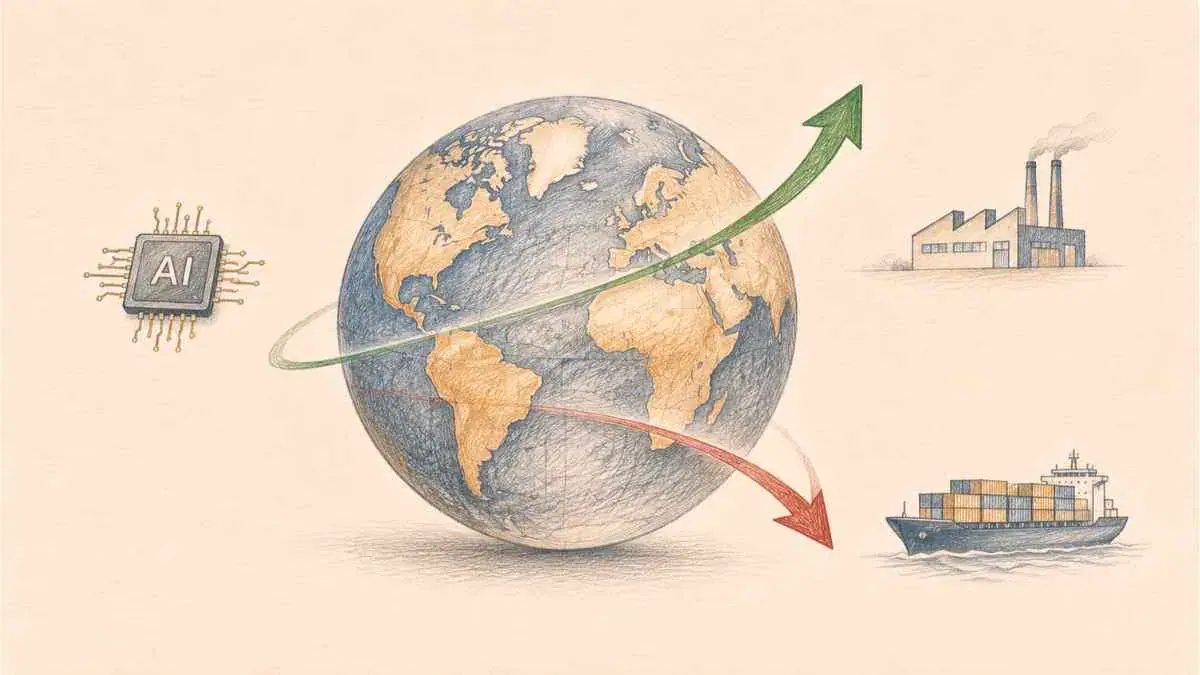
The international economic landscape is marked by increasingly divergent dynamics. The global economy is advancing on different paths, influenced by a combination of factors including restrictive monetary policies, investments in artificial intelligence, industrial restructuring, and geopolitical tensions. This contrast is evident in the varying performances of different sectors and regions.
The current monetary policy landscape is under scrutiny, with the Bank of England's announced rate of 4% highlighting the constraints on monetary policy. In the United States, a high productivity rate and low layoff numbers indicate a certain level of resilience in the labor market. However, these indicators also raise questions about the trajectory of interest rates and growth prospects.
A significant economic agreement between Washington and Cairo, worth $125 million, underscores the importance of private sector development and infrastructure in bilateral relations. This deal reflects the emphasis on strategic investments to drive growth and stability. The agreement is seen as a positive development, but its impact on the broader economic landscape remains to be seen.
The rapid progress of artificial intelligence is accompanied by growing investor scrutiny. The massive spending on AI development is no longer sufficient to convince investors; instead, the focus is shifting to the translation of these investments into revenue and profits. This increased vigilance is driving companies to reassess their AI strategies and prioritize returns on investment.
The European automotive industry exemplifies the divergence in economic performance. The British electric vehicle market has achieved a record growth, while Italy is experiencing production disruptions and challenging industrial prospects. This contrast highlights the uneven nature of economic recovery and growth across different regions and sectors.
Geopolitical tensions are also affecting global trade, with the conflict in the Middle East disrupting tourism and air transport. In response, Qatar Airways is considering new routes to Latin America, while Libya continues to pursue its plans to establish a national airline. These developments reflect the complex interplay between geopolitics and economic growth.
As the global economy navigates these challenges, a key question remains: can strategic investments and new markets compensate for the financial, industrial, and geopolitical constraints? The answer will depend on various factors, including the effectiveness of monetary policies, the resilience of different sectors, and the ability of companies to adapt to changing circumstances.
Key points
- The global economy is experiencing divergent growth trajectories due to restrictive monetary policies, investments in AI, and geopolitical tensions.
- The European automotive industry is a notable example of this divergence, with the British electric vehicle market growing rapidly while Italy faces production disruptions.
- The ability of strategic investments and new markets to compensate for financial, industrial, and geopolitical constraints will be crucial in determining the future trajectory of the global economy.