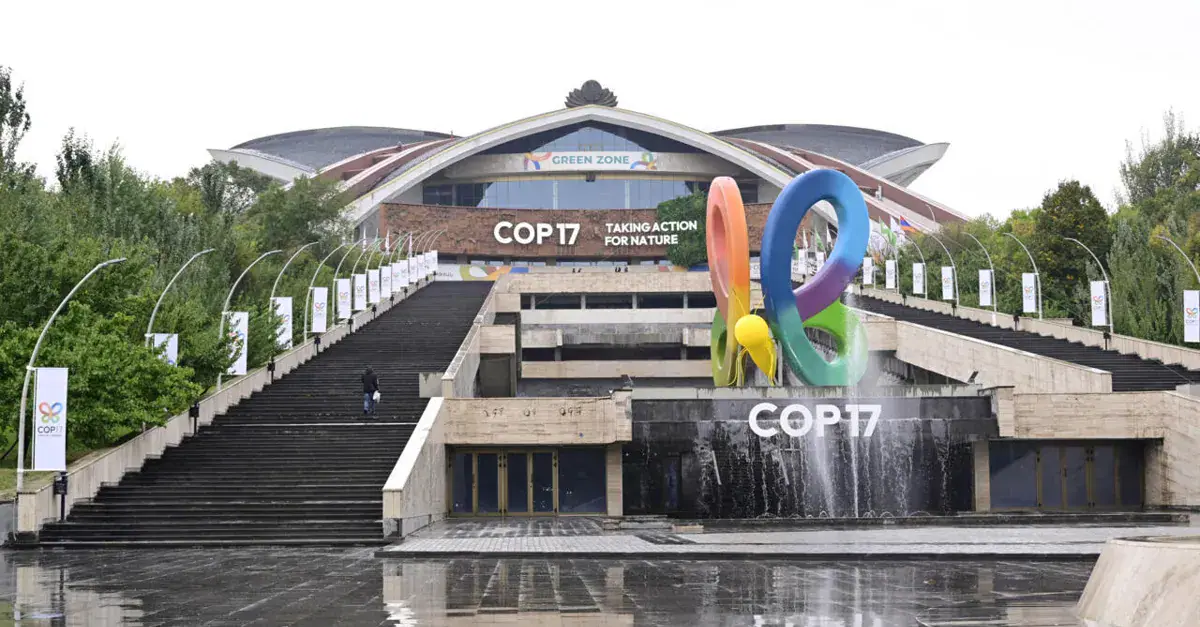
The 17th Conference of the Parties to the Convention on Biological Diversity (COP17), which concluded on Saturday, saw governments agree to accelerate efforts to protect biodiversity globally. The two-week meeting in Yerevan, Armenia, was marked by intense negotiations, with the outcome still uncertain. Despite progress, delegates acknowledged that more needs to be done to achieve the goals set out in the Global Biodiversity Framework agreed in Montreal four years ago.
The meeting in Yerevan was the first review of the Global Biodiversity Framework, which aims to protect 30% of land and sea areas by 2030, restore 30% of degraded ecosystems, and redirect subsidies that harm the environment. While some progress was made, delegates agreed that it was insufficient, with most countries still far from achieving the framework's goals. The agreement, dubbed the "Yerevan Pathway," commits governments to take faster action in areas such as reducing environmentally harmful subsidies and increasing funding for developing countries.
The Yerevan Pathway also aims to align national spending with biodiversity goals and accelerate efforts to protect ecosystems. Governments acknowledged that current actions are insufficient and set priorities for accelerating efforts by 2030. The agreement was welcomed by conservation groups, with Anita de Horde, Executive Director of Finance for Biodiversity, saying that it showed international cooperation still works.
However, significant challenges remain, particularly in terms of funding. The Global Biodiversity Framework aims to mobilize $200 billion annually to support conservation efforts, but current funding levels are far short of this target. Developing countries, which are often most affected by biodiversity loss, require significant financial support to implement the framework's goals.
The COP17 agreement also highlights the need for countries to review and adjust their national biodiversity strategies. According to the United Nations, around 90% of parties to the Convention on Biological Diversity have set national targets, but fewer than half of these are on track to meet their goals. The next major international meeting on biodiversity will take place in Quito, Ecuador, in 2028.
The outcome of COP17 has been seen as a positive step forward, but also a reminder of the significant work still to be done. As the world prepares for the next major climate talks in Turkey in November, the focus will be on implementing the agreements reached in Yerevan and mobilizing the necessary funding to support conservation efforts.
The COP17 agreement has been hailed as a significant achievement, particularly given the current global context. With growing tensions and challenges to multilateralism, the agreement demonstrates that international cooperation can still deliver results. The focus now shifts to implementation, with governments expected to take concrete actions to protect biodiversity and mobilize the necessary funding.
Key points
- Governments agree to accelerate efforts to protect biodiversity globally.
- Significant funding challenges remain to achieve biodiversity goals.
- The next major international meeting on biodiversity will take place in Quito, Ecuador, in 2028.