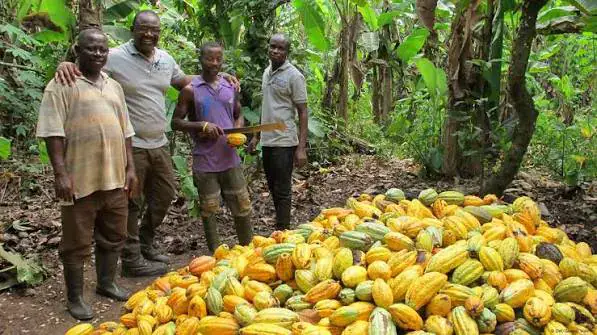
Ghanaian cocoa farmers are experiencing a tough season due to unpredictable weather conditions. Heavy rainfall in some areas and prolonged dry spells in others have disrupted flowering and pod formation, leading to a sharp decline in harvests. One farmer, Joseph Agbeko, reported a significant decrease in his harvest, with only five bags so far, compared to 31 bags in the previous season.
The Ghana Cooperative Cocoa Farmers and Marketing Association has assessed the situation, and their administrator, Moses Djan Asiedu, stated that it's too early to predict a turnaround. Farm visits across four cocoa-growing regions revealed a mixed picture, with excess rain causing flowers to drop in some areas and drought killing flowers in others. Asiedu emphasized that improved harvests from March remain possible if rainfall comes in the right amounts and the harmattan is not severe in January.
However, concerns have been raised over late fertiliser distribution, which usually takes place between March and May but arrived in August, with some farmers still awaiting supply. This delay may further impact the season's output. COCOBOD had projected in July that output would fall by at least 16% this season due to El Niño and excessive rain in May and June, but has yet to provide an updated forecast.
The Ghana Meteorological Agency has confirmed a strong El Niño, warning of prolonged dry spells that could further affect agricultural production. This weather phenomenon may exacerbate the challenges faced by cocoa farmers, potentially leading to a decline in production. Ghana produced 771,000 metric tonnes last season against a target of 650,000, but COCOBOD has not announced a target for this season.
Farmers are cautiously optimistic about the prospects for March, provided that weather conditions improve. If rainfall comes at the right time and the harmattan is mild, harvests may recover. However, the outlook remains uncertain, and farmers are anxiously waiting to see how the season unfolds. The industry is closely monitoring the situation, as cocoa is a crucial crop for Ghana's economy.
The impact of the challenging season is being felt by farmers, who are struggling to make ends meet due to the decline in harvests. The situation may have far-reaching consequences for the country's economy and the livelihoods of those dependent on cocoa farming. Stakeholders are working to mitigate the effects of the season's challenges and support farmers in any way possible.
As the season progresses, farmers and industry stakeholders will be closely watching the weather and harvests. The hope is that improved weather conditions will lead to a recovery in March, but for now, the situation remains uncertain. Key players in the industry are working together to address the challenges and find solutions to support Ghana's cocoa farmers.
Key points
- Ghanaian cocoa farmers face a challenging season due to erratic weather conditions.
- Improved harvests in March are possible if rainfall comes in the right amounts and the harmattan is not severe.
- The season's challenges may have far-reaching consequences for Ghana's economy and the livelihoods of cocoa farmers.