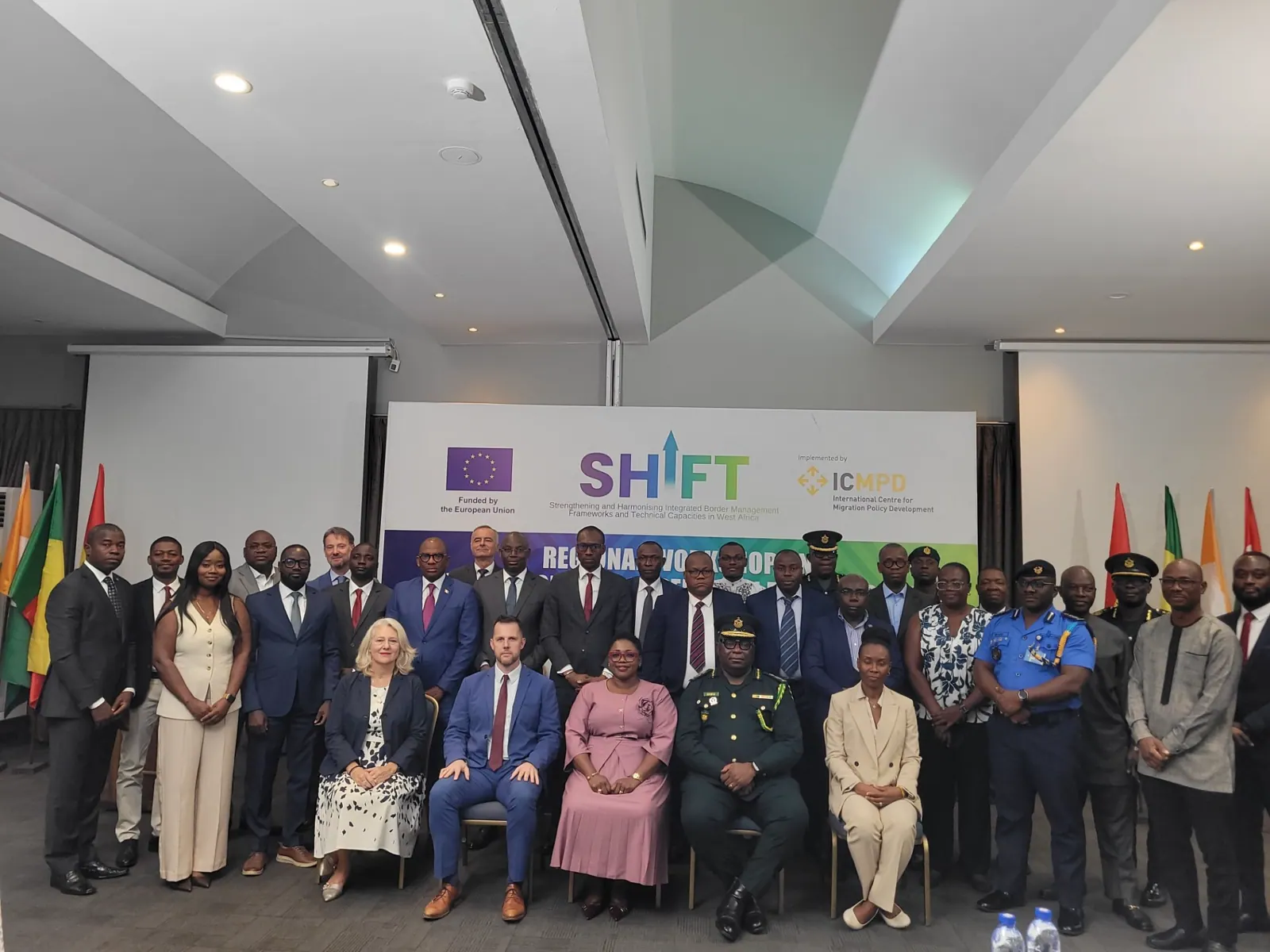
Ghana and its West African neighbours have come together to discuss ways to improve cooperation and information exchange among border and security agencies. The regional workshop on Cross-Border Cooperation Frameworks, held in Accra, brings together officials from Ghana, Benin, Côte d’Ivoire, and Togo. The meeting aims to enhance the sharing of intelligence and operational information to tackle transnational organised crime.
The two-day workshop is being held under the European Union-funded Strengthening and Harmonising Integrated Border Management Frameworks and Technical Capacities in West Africa, SHIFT Project. Participants include immigration, customs, border management, and security institutions from the four countries, as well as representatives from the European Union, ECOWAS Commission, INTERPOL, and the GIZ. The project seeks to support regional integration and economic development by improving border management.
As members of ECOWAS, the four countries benefit from the free movement of persons and goods. However, officials say that the same borders face common pressures, including trafficking in persons, illicit trade, smuggling, cattle rustling, terrorism, and violent extremism. The workshop provides a platform for peer-to-peer exchange and joint problem-solving among agencies responsible for border management.
Director of the Migration Directorate at the Ministry of the Interior, Freda Agyei Asare, delivered an address on behalf of the Minister for the Interior. She called for stronger bilateral and multilateral cooperation to improve migration management and strengthen peace and security in border communities. Agyei Asare emphasised that effective border management requires not only legal frameworks but also adequate capacity, infrastructure, logistics, and community engagement.
Deputy Comptroller-General of Immigration in charge of Operations and Command Posts and Co-Chair of the SHIFT Project, Faisal Disu, highlighted the need for stronger regional coordination. He noted that while the ECOWAS free movement regime facilitates the movement of people and goods, the same porous borders are exploited by criminal networks. Disu emphasised that none of the four countries can meet these threats alone.
Participants are also discussing the West African Police Information System, WAPIS, which supports intelligence and data exchange among law enforcement agencies at national and regional levels. Deputy Ambassador of the European Union, Jonas Claes, said the EU considers the project a partnership with the countries of the Gulf of Guinea because of the shared security and development interests.
The workshop aims to ensure that major outcomes do not end up only on reports but in actionable activities. With stronger cooperation at borders, the region can address common security challenges and promote regional integration and economic development. The meeting is expected to yield practical solutions to enhance cross-border cooperation and improve border management in West Africa.
Key points
- Officials from Ghana, Benin, Côte d’Ivoire, and Togo are discussing ways to improve cooperation and information exchange at a regional workshop on Cross-Border Cooperation Frameworks in Accra.
- The workshop is being held under the European Union-funded Strengthening and Harmonising Integrated Border Management Frameworks and Technical Capacities in West Africa, SHIFT Project.
- Stronger regional coordination is necessary as criminal networks increasingly operate across national boundaries.