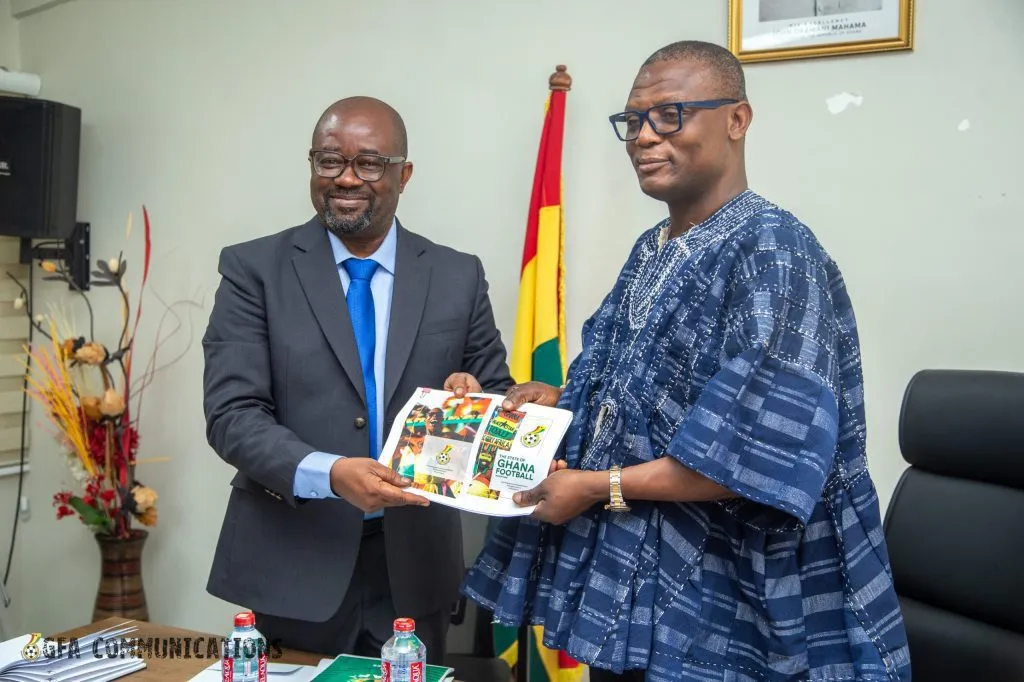
Ghana's football landscape is facing intense scrutiny following a string of disappointing performances, including the Black Stars' recent defeats to Ivory Coast and The Gambia. The country's Sports Ministry and Ghana Football Association (GFA) are at odds, and the situation has sparked renewed calls for Ghana to sign the FIFA Standard Cooperation Agreement (SCA). This document, introduced in 2007, aims to foster cooperation between governments and football associations, ensuring transparency and accountability in the use of public funds.
The SCA, approved by FIFA on October 27, 2007, and circulated to all 211 member associations on December 28, 2007, outlines the roles and responsibilities of football associations, government bodies, and other stakeholders. Its primary objective is to promote good governance and optimal development of football, in line with FIFA's statutes. Contrary to popular misconceptions, the agreement does not grant government control over football but rather provides a framework for collaboration and oversight when public funds are involved.
Ghana has been one of the few countries yet to sign the SCA, despite having had several ministers and GFA administrations over the past 19 years. Naa Odofoley Nortey, a member of FIFA's Normalisation Committee, revealed in 2020 that Ghana has not signed the agreement since its introduction. This omission has been cited as a major contributor to the current crisis, with many arguing that it has hindered the country's ability to attract investment and develop its football infrastructure.
In contrast, over 150 countries have signed the SCA, reaping benefits such as increased investment in infrastructure and development programs. South Africa, for instance, signed a cooperation agreement in 2024, enabling FIFA to establish a fully funded Regional Development Office in Johannesburg to serve Southern Africa. Similarly, countries like France, Rwanda, Morocco, and Senegal have linked government investment in infrastructure with FIFA Forward funding, Football for Schools, and women's football programs.
Sports Minister Kofi Iddie Adams has taken steps to address the issue, issuing seven directives aimed at reforming Ghana's football administration. One of the key directives is the conclusion and signing of a FIFA-standard cooperation agreement, which would formalize joint decision-making between the government and the GFA. Minister Adams has emphasized the importance of accountability, noting that the government is sponsoring the Ghana Premier League and intends to continue supporting it.
The benefits of signing the SCA are multifaceted. For Ghana, it would provide protection from potential FIFA bans, ensure accountability in the use of public funds, and facilitate joint technical control over football administration. Additionally, it could unlock development money and infrastructure projects, enabling Ghana to host West Africa's football hub. By signing the agreement, Ghana can demonstrate its commitment to transparency and good governance in football.
As the Somalia double-header approaches, stakeholders are urging Minister Adams and GFA President Kurt Okraku to expedite the signing of the SCA. The agreement is seen as a crucial step towards rebuilding Ghana football, and its implementation could mark a new era of cooperation and development in the country's football landscape. With the current crisis showing no signs of abating, the need for swift action has become increasingly pressing.
Key points
- Ghana's 19-year failure to sign the FIFA Standard Cooperation Agreement has contributed to the country's football crisis.
- Signing the SCA could provide Ghana with protection from FIFA bans and ensure accountability in the use of public funds.
- The agreement could unlock development money and infrastructure projects, enabling Ghana to host West Africa's football hub.