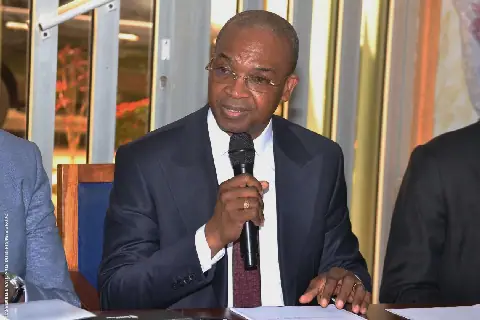
Former Vice-President and New Patriotic Party flagbearer Dr Mahamudu Bawumia has urged the government to adopt policies to protect Ghanaian rice farmers from competition with cheaper imported rice. He made the call during an interaction with farmers at Asutuare on November 13, 2026. Dr Bawumia argued that falling import costs, partly due to the cedi's appreciation, were undermining local producers with high production costs.
Dr Bawumia proposed that the government increase procurement of locally produced rice for schools, prisons, and public institutions. He also suggested stronger support for the National Food Buffer Stock Company to create reliable markets for farmers. Additionally, he advocated for the completion of the Pwalugu Irrigation Project and the restoration of fertiliser subsidies to reduce production costs. These measures aim to help farmers who have complained about unsold harvested rice, exposing them to financial losses and loan defaults.
The concerns raised by Dr Bawumia highlight a longstanding weakness in Ghana's agricultural policy, specifically the failure to connect local production with a reliable and profitable market. It is unacceptable that farmers who invest resources, time, and labour in cultivating rice end up with unsold produce while the country imports the same commodity. This situation has significant financial implications for farmers who depend on loans to finance their operations.
Ghana's dependence on imported rice has considerable economic consequences. According to the Ministry of Food and Agriculture, domestic production met approximately 56% of national demand in 2025, leaving 44% to imports. The country spends an estimated $320 million to $500 million annually on rice imports. This money could support local farmers, processors, transport operators, and traders if the domestic value chain were strengthened.
To address these challenges, the government must demonstrate a firm commitment to supporting local producers. One immediate intervention should be to increase the procurement of locally produced rice for public institutions. The National Food Buffer Stock Company must also be adequately resourced to purchase rice from farmers at competitive prices. Such purchases must be timely, transparent, and predictable to ensure farmers receive fair value for their produce.
Japan offers an instructive example of how governments can treat rice production as a strategic national interest. Its agricultural policy employs significant border protection and domestic support for rice farmers. While Ghana need not replicate Japan's approach, it must recognise that food security requires deliberate investment and policies that make local production commercially viable. However, protecting local farmers should not mean imposing indiscriminate restrictions on imports or creating artificial shortages that punish consumers.
The Ministry of Food and Agriculture has set a target of achieving rice self-sufficiency by 2028 under its rice development interventions. To achieve this goal, the government must match its ambition with measurable action and sustained investment. Supporting rice farmers is not merely an agricultural intervention; it is an investment in jobs, livelihoods, economic resilience, and national food security. The government must act decisively to ensure that Ghanaian farmers can produce, sell, and earn from their labour.
Key points
- Dr Bawumia calls for government support to protect Ghanaian rice farmers from cheaper imports.
- Ghana spends an estimated $320 million to $500 million annually on rice imports.
- The Ministry of Food and Agriculture aims to achieve rice self-sufficiency by 2028.
Reporting sources
- Editorial: We Support Bawumia’s Call For Deliberate Policies To Protect Rice Farmers · The Ghanaian Chronicle