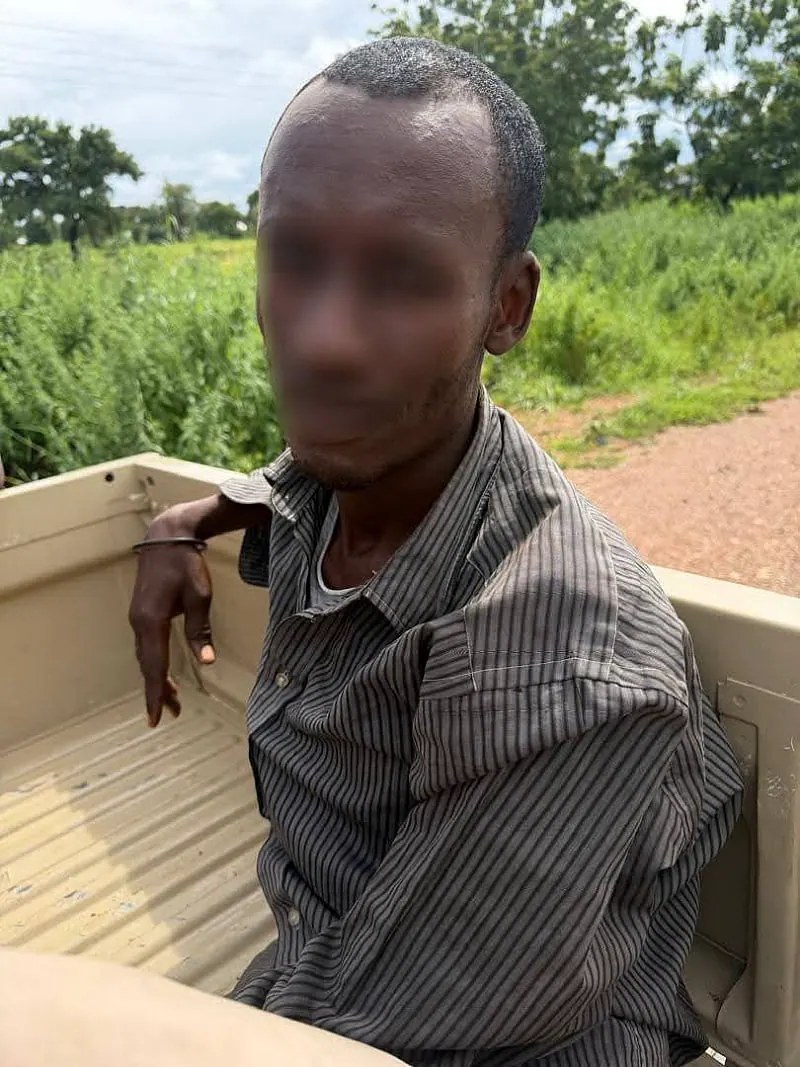
The recent arrest of three suspects in Ghana over a ransom demand of GH¢100,000 near Yendi has raised concerns about the growing threat of kidnapping for ransom in the country. According to experts, Ghana can learn from Nigeria's experience, where kidnapping has become a multi-million-dollar industry. In Nigeria, the ransom economy began with a few isolated cases, but it quickly grew into a lucrative business, with armed gangs and terrorist groups demanding large sums of money.
Nigeria's kidnapping industry has grown in stages, starting as a tactic against oil workers and foreigners in the Niger Delta. The mass abductions by Boko Haram, including the Chibok schoolgirls in 2014, showed the potential for large-scale kidnappings to bring publicity and leverage. In the northwest, armed gangs turned kidnapping into a steady income, targeting highways, farms, and schools. According to SBM Intelligence, between July 2025 and June 2026, there were 7,825 kidnapping incidents, resulting in 1,713 cases and at least 1,142 deaths.
The ransom payments in Nigeria are concentrated in fewer hands, with one faction of Boko Haram collecting 90% of all ransom paid from just eight incidents. The largest single ransom recorded was about 5 billion naira, or roughly $3.7 million, for the Ngoshe captives. The dollar value of ransoms is also rising fast, with the total ransom paid increasing from about $1.66 million to $5.7 million. This growth has been driven by the strengthening of the naira, which has led to an increase in ransom demands.
The conditions that have contributed to Nigeria's kidnapping crisis are also present in Ghana, including porous northern borders, unresolved local conflicts, youth unemployment, and easy access to illegal firearms. The use of mobile money has also made it easier for kidnappers to collect ransom quickly and anonymously. According to experts, Ghana must act quickly to prevent kidnapping from becoming a lucrative business, as seen in Nigeria.
To prevent the growth of kidnapping in Ghana, experts recommend that the government treats every kidnapping case as a security signal, not a local crime. This includes strengthening intelligence-led policing and rapid-response units in vulnerable regions, tracking ransom flows through mobile money and informal channels, and building community early-warning systems. The government must also support victims and their families, encouraging them to report incidents rather than quietly paying ransom.
The use of mobile money has made it easier for kidnappers to collect ransom, but it also provides an opportunity for the government to track and disrupt these transactions. By working with banks and the telecoms regulator, the government can identify and freeze suspicious transactions, making it harder for kidnappers to collect ransom. Additionally, the government must tighten control of illegal arms and cross-border movement to prevent the spread of kidnapping.
Ghana still has time to act, but the window for action is narrow. According to experts, every ransom paid gives birth to another kidnapping incident, and the longer the government waits, the more difficult it will be to prevent the growth of kidnapping. By learning from Nigeria's experience and taking proactive steps, Ghana can prevent kidnapping from becoming a lucrative business and protect its citizens from this growing threat.
Key points
- Ghana must act quickly to prevent kidnapping from becoming a lucrative business.
- The conditions that have contributed to Nigeria's kidnapping crisis are also present in Ghana.
- The government must treat every kidnapping case as a security signal, not a local crime.