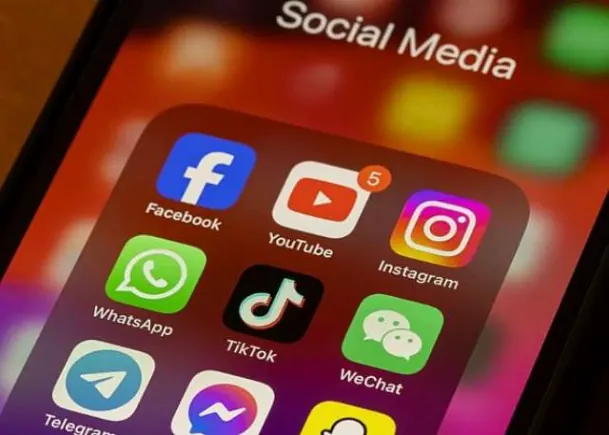
The call for a national framework to regulate social media access for children in Ghana has been made, citing the need to protect them from online harm. The digital environment has changed, and Ghana's response must change with it. The framework should focus on regulating children's independent access to social media, rather than prohibiting them from using the internet. This is not a call to disconnect Ghanaian children from the internet, but to protect them from cyberbullying, grooming, and other forms of digital abuse.
Ghana already has laws in place to protect children online, including the Children's Act, 1998 (Act 560), and the Cybersecurity Act, 2020 (Act 1038). However, these laws may not adequately address the specific problem of children independently participating in social-media environments at increasingly young ages. The policy gap Ghana should now examine is whether these laws are sufficient to protect children online. The world is moving, and Ghana must pay attention to the changing digital landscape and its impact on children.
Several countries have taken steps to regulate social media access for children, including Australia, Greece, Indonesia, Malaysia, and Türkiye. Australia has required age-restricted social-media platforms to take reasonable steps to prevent Australians under 16 from creating or maintaining accounts. Greece has introduced restrictions for children under 15, while Indonesia has restricted under-16 access to designated high-risk platforms. These countries' approaches demonstrate that child protection legislation must be carefully designed to respect fundamental rights and withstand legal scrutiny.
The European Commission has also announced a major new initiative aimed at protecting children from online harms. The proposed approach would prevent social-media platforms from accessing children under 13, establish 15 as the proposed minimum age for independently opening an account, and provide more restricted and supervised arrangements for younger teenagers. The European Commission formally adopted the proposed EU KIDS Act, which would place greater responsibility on technology companies to demonstrate that services used by children are safe by design.
In Africa, Gabon has emerged as an important example, establishing a digital age of majority of 16 and introducing requirements for age verification on social-media platforms. The framework provides for restrictions on accounts held by younger users and gives platforms a period to implement the requirements. Ghana can learn from Gabon's approach and other international examples to develop its own framework.
The proposed framework in Ghana should focus on independent social accounts, protect access to education, and target companies, not children. It should also establish effective, privacy-preserving age assurance mechanisms that safeguard children's identity and personal data against unauthorized tracking or surveillance. The framework must be intelligently designed to address the specific needs of Ghanaian children.
The call for a national framework to regulate social media access for children in Ghana has been made to the Parliament of Ghana, the Government, the Ministry of Communication, Digital Technology and Innovations, the Cyber Security Authority, and relevant regulatory institutions. The framework should seriously consider 16 years as the minimum age for independently creating and maintaining personal accounts on designated social-media platforms.
Key points
- The proposed framework should focus on regulating independent social media accounts, rather than prohibiting children from using the internet.
- The framework should establish effective, privacy-preserving age assurance mechanisms to safeguard children's identity and personal data.
- The proposed minimum age for independently creating and maintaining personal accounts on designated social-media platforms is 16 years.