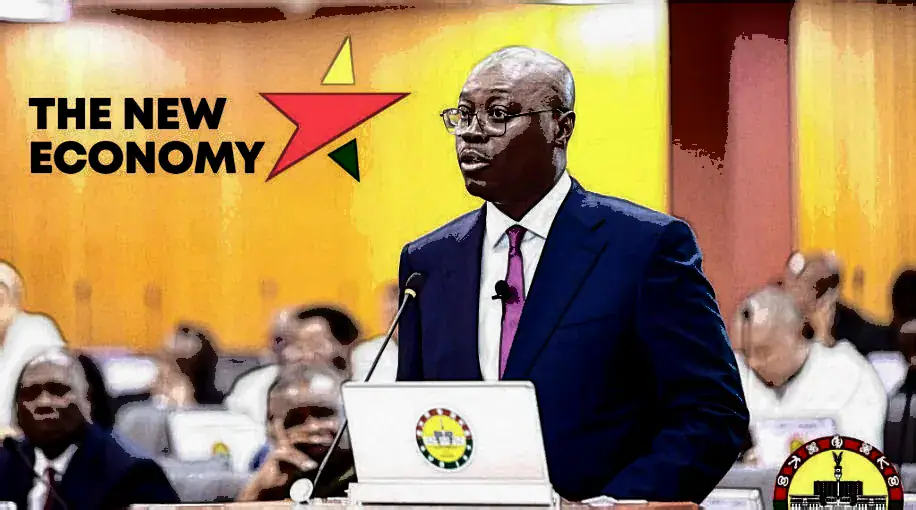
The Ghanaian government has introduced a new economic policy, dubbed 'The New Economy', aimed at transforming the country's economy from stabilization to sustainable jobs, higher productivity, and broad-based prosperity. The policy was first mentioned in May 2026 by Finance Minister, Dr Cassiel Ato Forson, during a brief to Parliament on the ministry's engagement with the International Monetary Fund (IMF). The policy is set to be unveiled in the 2027 Budget Statement and Economic Policy.
According to Minister Ato Forson, 'The New Economy' is a four-year programme, beginning in 2027, designed to confront weaknesses and transform the structure of Ghana's economy. The programme aims to expand production, process more resources at home, and turn the nation's wealth into decent jobs and higher incomes for lasting prosperity. The government will spend US$10 billion over four years, from 2027 to 2030, to create a modern Ghanaian economy for jobs and prosperity.
The government plans to fund the programme through two fiscal measures. Firstly, Ghana's primary surplus target will be reduced by 1 percentage point of GDP over the period, creating room for investment in productive infrastructure, industries, and jobs. Secondly, tax reforms already approved by Parliament and compliance measures are expected to generate 0.5 per cent of GDP. In 2027, the government will invest 1.5 per cent of GDP, equivalent to GH¢30 billion, in the New Economy.
The investment will finance the foundations for economic transformation needed to expand businesses, increase exports, and create jobs for the Ghanaian people. The government aims to create a conducive and stable financial environment for farmers and factories to access affordable financing. This will be achieved through lower interest rates, which will help businesses afford financing for their operations.
The government has outlined its economic targets for 2027 and 2030. An annual Investment Grade Readiness Report will be published on reserves, debt affordability, monetary credibility, financial sector strength, institutional quality, and economic diversification to encourage businesses. The report aims to provide a clear picture of Ghana's economic readiness for investment.
The New Economy policy is expected to have a positive impact on Ghana's economy, creating jobs, generating wealth, and growing the economy on the strength of what Ghana produces. The policy is a significant step towards transforming Ghana's economy and achieving sustainable growth and prosperity. The government is committed to implementing the policy and achieving its objectives.
The implementation of the New Economy policy will be closely monitored, and the government will provide regular updates on its progress. The policy's success will depend on effective implementation, and the government will need to work closely with stakeholders, including businesses, farmers, and civil society organizations, to ensure its success.
Key points
- The New Economy policy aims to transform Ghana's economy through sustainable jobs, higher productivity, and broad-based prosperity.
- The government will spend US$10 billion over four years to implement the policy.
- The policy is expected to create a conducive and stable financial environment for businesses to access affordable financing.
Reporting sources
- The New Economy: All you need to know about the US$10 billion economic policy · FactSpace West Africa