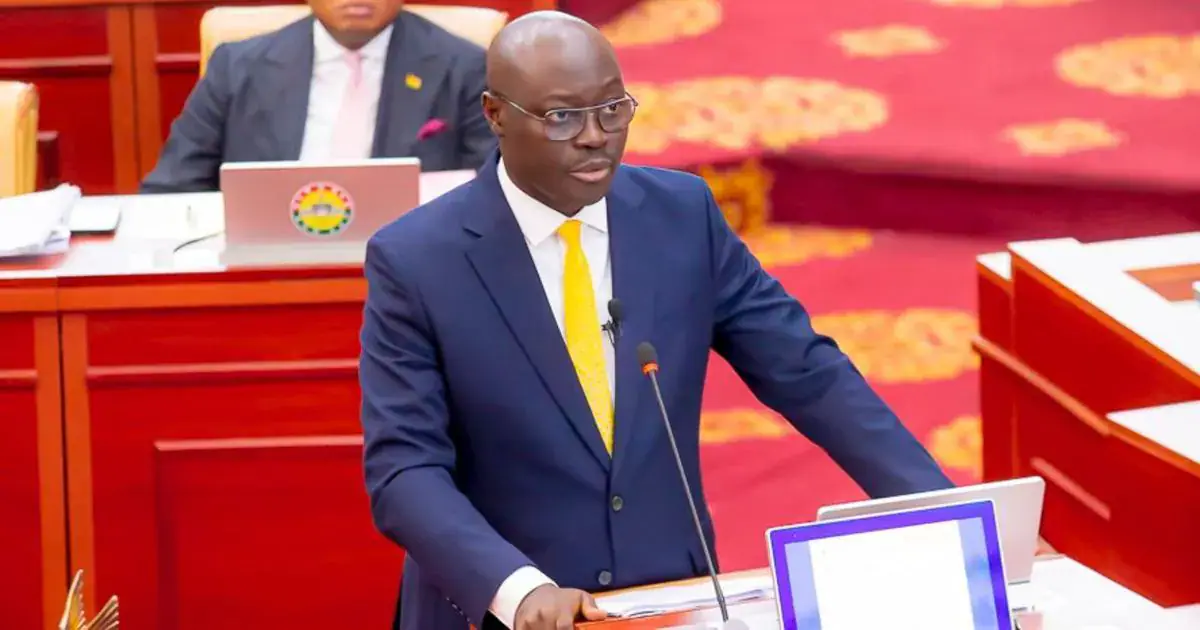
Ghana's Finance Minister, Cassiel Ato Forson, has announced that the government will commit $10 billion over four years from 2027 to a locally financed "New Economy" programme. The initiative aims to raise production, exports, and employment, with a focus on commercial agriculture, energy infrastructure, technology, textiles and garments, and value addition to critical minerals. This plan is part of the 2027 budget presented to Parliament.
The budget forecasts a GDP growth of 5.2% next year, up from 4.8% in 2026, and a cash-based fiscal deficit of 3.6% of GDP, down from 4% this year. The government also intends to keep inflation within a band of 8%, plus or minus 2 percentage points. This budget comes after Ghana completed a $3 billion IMF support programme, under which the economy improved significantly.
Ghana sought IMF assistance in 2022 after debt-servicing costs surged due to years of overspending, the COVID-19 pandemic, Russia's invasion of Ukraine, and high global interest rates. Inflation, which peaked at 54.1% in December 2022, eased sharply over the three-year programme, dropping to a low of 3.2% in March this year, though it has risen slightly since.
As part of the budget, the government will redeem GH¢29 billion ($2.48 billion) of Domestic Debt Exchange Programme bonds due in February 2027 ahead of schedule. The repayment will take effect immediately. Additionally, plans are in place to repay the second Eurobond restructured in 2024 and due to mature in January 2027 by December 31.
The early redemptions are expected to retire more than GH¢36 billion of debt ahead of time. Ghana is still working closely with the IMF through a three-year Policy Coordination Instrument, an arrangement that involves no funding but includes regular IMF reviews and can help signal commitment to reforms and reassure investors.
The "New Economy" programme will focus on creating predictable conditions for businesses to thrive, safeguarding stability, and delivering strategic infrastructure. The government aims to develop bankable projects and support key sectors such as energy, technology, and textiles.
The budget has received criticism from the Minority, who have labelled it a "scam budget" and a "paper economy". Despite this, the government remains committed to implementing the programme, which is expected to drive economic growth and development in Ghana.
Key points
- The "New Economy" programme will focus on commercial agriculture, energy infrastructure, technology, textiles and garments, and value addition to critical minerals.
- Ghana's economy improved significantly under a $3 billion IMF support programme completed earlier this year.
- The government aims to keep inflation within a band of 8%, plus or minus 2 percentage points.
Reporting sources
- Ghana to Pump $10 Billion into Homegrown “New Economy” Plan from 2027 · Daily Searchlight