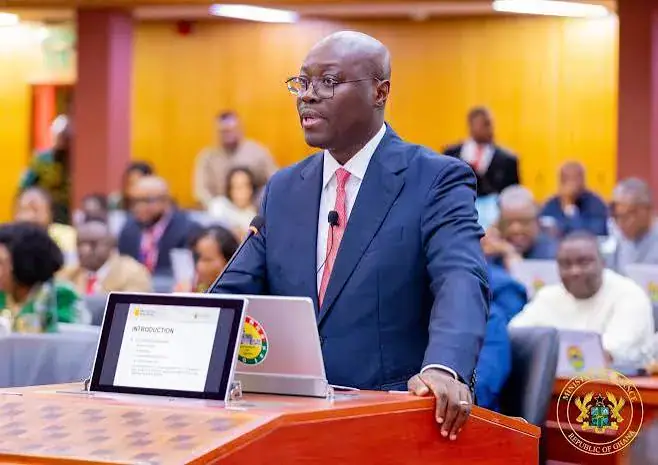
Ghana's Finance Minister Dr Cassiel Ato Forson has unveiled a comprehensive $10 billion economic transformation programme aimed at driving growth, increasing domestic production, and creating employment opportunities. The initiative, dubbed The New Economy: New Ghana, Jobs and Prosperity, will be implemented between 2027 and 2030. This multi-year programme targets key sectors of the economy, focusing on addressing structural weaknesses that have hindered Ghana's economic potential. The programme's overarching goal is to reduce the country's dependence on raw material exports and insufficient employment opportunities.
The programme is built on eight strategic pillars designed to operate as an interconnected framework. The private sector is expected to play a pivotal role in driving investment, production, and job creation. One of the primary objectives is to increase local manufacturing, strengthen agricultural production, and improve energy infrastructure. This will enable Ghana to retain more value from its natural resources. By 2030, the government aims to achieve economic growth of about 8 per cent and reduce unemployment to below 8 per cent.
The first pillar of the programme focuses on maintaining macroeconomic stability while improving access to affordable long-term financing for businesses, farmers, and manufacturers. The government has set ambitious targets, including single-digit inflation, public debt of approximately 45 per cent of GDP, and a primary surplus of at least 0.5 per cent of GDP. To support businesses, the government plans to reduce the cost of capital to single digits through stronger bank lending and expanded financing from institutions such as Development Bank Ghana and Ghana EXIM Bank.
A significant allocation of $3 billion has been assigned to the second pillar, which seeks to transform agriculture into a commercially driven industry. This initiative will concentrate on eight value chains: rice, sugar, poultry, maize and soya feed, aquaculture, oil palm, vegetables, and cocoa processing. The programme will establish production hubs in key regions, bringing an additional 100,000 hectares under cultivation. This intervention is projected to create approximately 125,000 jobs, while the government intends to end commercial rice imports by 2030.
The government intends to invest GH¢30 billion in 2027, representing 1.5 per cent of GDP. This investment will be crucial in driving the programme's objectives, particularly in the areas of infrastructure development and job creation. The programme's success will depend on the effective implementation of its various pillars and the active participation of the private sector.
The programme's implementation will be closely monitored, with regular assessments to ensure that its objectives are being met. The government has expressed confidence that the programme will drive economic growth, increase domestic production, and create employment opportunities. If successful, the programme could have a transformative impact on Ghana's economy.
The programme's impact will be evaluated based on its ability to achieve its set targets, including economic growth, unemployment rates, and job creation. The government's commitment to transparency and accountability will be crucial in ensuring that the programme's objectives are met and that its benefits are equitably distributed.
Key points
- The programme aims to achieve economic growth of about 8 per cent and reduce unemployment to below 8 per cent by 2030.
- The government has assigned $3 billion to transform agriculture into a commercially driven industry.
- The programme will be implemented through eight strategic pillars, with the private sector playing a leading role in investment, production, and job creation.