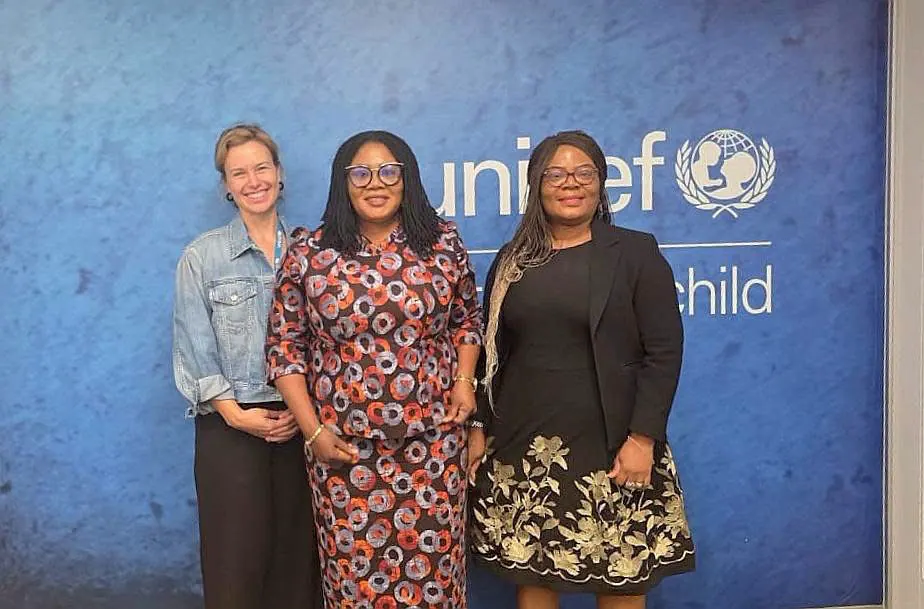
Ghana and the United Nations Children's Fund (UNICEF) have reaffirmed their commitment to strengthening collaboration to protect children and empower adolescent girls across the country. The Minister for Gender, Children and Social Protection, Dr Agnes Naa Momo Lartey, held a bilateral engagement with senior UNICEF officials in New York on the sidelines of the 81st United Nations General Assembly.
The meeting focused on strengthening interventions to address key challenges affecting children and adolescents, including child marriage, adolescent pregnancy, birth registration and the protection of vulnerable girls. Discussions also explored ways to strengthen birth registration and link it more closely to child protection interventions.
The two sides considered how an effective birth registration system could help identify vulnerable children, improve access to protection services and contribute to efforts to prevent child marriage. A key area of discussion was the Livelihood Empowerment and Productive Inclusion Programme (LEPIP), a joint Government of Ghana-UNICEF initiative targeting out-of-school, vulnerable and at-risk adolescent girls and young mothers between the ages of 16 and 21.
The LEPIP programme combines social protection, financial inclusion, life and livelihood skills, access to essential services and livelihood support to help beneficiaries transition from skills development to sustainable income generation. Dr Lartey and the UNICEF team further discussed ways to strengthen Ghana's social protection systems, particularly mechanisms for identifying and supporting vulnerable households, including those with pregnant women.
Dr Lartey stressed the importance of strengthening financing for social protection to ensure that interventions are better targeted and reach children, adolescent girls and families facing multiple vulnerabilities. She reaffirmed the Ministry's commitment to working closely with UNICEF, government institutions and other stakeholders to strengthen child protection systems and implement practical interventions.
The UNICEF delegation congratulated Ghana on its efforts to address child marriage and other vulnerabilities affecting children and adolescent girls. The team also expressed its readiness to continue working with Ghanaian stakeholders to strengthen systems and interventions that promote the rights, protection and wellbeing of children.
The collaboration between Ghana and UNICEF aims to address the complex challenges facing children and adolescent girls in the country. Key areas of focus include child protection, birth registration, and social protection.
Key points
- Strengthening birth registration and linking it to child protection interventions.
- Expanding the Livelihood Empowerment and Productive Inclusion Programme (LEPIP) to support vulnerable adolescent girls and young mothers.
- Improving financing for social protection to target vulnerable children, adolescent girls, and families.