Ghana's roads have become increasingly deadly, with 2,949 people killed in road crashes in 2025, up from 2,494 the previous year. Serious injuries also rose to 16,714. Many believe that bad motorist behavior is a major contributor to these statistics, and that the police are either too stretched or too corrupt to effectively enforce deterrence. In response, the government has announced the deployment of technology to improve road safety. The new system, known as Traffitech-GH, will use cameras and handheld devices to catch vehicles speeding, jumping red lights, and committing other offenses.
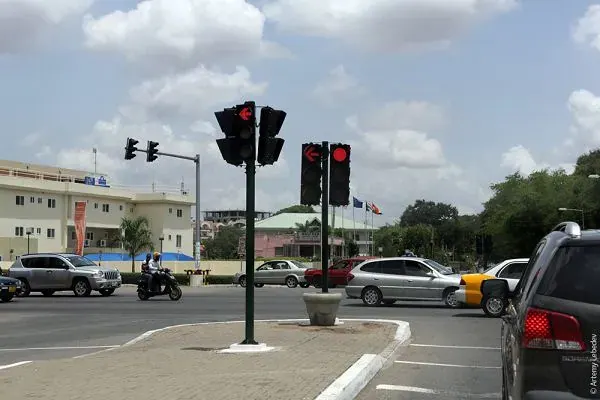
The Traffitech-GH system will send an SMS to the registered owner of a vehicle with a fine and 14 days to pay. The system will be implemented on November 1, 2026, after a one-month postponement to allow for better sensitization of the public. The police will use fixed cameras at 34 hazardous junctions, in-vehicle cameras, handheld laser cameras, and tripod units to record offenses. Officers will also log offenses on handheld devices, and images will be reviewed by police at regional back offices before a notice is sent by SMS.
The journey to the Traffitech-GH system began around 2008, nearly 20 years ago. Frank Osei, a gritty entrepreneur, has been instrumental in keeping the project going despite changes in government. His company, Nationwide Technologies, has been working with the government to implement the system. Osei sold tax stamps and fuel marking to the NDC government in the Mills era and pushed for a public-private partnership concession for the text-messaging spot-fine system during the NPP era.
The current PPP agreement for the Traffitech-GH system was signed on December 23, 2022, for 11 years, with a reported investment cost of GH¢77.73 million. The system will be operated by Nationwide Traffic Management & Enforcement Limited (NTMEL), a company set up by Osei in 2008. NTMEL has partnered with Sensys Gatso, a Swedish company, to provide the technology and cameras for the system. Sensys Gatso has been open about the commercial apparatus, unlike the police and ministers.
The law enabling the Traffitech-GH system was passed in December 2025, with the Road Traffic (Amendment) Act mentioning automated enforcement. Owner liability, daily surcharges, license penalties, and camera evidence are all perched in regulations passed in 2026. The contract for the system was signed three years before the state had the regulations to levy fines. The system is expected to earn revenue from hardware and fines.
The board of NTMEL is split between Ghanaian and Swedish interests, with Lewis H. Miller and Timo Gatsonides holding seats for Sensys Gatso. Edmar van der Weijden, managing director of Sensys Gatso International, is also managing director of NTMEL. A former Sensys Gatso chief executive is registered as a beneficial owner of NTMEL with the right to appoint and remove directors.
Fines from the Traffitech-GH system will start at GH¢120 for the first three offenses, then GH¢180 and GH¢240. A sixth offense within 24 months can lead to a court case and a license suspension for at least a year. Unpaid fines can block DVLA services, and officials have floated restrictions linked to the Ghana Card. The registered owner is liable "regardless of who was driving".
Key points
- The Traffitech-GH system aims to reduce road crashes and improve safety in Ghana.
- The system will use cameras and handheld devices to catch vehicles committing offenses.
- The system's implementation has been delayed to allow for better sensitization of the public.