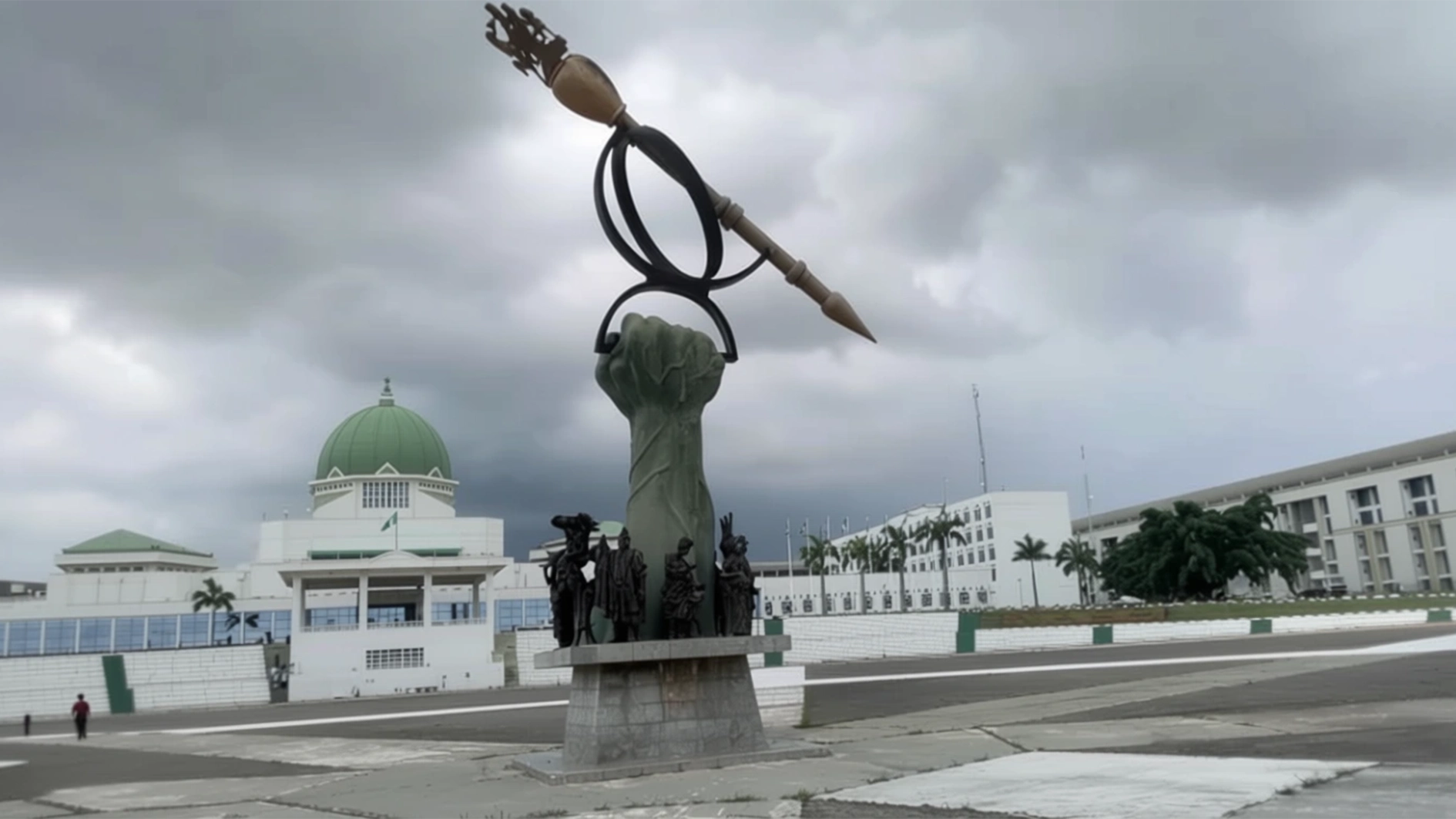
The 10th National Assembly in Nigeria has come under fire for its lack of productivity, with records showing that between June 2023 and March 2026, it spent 581 of its first 1,003 calendar days on recess, compared to 422 days of plenary activity. In 2025 alone, the Assembly sat for only 141 days, falling short of the constitutional minimum of 181 sitting days. By March 2026, lawmakers had managed just 17 sitting days for the year. This has led to accusations that the Assembly has abandoned its legislative duties.
The Presidential Foreign Intervention Promotion Council (PFIPC) has been cited as an example of the Assembly's questionable activities. Despite not being established by law, the PFIPC was allocated ₦1.303 billion in the 2026 Appropriation Act. The council, led by Adeniyi Adeyemi Matthew, who presented himself as the Director-General, operated from within the Federal Secretariat and secured a federal waiver to recruit 300 employees. However, the Budget Office and the Office of the Accountant-General claim that no part of the appropriation was released to PFIPC due to incomplete financial and payment approvals.
The PFIPC controversy has sparked an investigation, with the House of Representatives establishing an ad hoc committee to look into the matter. The Senate, however, has declined to initiate a separate inquiry, choosing to await the outcome of an ICPC investigation ordered by the President. Critics argue that the Assembly's inaction and lack of transparency have created an environment conducive to corruption and misuse of funds.
According to BudgIT's analysis of the 2025 federal budget, the National Assembly inserted 11,122 projects valued at ₦6.93 trillion, with a further ₦3.18 trillion added to capital supplementation. These insertions included 1,477 street-light projects, 538 boreholes, and 2,122 ICT-related projects. While lawmakers may legitimately identify needs overlooked by the Executive, the scale and opacity of the exercise have raised concerns about political patronage and the lack of transparency.
Nigeria's budgets have been criticized for their lack of transparency and accountability. The country's budgets have developed a "remarkable form of immortality," with funds lingering and rolling over into subsequent years. In April 2026, President Bola Tinubu signed a ₦68.32 trillion budget while extending the implementation of the 2025 capital budget to 30 June 2026. This has created a situation where Nigeria has multiple active budgets, making it difficult to track which budget funded which projects.
The National Assembly's appropriation process has been likened to a "national open market" where projects are inserted without clear justification or transparent selection criteria. This has led to concerns about the implementation and tracking of projects, with many projects seemingly abandoned or left incomplete. Critics argue that the Assembly's priorities are misplaced, with a focus on constituency development rather than national priorities.
The 10th National Assembly's inactivity and misuse of funds have significant implications for Nigeria's governance and development. With the country's budgets becoming increasingly opaque and unaccountable, there is a growing need for transparency and reform. The Assembly's priorities must shift towards its constitutional duties, with a focus on lawmaking and oversight rather than politicking and patronage.
Key points
- The 10th National Assembly in Nigeria has been accused of abandoning its legislative duties, prioritizing ghost agencies and unexplained budget lines over lawmaking.
- The Presidential Foreign Intervention Promotion Council (PFIPC) was allocated ₦1.303 billion in the 2026 Appropriation Act despite not being established by law.
- Nigeria's budgets have developed a "remarkable form of immortality," with funds lingering and rolling over into subsequent years, creating accountability challenges.