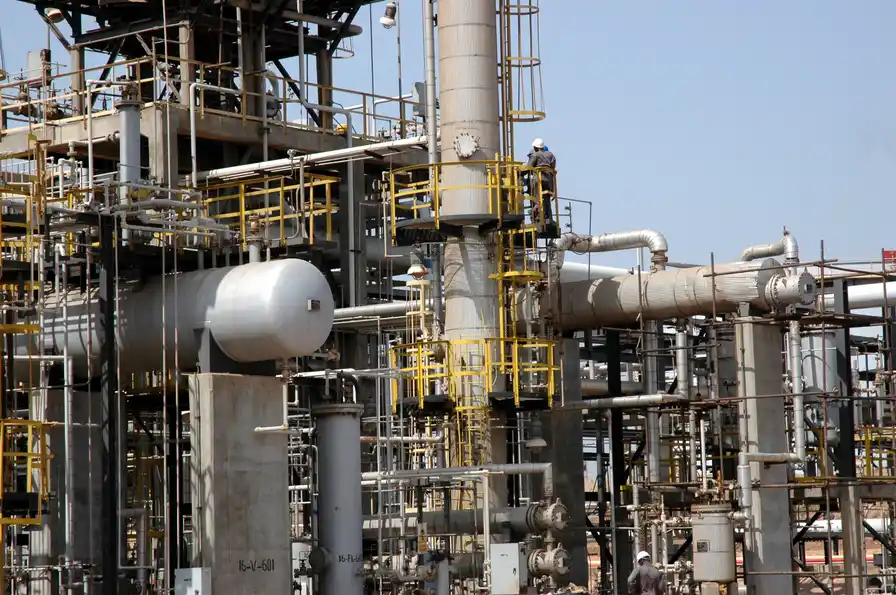
Ghana is taking a significant step towards refining more of its own crude oil at home. Tullow Oil has started supplying crude from its Ghanaian fields to local refineries, marking a new development in the country's oil sector. The first cargo was purchased earlier this year by Sentuo Oil Refinery, with the crude coming from Tullow's Jubilee and Tweneboa, Enyenra and Ntomme (TEN) fields. This move is seen as a significant achievement for Ghana's oil sector.
The development raises questions about Ghana's reliance on imported crude for its refineries despite producing crude oil for years. The answer lies partly in how Ghana's crude has traditionally been marketed and the challenges facing the country's refining infrastructure. Tullow's crude entitlement has historically been marketed through its commercial relationship with Glencore Energy UK Limited, which serves as the exclusive marketer of Tullow's crude entitlement. This made it challenging to get Ghanaian crude into a local refinery without a commercially viable arrangement.
Tullow's Chief Financial Officer, Richard Miller, described the development as a significant achievement for Ghana's oil sector. He said the latest transactions were conducted on commercial terms, with financing arrangements also put in place to support the initiative. Sentuo Oil Refinery has now become one of the significant buyers of crude produced from Ghana's oil fields. Miller added that Sentuo has become one of the prolific buyers of crude not only from Tullow Oil alone but also from other partners on Ghana's oil fields.
For years, Ghana's refining capacity was constrained by problems at the Tema Oil Refinery, which was largely out of operation for an extended period. This left the country heavily dependent on imported petroleum products and, where refineries were operating, crude supplies from outside Ghana. The previous model was described as unsustainable by Energy and Green Transition Minister, Dr John Abdulai Jinapor, who urged continued supplies of Ghanaian crude to local refineries.
One of the biggest changes is the gradual restoration of Ghana's domestic refining capacity. In June, Sentuo Oil Refinery received its first one-million-barrel shipment of Jubilee crude for domestic processing. This development is seen as a step towards adding value to Ghana's oil production and developing local industries. The move is also expected to contribute to the country's prosperity by reducing reliance on imported petroleum products.
In August, President John Dramani Mahama commissioned the refurbished Crude Distillation Unit of the Tema Oil Refinery, marking the processing of another one million barrels of locally produced Jubilee crude. President Mahama said the move was more than simply getting TOR back into operation. He emphasized that nations become prosperous by adding value to what they produce, developing local industries, and creating jobs.
The consistency of crude supplies to local refineries will be crucial to the success of this new development. Energy Minister, Dr Jinapor, acknowledged the problem of inconsistent supplies, urging continued supplies of Ghanaian crude to local refineries. The government will be monitoring the situation to ensure that this new step in the oil value chain achieves its intended objectives and contributes to Ghana's economic growth.
Key points
- Tullow Oil starts supplying crude from Ghanaian fields to local refineries
- Ghana's refining capacity constrained by problems at Tema Oil Refinery
- Consistency of crude supplies crucial to success of local refining initiative