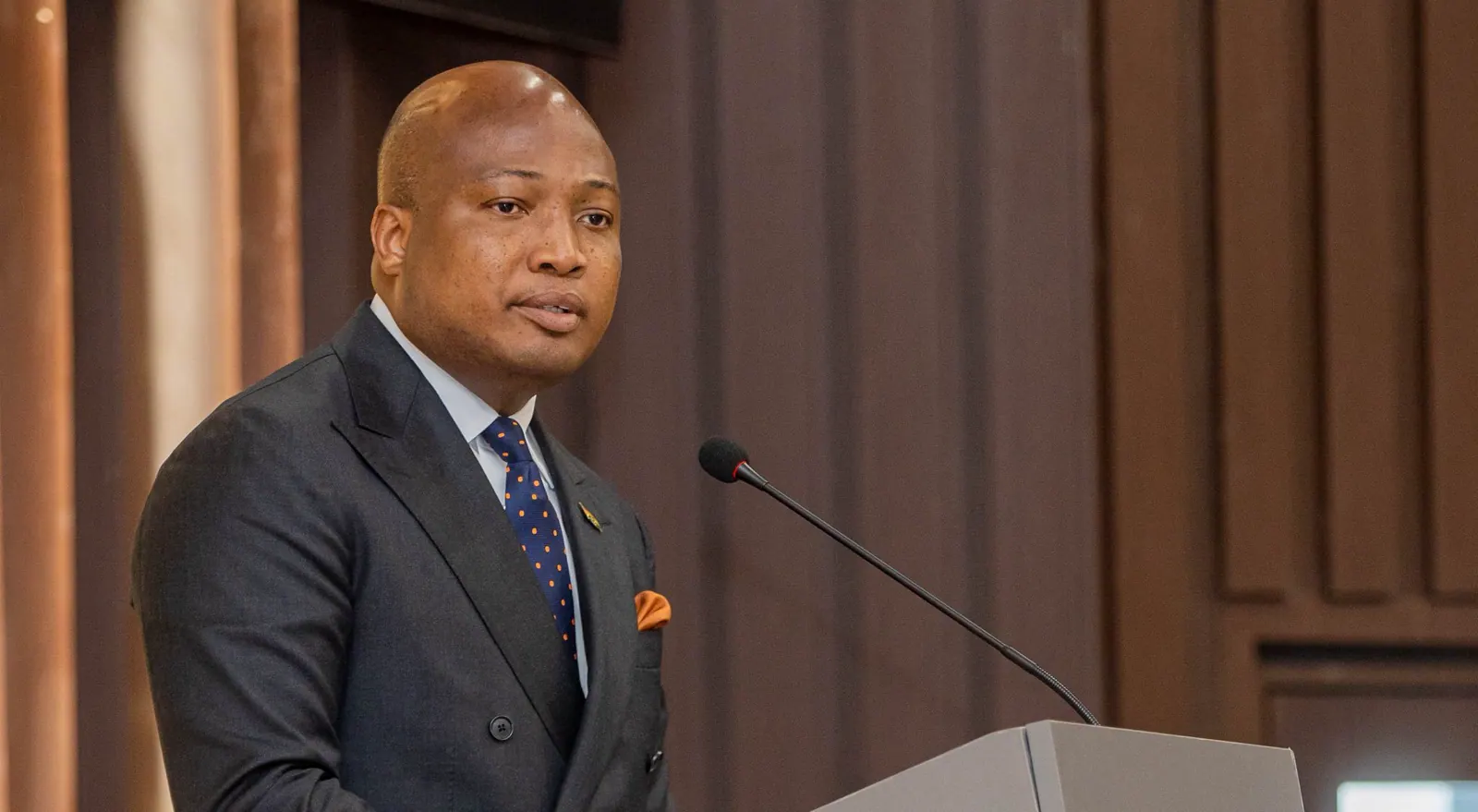
Ghana's Foreign Affairs Minister, Samuel Okudzeto Ablakwa, has stated that the country aims to capitalize on the shifting global geopolitical landscape to decrease its reliance on external assistance and enhance its control over natural resources. According to him, the current global tensions present Ghana and other African countries with an opportunity to develop home-grown solutions, negotiate more beneficial agreements, and pursue greater resource sovereignty.
Mr. Ablakwa emphasized that Africa, despite its vast natural and human resources, can no longer afford to remain dependent on external assistance. With a median age of 19 and a population of about 1.4 billion, Africa is projected to account for one in every four people globally by 2050. This demographic potential, coupled with the continent's abundant oil, gas, lithium, cobalt, cocoa, and bauxite resources, should position Africa as a major global economic force.
The Foreign Affairs Minister disclosed that Ghana recently rejected a health financing package worth less than $200 million due to concerns about the conditions attached to it. The conditions included access to Ghana's health and pathogen data, as well as information affecting the privacy of citizens. Mr. Ablakwa said the decision demonstrated the importance of building domestic resilience and strengthening national capacity without compromising the country's strategic interests in exchange for external financing.
Ghana has set a target of ending the export of raw materials by 2030 as part of efforts to industrialize the economy and retain more value from its natural resources. Mr. Ablakwa cited cocoa, gold, and bauxite among the resources the government intends to process locally before export. The Foreign Affairs Minister said the government was also seeking to renegotiate resource agreements to secure better returns for the country.
Mr. Ablakwa also highlighted Ghana's role in championing a recent United Nations resolution declaring transatlantic enslavement the greatest crime against humanity. The resolution received the support of 123 countries. He said such voting patterns could help Ghana identify countries with which it could establish closer diplomatic and economic relations. Ghana is preparing to assume the chairmanship of the African Union and intends to deepen cooperation with international blocs such as BRICS and the Caribbean Community (CARICOM).
The minister further stated that Ghana's foreign policy will increasingly be guided by the national interest rather than historical relationships. Mr. Ablakwa expressed concern that intra-African trade currently accounts for only about 14 per cent of the continent's overall trade, stressing the need for African countries to trade more among themselves. He also disclosed that Cabinet had recently considered Ghana's potential membership of BRICS and was taking a positive view of the bloc.
Key points
- Ghana aims to end raw material exports by 2030.
- The country recently rejected a $200 million health financing package due to concerns about attached conditions.
- Ghana is seeking new global partnerships based on mutual interests, fairness, and tangible benefits for citizens.