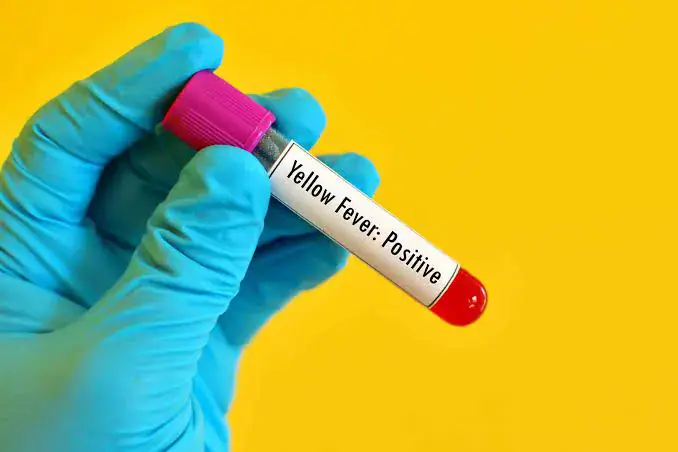
The World Health Organisation (WHO) has evaluated Ghana's Public Health Reference Laboratory as part of efforts to enable yellow fever test results conducted in the country to gain international recognition and be certified. This development is expected to significantly enhance the country's ability to respond to yellow fever outbreaks. The evaluation is a crucial step towards achieving international recognition of Ghana's yellow fever testing capabilities.
Currently, samples collected from suspected yellow fever cases in Ghana are tested at the Noguchi Memorial Institute for Medical Research or the Public Health Reference Laboratory. The samples are then sent to the Institut Pasteur de Dakar in Dakar, Senegal, a Regional Reference Laboratory (RRL) for yellow fever testing recognized by the WHO, for further testing and confirmation.
The process of sending samples to Senegal often takes considerable time, as samples must be transported and results communicated back to Ghana. This delay can hinder the country's ability to respond promptly to yellow fever outbreaks. Dr. Samuel Kaba Akoriyea, Director-General of the Ghana Health Service, stated that the evaluation of the Public Health Reference Laboratory aims to address this challenge.
According to Dr. Akoriyea, once the evaluation is complete and formal approval is granted, test results generated locally will be accepted internationally. This will enable Ghana to respond more effectively to yellow fever cases, as results will be available more quickly. The country's laboratories, particularly the Public Health Reference Lab, have undergone rigorous evaluation by the WHO.
Dr. Akoriyea explained that the current process involves sending samples to Dakar for confirmation because the international body recognizes the results from Dakar. However, with the expected certification of Ghana's laboratories, test results from the country will be recognized internationally. This development will significantly enhance Ghana's capacity to manage yellow fever cases.
The evaluation of Ghana's Public Health Reference Laboratory by the WHO is a significant milestone in the country's efforts to strengthen its public health infrastructure. Once formal approval is granted, Ghana will join a select group of countries with internationally recognized yellow fever testing capabilities. This achievement will have a positive impact on the country's ability to respond to public health emergencies.
Ghana is awaiting formal written communication from the WHO to approve its yellow fever testing following the evaluation. Dr. Akoriyea expressed optimism that very soon, yellow fever tests in Ghana will be internationally recognized. This development will have far-reaching implications for the country's public health sector, enabling more effective disease surveillance and response.
Key points
- WHO evaluates Ghana's Public Health Reference Laboratory for international recognition of yellow fever tests
- Evaluation aims to enable Ghana to respond more effectively to yellow fever outbreaks
- International recognition of Ghana's yellow fever testing capabilities expected soon