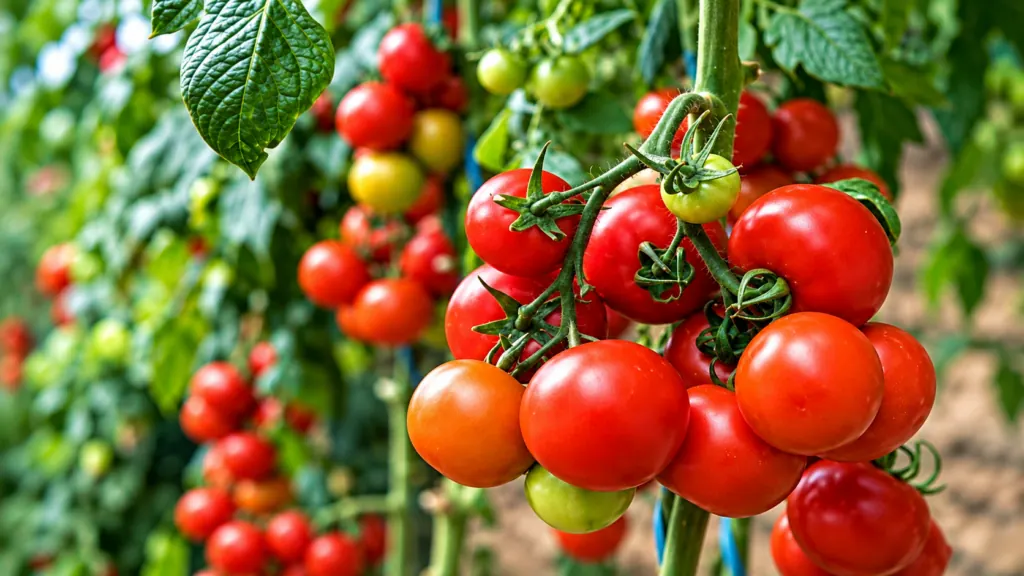
Ghana's tomato industry faces a significant challenge in achieving self-sufficiency, despite having committed farmers, suitable land, and irrigation infrastructure. Amidu Salifu Azeko, a farmer from Bolgatanga-Nyariga in the Upper East Region, has been growing tomatoes for nearly two decades. However, his production is heavily dependent on access to water from the Vea Irrigation Dam, which has been affected by ongoing rehabilitation and construction. This has resulted in uncertainty over production and highlights the need for reliable water sources.
The experiences of Azeko and other farmers, such as Desmond Akubire and Iddrisu Akolgo, demonstrate the risks associated with tomato production in Ghana. Despite having suitable land and irrigation infrastructure, farmers face challenges such as diseases, pests, and heat stress, which can reduce yields and affect production. Akubire has been cultivating tomatoes for 25 years and uses a machine to draw water from the Vea Irrigation Dam, but faces challenges with broken canals and diseases that reduce yields. Akolgo receives weather forecasts but still faces challenges with diseases.
The tomato paradox in Ghana is characterized by a situation where the country faces shortages and relies on imports, while farmers in other parts of the country struggle to find buyers for their produce. In September 2026, farmers at Anloga-Avume in the Volta Region reported tonnes of ripe tomatoes rotting on farms due to a lack of harvesting crates and buyers. This highlights the need for improved storage and cold-room facilities, as well as better connections to markets.
The Ghana Tomato Self-Sufficiency Initiative (GHATSI) has been launched to address the challenges facing the tomato industry. The initiative aims to produce 100,000 tonnes of tomatoes in its first phase and establish a year-round value chain linking farmers to irrigation, inputs, finance, insurance, processing, logistics, and guaranteed markets. However, the success of the initiative depends on addressing the weaknesses in the value chain, including post-harvest losses and limited access to markets.
Researchers have identified several factors limiting tomato production in Ghana, including the use of imported commercial hybrid seed, declining soil fertility, pests and diseases, heat stress, weak agronomic practices, and poor market incentives. Dr. Michael Kwabena Osei, Principal Research Scientist and vegetable breeder at the CSIR Crop Research Institute, notes that over 85% of tomato seed planted in Ghana is imported, which can lead to a reliance on imported food.
Smart technology, including artificial intelligence (AI) and precision agriculture, is being explored as a potential solution to address the challenges facing Ghana's tomato industry. Technologies such as precision irrigation, soil-moisture sensors, and weather forecasting can provide better information to farmers, enabling them to make informed decisions about their production. However, the impact of these technologies depends on the availability of irrigation infrastructure and other supporting systems.
The use of smart technology in Ghana's tomato industry has the potential to improve production and reduce post-harvest losses. However, it requires a comprehensive approach that addresses the weaknesses in the value chain, including limited access to markets, storage, and processing facilities. The government, farmers, and other stakeholders must work together to create an enabling environment for the adoption of smart technology and to ensure that its benefits are equitably distributed.
Key points
- The Ghana Tomato Self-Sufficiency Initiative aims to produce 100,000 tonnes of tomatoes in its first phase.
- Over 85% of tomato seed planted in Ghana is imported commercial hybrid seed.
- Smart technology, including AI and precision agriculture, is being explored as a potential solution to address the challenges facing Ghana's tomato industry.