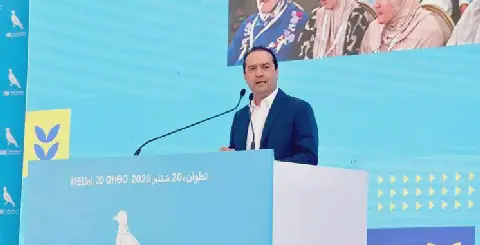
West Africa is struggling with a significant development financing gap of over $100 billion annually, according to Ghana Revenue Authority (GRA) Commissioner-General Anthony Sarpong. Speaking at the 8th High-Level Policy Dialogue and 23rd General Assembly of the West Africa Tax Administration Forum (WATAF), Sarpong emphasized that the region can no longer rely on borrowing and foreign aid to bridge this gap. He urged governments to focus on raising more revenue domestically.
The region's tax revenue currently averages about 13.5% of regional economic output, which is below the continental average of 16.1% for Africa as a whole. Sarpong noted that this gap between West Africa's performance and the rest of the continent indicates that there is significant room for governments to collect more revenue from their own economies. This can be achieved by widening the tax net, improving management of revenue from natural resources, and making greater use of domestic savings.
Sarpong emphasized that building the tax base, rather than raising tax rates, is the solution to the region's financing problem. He called on West African governments to bring more informal businesses and economic activities into the formal system. This can be achieved through the use of technology, such as electronic filing, digital payments, digital invoicing, data analytics, and artificial intelligence. These tools can help tax authorities identify taxpayers, improve compliance, and reduce revenue leakages.
Cross-border cooperation among West African tax administrations is essential to tackle issues such as illicit financial flows, transfer pricing disputes, and taxation of digital businesses. Sarpong stressed that no single country can handle these challenges on its own. The GRA Commissioner-General's remarks are part of a wider push in Ghana to drive domestic revenue, including the recent rollout of artificial intelligence tools at customs points.
The use of technology has already shown positive results in Ghana, with the GRA reporting an additional $100 million in revenue per month. Sarpong's regional remarks suggest that this approach can be applied to West Africa more broadly. The emphasis on formalizing informal economic activity and tightening compliance signals that tax authorities are likely to intensify enforcement and expand the categories of taxpayers and transactions they monitor.
For Ghanaian businesses and individuals, the call for reform means that tax authorities are likely to take a closer look at existing taxpayers and transactions. However, officials insist that existing taxpayers will not necessarily face higher rates. The GRA's drive for domestic revenue is expected to continue, with a focus on widening the tax base rather than simply raising rates.
The West Africa Tax Administration Forum (WATAF) is a body that brings together tax authorities from across the region to discuss shared challenges and coordinate approaches to raising domestic revenue. While no specific policy announcements or timelines were given at the WATAF assembly, the general call for reform is expected to lead to region-wide changes in the future.
Key points
- West Africa faces a significant development financing gap of over $100 billion annually.
- The region's tax revenue averages about 13.5% of regional economic output, below the continental average.
- Technology can play a central role in closing the gap, including electronic filing, digital payments, and data analytics.