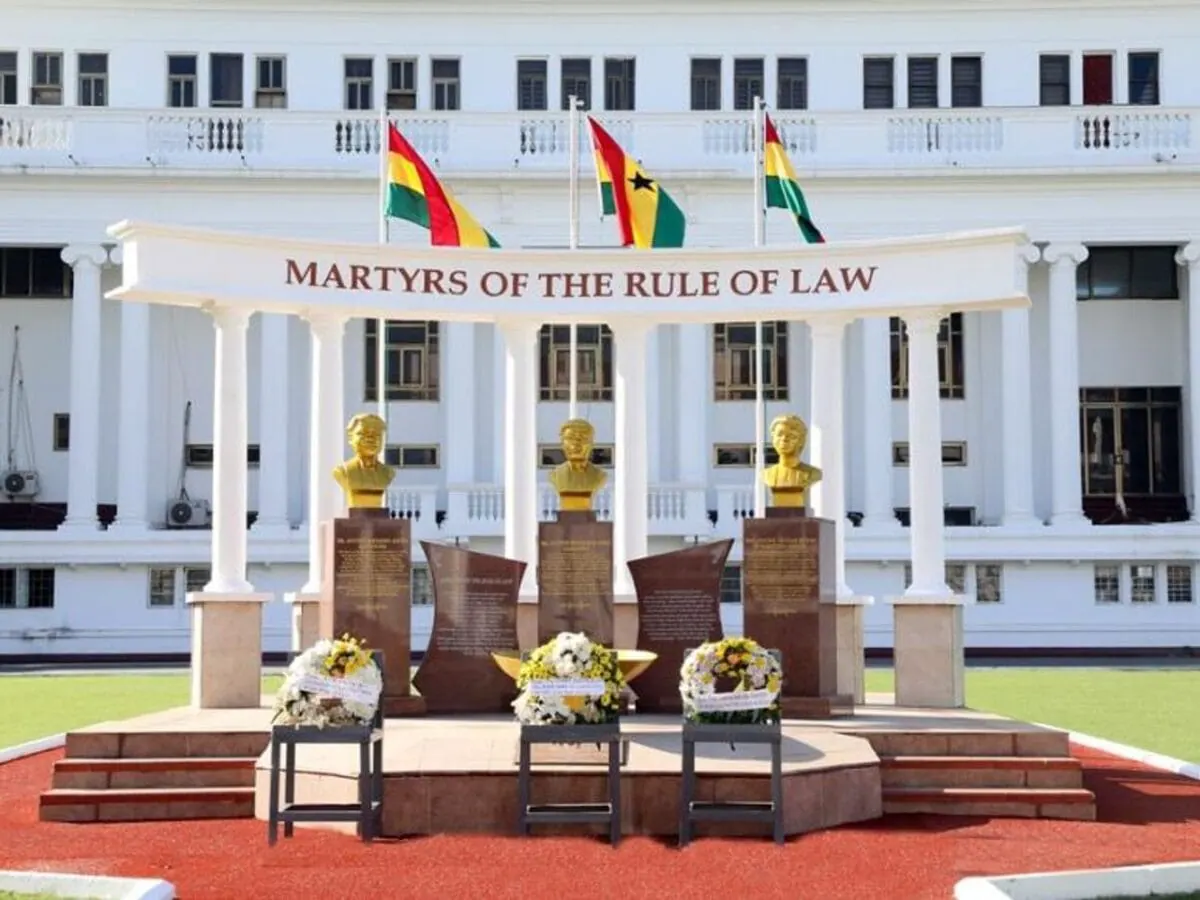
In 2001, Ghana repealed its criminal libel and seditious laws, a move seen as a step forward for freedom of expression. However, sections 207 and 208 of the Criminal Offences Act, 1960 (Act 29), have become alternative routes for arrest, detention, and prosecution for speech. These sections have raised concerns among advocates for free speech, who argue that they can be used to stifle legitimate expression.
Section 207 of the Act provides that using threatening, abusive, or insulting words or behavior in a public place or meeting with intent to provoke a breach of the peace or likely to occasion one, is a misdemeanor. Critics argue that this section goes too far by criminalizing words considered "abusive" or "insulting," which are subjective terms. Furthermore, speech may become criminal if a breach of the peace is considered likely, effectively giving the heckler a veto over the speaker.
The State has a legitimate interest in preventing genuine threats and imminent violence, but section 207's broad language may lead to abuse. Genuine threats and intentional incitement to imminent violence can be addressed through narrowly tailored laws. Mere offensiveness or insult should not justify arrest, detention, and prosecution. The use of elastic terms like "abusive" and "insulting" can lead to arbitrary enforcement.
Section 208 of the Act deals with publishing or reproducing false statements, rumors, or reports likely to cause fear and alarm to the public or disturb the public peace. This provision is objectionable on several grounds, including its broad and uncertain standards. Almost any controversial allegation about crime, corruption, security, health, or the economy could cause public anxiety, and the provision risks criminalizing error and inadequate verification.
Section 208 also places a burden on the accused to prove that reasonable verification measures were taken before publication. This sits uneasily with the constitutional presumption of innocence and the State's obligation to prove every element of a criminal offense. Furthermore, the provision invites the police to become arbiters of truth, which can be problematic in disputed claims that require careful judicial determination.
The decline of civility in public discourse is a concern, with insults, deliberate provocations, and reckless accusations being deeply concerning and deserving of condemnation. Those who manufacture such messages and those who knowingly amplify and distribute them should face social and political consequences. However, addressing these issues should not come at the expense of legitimate free speech.
In conclusion, while Ghana's repeal of criminal libel laws in 2001 was a positive step, sections 207 and 208 of the Criminal Offences Act pose concerns for free speech. The provisions' broad language and subjective terms may lead to arbitrary enforcement and stifle legitimate expression. There is a need for a review of these sections to ensure that they do not undermine Ghana's democratic gains.
Key points
- Ghana's sections 207 and 208 of the Criminal Offences Act pose concerns for free speech despite the repeal of criminal libel and seditious laws in 2001.
- The provisions' broad language and subjective terms may lead to arbitrary enforcement and stifle legitimate expression.
- A review of these sections is necessary to ensure that they do not undermine Ghana's democratic gains.