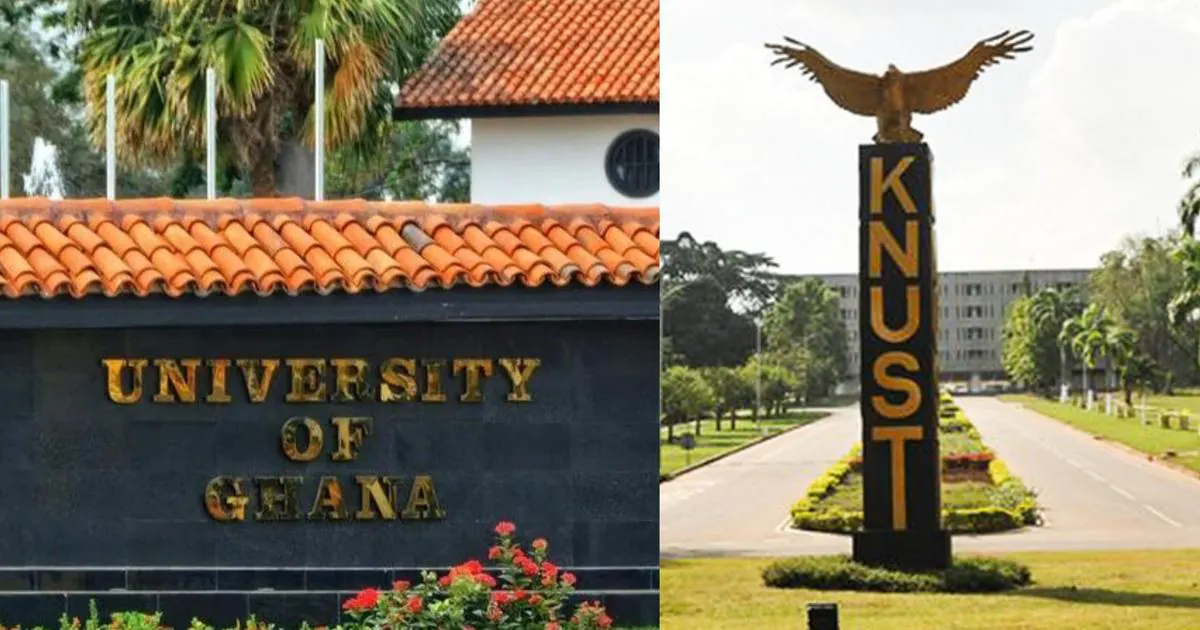
As of 2026, Ghana boasts 26 public university institutions, comprising 16 Traditional Universities and 10 Public Technical Universities. According to the Ghana Tertiary Education Commission's (GTEC) current institutional classifications, these universities are spread across 10 regions. The distribution, however, is uneven, with some regions having multiple institutions while others have none. This disparity highlights the need for a comprehensive understanding of the country's public university landscape.
The Greater Accra region leads with six public university main campuses, including the University of Ghana (UG) – Legon, University of Professional Studies, Accra (UPSA) – Legon, and Ghana Institute of Management and Public Administration (GIMPA) – Achimota, among others. In contrast, six regions currently have no public university main campus. These regions include Bono East, Ahafo, Savannah, North East, Oti, and Western North. It is essential to note that the absence of a main campus does not necessarily mean that students in these regions have no access to university programs.
The Ashanti and Central regions have three public university main campuses each. The Ashanti Region is home to Kwame Nkrumah University of Science and Technology (KNUST) – Kumasi, Akenten Appiah-Menka University of Skills Training and Entrepreneurial Development (AAMUSTED) – Kumasi, and Kumasi Technical University (KsTU) – Kumasi. Similarly, the Central Region hosts the University of Cape Coast (UCC) – Cape Coast, University of Education, Winneba (UEW) – Winneba, and Cape Coast Technical University (CCTU) – Cape Coast.
Seven regions have two public university main campuses each. These regions include Eastern, Northern, Volta, Bono, Upper East, Upper West, and Western. For instance, the Eastern Region has the University of Environment and Sustainable Development (UESD) – Somanya and Koforidua Technical University (KTU) – Koforidua. The Northern Region, on the other hand, is home to the University for Development Studies (UDS) – Tamale and Tamale Technical University (TaTU) – Tamale.
The Ghana Tertiary Education Commission's (GTEC) current list provides a comprehensive breakdown of the country's public universities. GTEC distinguishes between Traditional Universities and Public Technical Universities. The commission also warns that some learning centres and additional campuses of public universities have not been accredited. In July 2026, GTEC listed several learning centres and additional campuses, emphasizing the need for accreditation.
The regional breakdown of Ghana's public universities reveals a significant disparity in access to higher education across the country. While some regions have multiple institutions, others have none. The full 2026 regional breakdown is as follows: Greater Accra (6), Ashanti (3), Central (3), Eastern (2), Northern (2), Volta (2), Bono (2), Upper East (2), Upper West (2), and Western (2). Six regions currently have no public university main campus.
Key stakeholders, including policymakers and educators, can utilize this breakdown to inform decisions about resource allocation and infrastructure development. By understanding the current state of public universities in Ghana, stakeholders can work towards creating a more equitable and accessible higher education system. The data provided by GTEC's current list will be crucial in shaping the future of higher education in Ghana.
Key points
- Ghana has 26 public universities in 2026, with 10 regions having at least one institution.
- The Greater Accra region has the highest number of public university main campuses, with six institutions.
- Six regions currently have no public university main campus, including Bono East, Ahafo, Savannah, North East, Oti, and Western North.