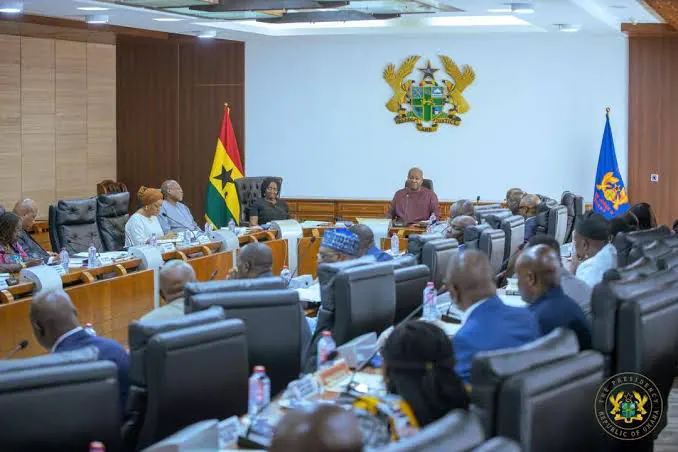
Ghana's President John Dramani Mahama has defended his country's decision to reject a proposed health compact from the United States. The compact was intended to replace funding previously provided through the United States Agency for International Development (USAID). President Mahama explained that some conditions attached to the agreement were unacceptable and raised concerns about Ghana's sovereignty. The decision was made at a Cabinet meeting, where the proposal was quickly rejected due to several provisions that raised concerns.
The proposed compact required Ghana to provide a pathogen profile and medical records to the United States, which President Mahama described as "humiliating". The agreement also required Ghana to provide a specified amount in counterpart funding and would have prevented the Food and Drugs Authority (FDA) from inspecting certain medicines and medical products supplied under the programme. These conditions led to the rapid rejection of the proposal, with President Mahama stating that it was "thrown out in record time" at the Cabinet meeting.
President Mahama made these comments at a session titled "A Conversation with President John Dramani Mahama" at the Council on Foreign Relations (CFR) in New York. The CFR is a non-profit and nonpartisan American think tank focused on US foreign policy and international relations. The event provided a platform for President Mahama to discuss Ghana's position on the proposed health compact and its implications for the country's sovereignty.
The rejection of the proposed compact was partly influenced by the abrupt withdrawal of US development assistance, which had been factored into Ghana's national budget. The withdrawal of $174 million left funding gaps in critical sectors, particularly health and education. The health sector alone faced an annual shortfall of about $74 million, affecting areas such as medical research, HIV and AIDS testing laboratories, and the supply of antiretroviral medicines.
In response to the funding gaps, the Ghanaian government developed the Accra Reset initiative, which aims to reduce external dependence by strengthening Africa's capacity to manufacture medicines and vaccines locally. The initiative seeks to improve health outcomes and make healthcare a more central component of Africa's broader development agenda. President Mahama pointed to the COVID-19 pandemic as an important lesson, noting that African countries were often at the back of the queue for vaccines due to concentrated global production capacity in Western countries.
The Accra Reset initiative is part of a broader effort to achieve greater health sovereignty in Africa. President Mahama emphasized the need for Africa to develop the capacity to produce essential medicines and vaccines to better prepare for future health emergencies. The initiative has renewed discussions about Africa's ability to take control of its own health needs and reduce reliance on external assistance.
Ghana's decision to reject the proposed health compact was not an isolated incident, as similar concerns over data governance were raised by other African countries during their negotiations with the United States. Zimbabwe and Kenya also raised related issues, with a Kenyan court temporarily suspending implementation of its agreement pending the hearing of a case brought by a consumer protection group.
Key points
- Ghana rejected a proposed US health compact due to concerns over sovereignty and data sharing.
- The rejection was partly influenced by the abrupt withdrawal of US development assistance.
- Ghana's Accra Reset initiative aims to strengthen Africa's capacity to manufacture medicines and vaccines locally.