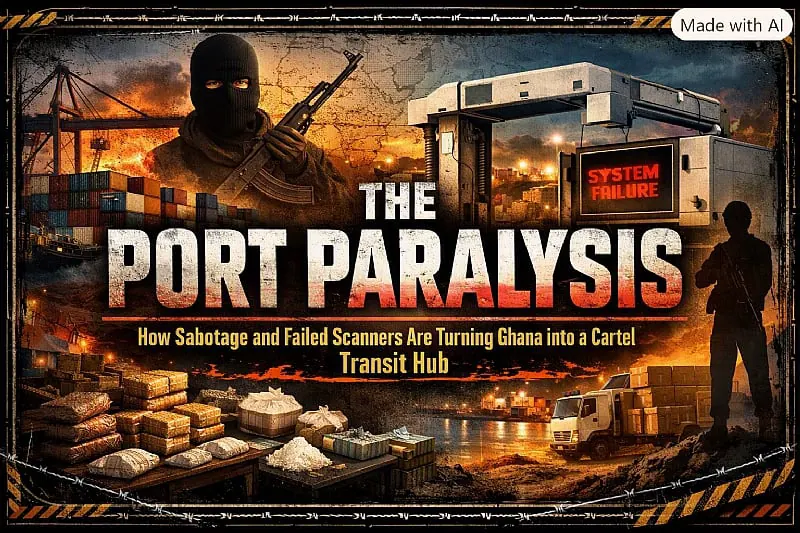
A recent seizure of 3.9 metric tonnes of cocaine valued at $261 million by French customs at the Port of Dunkirk has raised concerns about Ghana's port security. The contraband, which was deceptively declared as "plastic waste," bypassed every security layer at Ghana's ports before setting sail. This incident has dealt a devastating blow to Ghana's international reputation and highlighted the need for the country to confront its port security challenges.
An investigation into the incident has revealed a darker reality than initially thought. While the state often blames "technical downtime" or maintenance backlogs for broken scanners, the investigation suggests that corrupt officials intentionally cleared containers flagged with "abnormal images." This has led to allegations of insider sabotage, with at least ten individuals, including four high-ranking officers from the Customs Division of the Ghana Revenue Authority (GRA), remanded in connection with the incident.
The Narcotics Control Commission (NACOC) and state prosecutors have exposed the depth of the crisis, revealing that the intercepted containers were scanned in Ghana and generated electronic "abnormal images" that were intentionally ignored by officers on duty. International intelligence has linked this massive shipment directly to the network of Jos Leijdekkers, one of Europe's most notorious and wanted drug kingpins.
The incident has also highlighted the limitations of Ghana's current security measures, including the use of sniffer dogs. Despite possessing highly capable, specialized K9 units donated by international partners like Germany, these units are being rendered useless when compromised officials choose to bypass standard physical and canine inspection protocols entirely.
The crisis has grown so severe that international allies, including France and Australia, are reportedly hesitant to share real-time maritime intelligence with local agencies due to fears of systemic leaks. To address this, the government, port authorities, and civil society must implement structural reforms, including the establishment of a centralized, heavily secured Remote Scanning Review Center in Accra.
Other recommended reforms include enforcing strict liability and mandatory prosecutions for customs officers who sign off on containers flagged with "abnormal images" without a documented, verified physical bust. The introduction of rotational, unannounced counter-intelligence teams consisting of National Security, NACOC, and international monitors at port exit points is also proposed.
To prevent similar incidents in the future, the government must show absolute ruthlessness in prosecuting compromised GRA customs officials and upgrade its technologies to restore international intelligence trust. If not addressed, Ghana risks facing severe global maritime sanctions, which could have far-reaching consequences for the country's economy and sovereignty.
Key points
- The incident has exposed weaknesses in Ghana's port security, including insider sabotage and compromised customs officials.
- The government has been urged to implement structural reforms to address the crisis, including the establishment of a centralized Remote Scanning Review Center.
- International allies are hesitant to share real-time maritime intelligence with local agencies due to fears of systemic leaks.