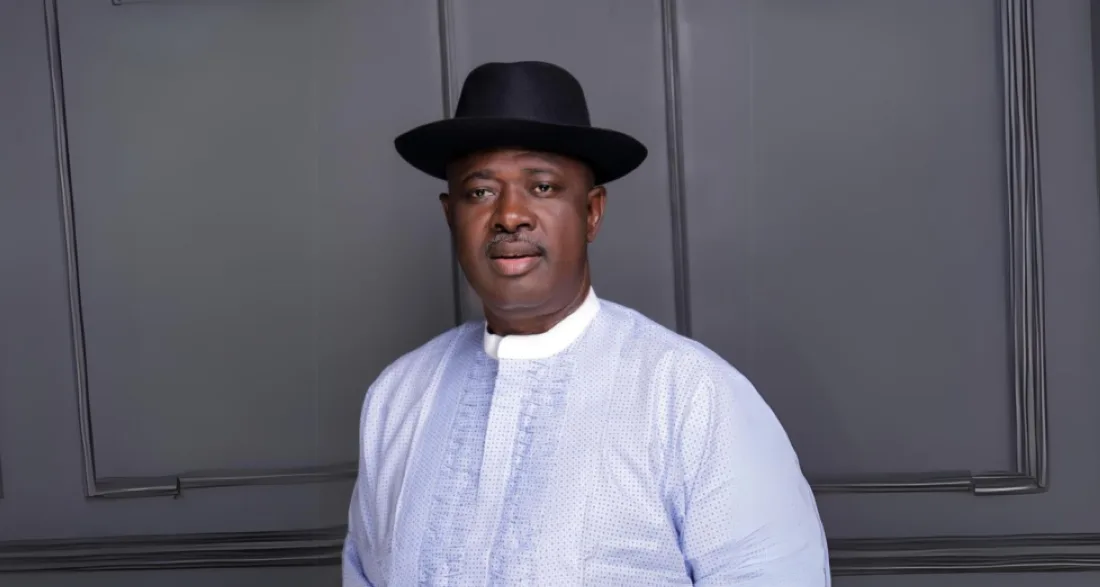
The Democratic Republic of Congo has initiated a study tour of Nigeria's local content framework to enhance indigenous participation in its oil and gas industry. A delegation led by the DRC Minister of Hydrocarbons, Simplice Stev Onanga, arrived in Nigeria to examine the policies, institutions, and strategies that have enabled Nigeria to increase local participation in the petroleum sector. This visit aims to gather insights and best practices from Nigeria's experience.
The Minister of State for Petroleum Resources (Oil), Senator Heineken Lokpobiri, welcomed the delegation in Abuja, emphasizing Nigeria's willingness to share its experiences with other African oil-producing countries. He highlighted that Nigeria has achieved 61% local content capacity since the enactment of the Nigerian Oil and Gas Industry Content Development Act 16 years ago. This growth has been driven by deliberate government policies, regulatory institutions, and increased participation of indigenous companies in oil and gas operations.
Senator Lokpobiri attributed the growth in local content capacity to the divestment of onshore assets by international oil companies, which has created opportunities for Nigerian companies like Renaissance Africa Energy Company, Seplat Energy, and Oando Energy Resources to acquire and operate petroleum assets. He emphasized that the solution to Africa's energy challenges lies within Africa and noted that Nigeria is currently producing over 1.8 million barrels of crude oil daily, with indigenous operators increasingly taking control of land and shallow-water assets.
The Nigerian Content Development Fund, financed through a 1% levy on awarded upstream oil and gas contracts, has been instrumental in developing local capacity. This industry-funded mechanism has supported the growth of indigenous companies and increased local participation in the petroleum sector. The fund is a key component of Nigeria's local content framework, which has been backed by institutional structures, regulatory collaboration, and strategic planning.
The Executive Secretary of the Nigerian Content Development and Monitoring Board (NCDMB), Felix Omatsola Ogbe, represented by Dr. Abdulmalik Halilu, expressed the board's readiness to support the DRC in developing a sustainable local content regime. He highlighted that Nigeria's local content framework is supported by a 10-year strategic roadmap targeting 70% in-country value retention and over 300,000 direct jobs by 2027.
The DRC Minister of Hydrocarbons, Simplice Stev Onanga, stated that the delegation is in Nigeria to learn from its experience and adapt relevant aspects of the framework to the DRC's petroleum industry. The study tour, which will continue until Friday, includes visits to key oil and gas facilities, such as the NCDMB headquarters, fabrication facilities at the Onne Free Zone, and the Nigeria LNG supplier session.
The study tour is expected to provide valuable insights and best practices for the DRC to develop its own local content regime. Key aspects of Nigeria's framework that the DRC may consider include the Nigerian Content Development Fund, institutional structures, regulatory collaboration, and strategic planning. The visit is a significant step towards strengthening indigenous participation in the DRC's oil and gas industry.
Key points
- The DRC delegation is in Nigeria to learn from its experience in developing a local content framework.
- Nigeria has achieved 61% local content capacity since the enactment of the Nigerian Oil and Gas Industry Content Development Act 16 years ago.
- The Nigerian Content Development Fund has been instrumental in developing local capacity and supporting the growth of indigenous companies.