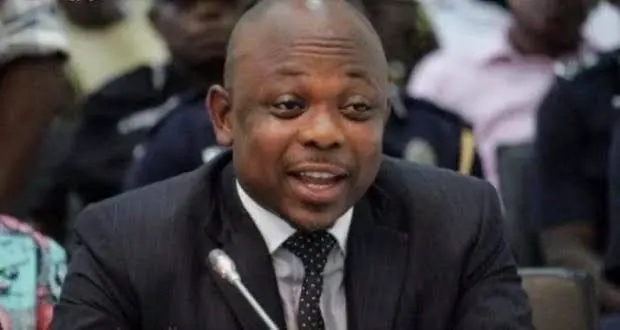
Ghana's Majority Leader, James Agalga, has rejected the Minority's call for a parliamentary probe into ongoing drug-related cases. He argued that Parliament has no mandate to conduct criminal investigations, as these cases are already before the courts and under investigation by state agencies. Agalga made these comments on TV3's Ghana Tonight on September 29.
According to Agalga, allowing Parliament to launch a parallel investigation could create conflicting outcomes and interfere with ongoing legal processes. He stated that Parliament has never conducted criminal investigations before. The motion filed by the Minority aimed to invite Parliament to commence a probe into matters already pending before the law courts.
Agalga questioned the purpose of initiating a parliamentary probe while several suspects had already been arrested, arraigned, and in some cases, remanded by the courts. Close to 20 people have been arrested and brought before the courts in connection with the cases, with investigations still ongoing. He cautioned that conducting separate investigations could result in contradictory findings.
The Minority's motion called for the establishment of an Ad Hoc Committee to investigate high-profile narcotics seizures in Ghana and abroad. One incident cited was the seizure of 3.9 metric tonnes of cocaine by French Customs at Dunkirk on September 10, 2026, valued at $261 million. However, Speaker Alban Bagbin dismissed the motion as inadmissible under the Standing Orders.
Agalga maintained that criminal investigations should remain with the appropriate state institutions while the courts determine the cases before them. He added that bringing Parliament into the investigation at this stage would be premature. The agencies of state mandated to conduct criminal investigations are already handling the matters.
The rejected motion was filed by First Deputy Minority Whip and Tolon MP Habib Iddrisu. The Minority's call for a probe aimed to investigate alleged lapses in the handling of narcotics seizures and prosecutions. However, Agalga emphasized that Parliament's role is not to conduct criminal investigations.
The issue highlights the boundaries of Parliament's powers in Ghana. While Parliament can conduct inquiries into certain matters, it does not have the mandate to conduct criminal investigations. This responsibility lies with state agencies, which are currently handling the ongoing drug-related cases.
Key points
- Parliament has no mandate to conduct criminal investigations.
- The cases are already before the courts and under investigation by state agencies.
- Conducting parallel investigations could create conflicting outcomes and interfere with ongoing legal processes.