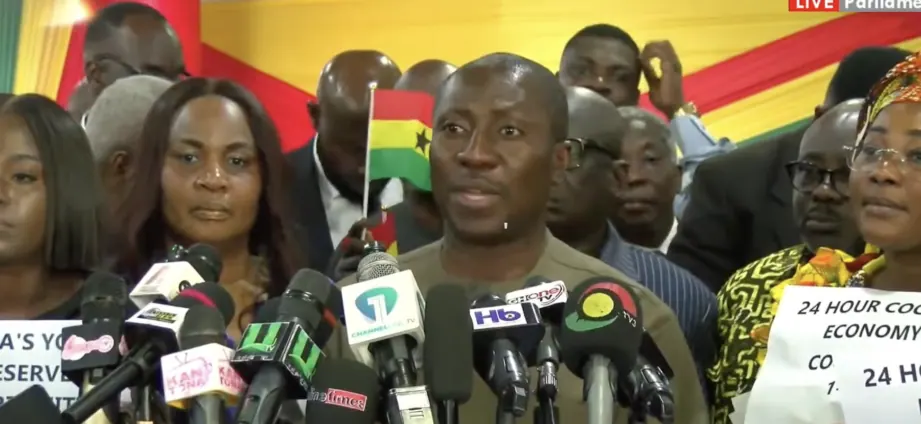
Ghana's Minority Leader, Alexander Afenyo-Markin, has contested Speaker Alban Bagbin's ruling to dismiss a motion calling for a bipartisan parliamentary inquiry into major narcotics seizures linked to Ghana. The motion, filed on September 28 by Habib Iddrisu, sought to establish an Ad Hoc Committee to investigate the circumstances surrounding these seizures. Afenyo-Markin argued that the Speaker's decision was misguided, as it could undermine Parliament's constitutional oversight responsibilities.
The Speaker had ruled the motion inadmissible on September 29, citing concerns that the proposed inquiry could overlap with ongoing judicial proceedings and potentially interfere with criminal matters currently before the courts. However, Afenyo-Markin countered that pending court cases should not prevent Parliament from examining wider institutional and systemic issues surrounding the narcotics seizures. He emphasized that the proposed inquiry aimed to scrutinize state institutions' handling of narcotics consignments, not to interfere with the courts or determine individual guilt or innocence.
The motion specifically referenced two significant narcotics seizures: 3.9 metric tonnes of cocaine at France's Port of Dunkirk on September 10, 2026, and 320 kilogrammes of methamphetamine by the Australian Border Force in June 2026. Afenyo-Markin stressed that effective parliamentary scrutiny was crucial to Ghana's democratic system, and the Minority would continue to pursue the matter. He warned that weakening Parliament's oversight function could have implications for accountability within state institutions.
Afenyo-Markin expressed concerns that a weakened Parliament would lead to reduced accountability and fewer checks on the exercise of power by state institutions. He emphasized the importance of a strong Parliament, stating that a super-majority must not be used to silence scrutiny or diminish Parliament's duty to oversight. The Minority Leader's comments highlight the ongoing debate about the role of Parliament in ensuring accountability and oversight in Ghana's governance.
Speaker Bagbin's ruling was based on Standing Orders 5, 6, and 103, Sub-Rule F, which effectively prevents the proposed parliamentary inquiry from proceeding in its current form. Despite this, the Minority has indicated its intention to continue pursuing the matter. The impasse raises questions about the balance between Parliament's oversight powers and the need to respect ongoing judicial proceedings.
The image of Ghana is at stake, according to Afenyo-Markin, who emphasized that democracy requires a strong Parliament. A strong Parliament, he argued, necessitates an effective minority, and the Minority will continue to push for the inquiry. The incident highlights the complexities of Ghana's democratic system and the challenges of balancing competing interests and responsibilities.
The outcome of this dispute will have implications for Ghana's democratic development and the role of Parliament in ensuring accountability. As the Minority continues to pursue the matter, it remains to be seen how the Speaker and the Majority will respond. The incident underscores the importance of effective parliamentary oversight in promoting good governance and accountability in Ghana.
Key points
- The Minority Leader has challenged Speaker Alban Bagbin's decision to dismiss a motion for a bipartisan parliamentary inquiry into major narcotics seizures linked to Ghana.
- The motion sought to establish an Ad Hoc Committee to investigate the circumstances surrounding significant narcotics seizures, including 3.9 metric tonnes of cocaine at France's Port of Dunkirk and 320 kilogrammes of methamphetamine by the Australian Border Force.
- The Speaker's ruling has sparked a debate about the balance between Parliament's oversight powers and the need to respect ongoing judicial proceedings.