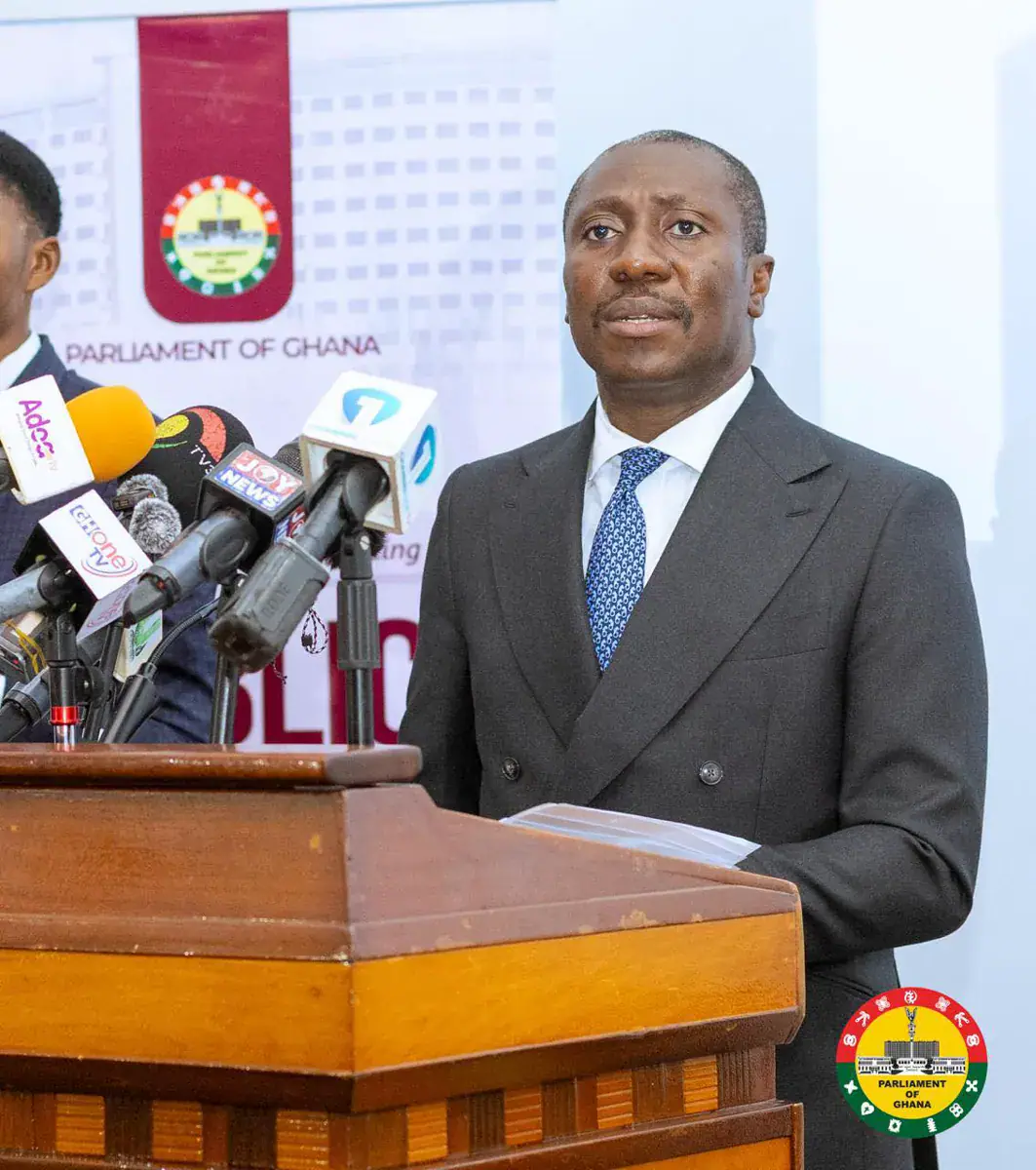
The Minority in Parliament has filed a motion to challenge Speaker Alban Bagbin's decision to block a proposed parliamentary inquiry into major cocaine seizures linked to Ghana. The motion, filed by First Deputy Minority Whip Habib Iddrisu, invokes Standing Order 127 of Parliament's Standing Orders and seeks a review of the Speaker's September 29, 2026 ruling. The Speaker had ruled that proceeding with the inquiry could prejudice ongoing criminal proceedings involving approximately 21 persons in four separate narcotics-related cases.
The Minority is challenging the decision, arguing that the existence of criminal prosecutions should not prevent Parliament from exercising its constitutional oversight responsibilities. Minority Leader Alexander Afenyo-Markin said the motion should not be construed as an attempt to undermine the authority of the Speaker. He emphasized that respect for the Speaker did not preclude Members of Parliament from questioning a ruling they believed raised concerns about the constitutional powers and responsibilities of the House.
The proposed inquiry aims to examine the institutional and regulatory circumstances surrounding the movement of illicit drugs through Ghana. The Minority Leader cited several incidents, including the seizure of approximately 3.9 tonnes of cocaine at the Port of Dunkirk in France on September 7, 2026. The consignment, reportedly concealed in a shipment of plastic waste originating from Ghana, was estimated to be worth about €225 million. Other reported cocaine interceptions in Amsterdam, Antwerp, and Sydney, as well as suspected seizures within Ghana, were also mentioned.
The incidents raised broader questions about the effectiveness of Ghana's border security and the capacity of state institutions to detect and prevent international narcotics trafficking networks from exploiting the country's entry points. The Minority believes the circumstances surrounding the seizures require scrutiny beyond the prosecution of individuals allegedly involved in the illicit trade. It wants Parliament to establish whether weaknesses in border protection systems, intelligence coordination, cargo monitoring, and institutional supervision have created opportunities for drug trafficking networks to operate through Ghana.
At the centre of the disagreement is whether Parliament can conduct an institutional investigation into the reported incidents without interfering with criminal proceedings before the courts. Mr Afenyo-Markin argued that criminal prosecution and parliamentary oversight serve different constitutional purposes and should not automatically be treated as mutually exclusive. He emphasized that while the courts were responsible for determining the criminal liability of accused persons, Parliament had a separate responsibility to examine the performance of public institutions.
The Minority has consequently maintained that its proposed inquiry would focus on institutional performance and accountability rather than matters relating to the criminal liability of persons currently before the courts. The proposed investigation was initially intended to be bipartisan, with the opposition seeking to have the matter treated as a national security and institutional accountability concern rather than a partisan political issue. However, the Speaker's September 29 ruling halted the process, citing the potential risk of prejudicing the ongoing criminal cases.
The latest motion now places the application of Standing Order 127 and the Speaker's authority to determine the admissibility of parliamentary business at the centre of a fresh disagreement within the House. Its outcome could have wider implications for Parliament's ability to conduct oversight investigations into matters that are simultaneously the subject of criminal investigations or prosecutions. The controversy has renewed attention on Ghana's vulnerability to transnational organised crime and the effectiveness of agencies responsible for monitoring the movement of goods through the country's ports, airports, and other entry points.
Key points
- The Minority in Parliament challenges Speaker Alban Bagbin's ruling blocking an inquiry into major cocaine seizures linked to Ghana.
- The proposed inquiry aims to examine the institutional and regulatory circumstances surrounding the movement of illicit drugs through Ghana.
- The disagreement centres on whether Parliament can conduct an institutional investigation into the reported incidents without interfering with criminal proceedings before the courts.