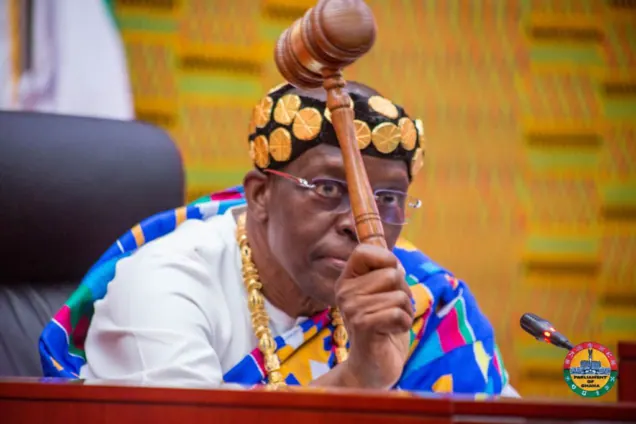
Speaker Alban Bagbin adjourned Ghana's Parliament indefinitely on Tuesday, September 29, during an emergency meeting aimed at discussing recent cocaine seizures involving consignments linked to Ghana. The decision followed his rejection of the Minority's proposal for debate, which sought to establish an ad hoc committee to investigate these consignments. Bagbin stated that permitting the motion to proceed could prejudice the interests of parties involved in pending judicial proceedings.
The emergency meeting was convened to address the issue of cocaine seizures linked to Ghana, particularly the recent interception of nearly 3.9 tonnes of cocaine in France. On September 12, French customs authorities seized the cocaine, estimated to be worth €225 million (approximately US$261.45 million), concealed in a consignment of plastic waste that originated from Ghana and arrived at Dunkirk in northern France. The drugs were hidden in a container reportedly en route to Antwerp, Belgium.
This seizure is not an isolated incident, as Ghana has been featured repeatedly in major trafficking cases over the past 18 months. On March 4, 2025, more than 3.3 tonnes of cocaine concealed beneath sand and reportedly traveling from Takoradi to Accra, with an estimated street value exceeding US$350 million, were intercepted. These incidents have prompted government authorities to step up efforts to curb the illegal smuggling and sale of prohibited goods, including narcotic drugs, across the country.
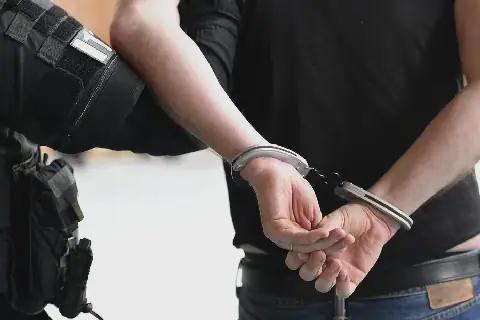
In August, three persons were remanded by an Accra Circuit Court for allegedly concealing 869 slabs of suspected cocaine in bags of gari and cassava powder in Tema. The accused persons are Gilano Jorgino Holwin, a Dutch security guard; Alhaji Iddrisu Haruna, a 56-year-old transporter; and John Mensah Sarbah, a 41-year-old clearing agent. They were apprehended by police officers stationed at the Tema Regional Criminal Investigations Department after acting on intelligence.
The Narcotics Control Commission (NACOC) has also been actively involved in seizing consignments containing narcotics. In a recent operation, NACOC seized a consignment containing approximately five million Tramadol tablets valued at an estimated GH¢100 million at the Accra International Airport (AIA). Police arrested three suspects in connection with the intercepted consignment, highlighting the government's efforts to combat the smuggling of prohibited goods.
The issue of narcotics trafficking in Ghana has also led to the arrest of public officers. In March, nine public officers, including five Customs officials, were arrested for their alleged involvement in an undeclared Tramadol consignment at Tema Port. The remaining four comprised one officer each from the Narcotics Control Commission, Port Security, the Energy Commission, and the Ghana Standards Authority. These arrests demonstrate the government's commitment to tackling the problem.
The country's struggle with poor sanitation also merits attention, as it costs Ghana over GHS6.2 billion every year, according to the Institute of Statistical, Social and Economic Research (ISSER). This significant economic burden highlights the need for the government to address various challenges facing the country, including narcotics trafficking and poor sanitation.
Key points
- The recent cocaine seizures in France and Ghana underscore the country's involvement in major trafficking cases.
- The Ghanaian government has stepped up efforts to curb the smuggling of prohibited goods, including narcotic drugs.
- Poor sanitation costs Ghana over GHS6.2 billion annually, according to ISSER.