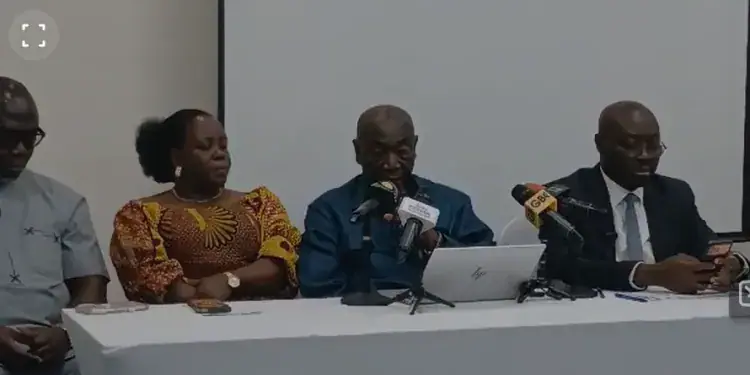
The Minority in Ghana has expressed strong reservations about the recent public sector salary agreement for 2027 and 2028, describing the 9% increase as "nothing short of an insult". This reaction follows the government's announcement of the salary increment, effective January 1, 2028, after an agreement with Organised Labour on October 28. The agreement includes an 8% increase in base pay and a 1% adjustment in conditions of service.
The Minority's criticism is rooted in concerns that the salary increase does little to alleviate the financial pressure on workers. They argue that the 9% total remuneration increase for 2027 and 10% for 2028 fails to adequately account for the rising cost of living. The Caucus noted that electricity tariffs have increased by approximately 29% since the beginning of 2025, while water tariffs have risen by about 18% over the same period.
The Minority also questioned the role of Organised Labour in the negotiations, expressing disappointment that union leaders accepted a 9% adjustment despite previous assurances of pushing for a significant increase in the 2027 base pay. The Caucus urged members of labour unions to demand explanations from their leadership on the proposals presented during negotiations and the reasons for accepting the latest agreement.
The statement recalled that some union leaders had described the 9% increase agreed for 2026 as "woefully inadequate" but still accepted the arrangement. This has led to concerns about the effectiveness of labour leaders in defending workers' wages. The Minority's statement emphasized that public sector workers have faced suppressed annual adjustments of 10% in 2025 and 9% in 2026.
The Minority further criticized the use of the transition from the Fair Wages and Salaries Commission (FWSC) to the Independent Public Emoluments Commission (IPEC) as a justification for adopting a two-year remuneration framework. They described this arrangement as a tactic to restrict workers' bargaining position and impose "poverty wages" on public sector employees.
In response to the agreement, the Minority has called for an immediate reconvening of the Public Services Joint Standing Negotiating Committee (PSJSNC) to review the agreement and establish a remuneration framework that reflects the actual cost of living. They also demanded that future wage negotiations take into account increases in utility tariffs and other essential household expenses.
The Caucus urged Organised Labour to publish the proposals it submitted during the negotiations and explain to its members the basis for accepting the two-year agreement. The Minority emphasized that the Ghanaian worker deserves dignity, economic justice, and a fair share of national prosperity.
Key points
- The Minority criticizes the 9% salary increase for public sector workers as insufficient.
- The salary increase fails to account for rising costs of living, including utility tariffs.
- The Minority questions the role of Organised Labour in the negotiations.