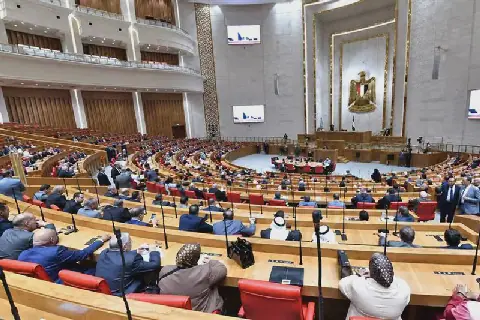
The Minority in Ghana's Parliament has defended its motion to establish an Ad Hoc Committee to probe recent narcotics seizures. The motion, which was dismissed as inadmissible by Speaker Alban Bagbin, aimed to assess the performance of state institutions responsible for narcotics control and other related duties. According to the Minority, the proposed inquiry was focused on institutional accountability, not the determination of criminal liability. The Minority Leader, Afenyo-Markin, clarified that the motion did not seek to put any accused person on trial or ask Parliament to determine the guilt or innocence of individuals involved in the narcotics cases.
The Minority's submission was made after the Speaker dismissed the motion during Parliament's emergency sitting on September 29, 2026. Afenyo-Markin emphasized that the motion was intended to evaluate the effectiveness of state institutions in discharging their responsibilities, particularly in the face of major narcotic incidents since January 2025. The Minority argued that Parliament's oversight responsibilities are distinct from the courts' role in determining criminal liability. This, they said, is a separate constitutional function, even where they arise from some of the same underlying factors.
The proposed committee was intended to assess the performance of various state institutions, including those responsible for narcotics control, customs administration, port and airport security, intelligence gathering, maritime surveillance, and border protection. The Minority maintained that the motion was not meant to assess the credibility of prosecution witnesses or decide upon evidence that is properly before the court. Instead, it sought to examine the administrative and accountability aspects of these institutions.
The Minority in Parliament argued that their motion was necessary to ensure that state institutions are held accountable for their actions. They emphasized that the inquiry would not interfere with the court's role in determining the guilt or innocence of individuals involved in the narcotics cases. According to the Minority, the motion was a legitimate exercise of Parliament's oversight powers.
The dismissal of the motion by Speaker Alban Bagbin was based on the grounds that it was inadmissible. However, the Minority Leader, Afenyo-Markin, expressed confidence that the motion was well-grounded and in line with Parliament's constitutional responsibilities. The Minority's defense of the motion highlights the ongoing debate about the role of Parliament in investigating matters related to narcotics seizures.
The narcotics seizures in question occurred in Ghana, and the Minority's motion was aimed at getting to the bottom of the issue. The incident has raised concerns about the effectiveness of state institutions in controlling the flow of narcotics into the country. The Minority's proposed inquiry sought to address these concerns and ensure that those responsible are held accountable.
The issue remains a matter of public interest, with many Ghanaians calling for greater accountability from state institutions. The Minority's defense of its motion reflects the ongoing efforts to ensure that Parliament exercises its oversight powers effectively. The matter is expected to continue to receive attention in the coming days.
Key points
- The Minority in Ghana's Parliament defends its motion to investigate recent narcotics seizures, saying it seeks institutional accountability, not criminal liability.
- The motion was dismissed as inadmissible by Speaker Alban Bagbin, but the Minority argues that it was a legitimate exercise of Parliament's oversight powers.
- The issue highlights the ongoing debate about the role of Parliament in investigating matters related to narcotics seizures in Ghana.