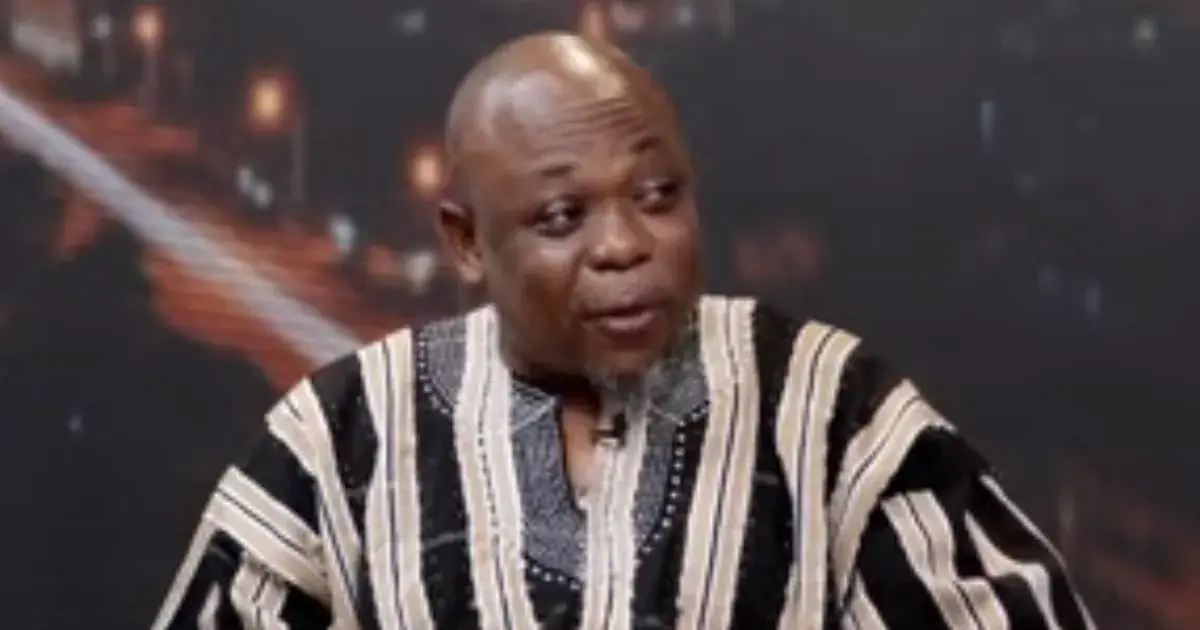
On Wednesday, Majority Leader James Agalga addressed the issue of a proposed parliamentary inquiry into major narcotics seizures linked to Ghana. He emphasized that Parliament lacks the authority to conduct criminal investigations, thereby rendering the Minority's push for a probe invalid. According to Agalga, the Minority is aware of Parliament's limitations but is merely trying to "play to the gallery."
The Minority had petitioned for Parliament to be recalled from recess to scrutinize port security, cargo inspections, and the work of agencies responsible for preventing drug trafficking. This petition led Speaker Alban Bagbin to recall the House for an emergency sitting on September 29. However, he ruled the proposed inquiry inadmissible due to its overlap with matters already before the courts, warning that proceeding could prejudice parties involved in pending judicial proceedings.
Agalga further invoked the sub judice principle, arguing that Parliament's rules restrict its involvement in matters already before the judiciary. He pointed out that arrests and court proceedings were already underway, with some suspects arraigned, others granted bail, and trials ongoing in some cases. This raised questions about what Parliament could investigate under these circumstances.
The Majority Leader accused the Minority of pursuing an inquiry despite knowing the limits of Parliament's authority. He described their actions as an attempt to interfere with ongoing investigations and judicial processes. According to Agalga, investigative agencies were already handling the cases, making a parliamentary probe unnecessary.
The issue at hand involves significant cocaine seizures that have led to various arrests and ongoing trials. The Minority's push for a parliamentary inquiry aimed to examine the efficacy of port security measures and the role of agencies tasked with preventing drug trafficking. However, Agalga maintained that such an inquiry would be beyond Parliament's powers.
Speaker Alban Bagbin's ruling on the inadmissibility of the proposed inquiry highlighted the potential for conflict with ongoing judicial proceedings. This ruling effectively prevented the inquiry from proceeding in its presented form. Agalga supported this stance, emphasizing the need to respect the boundaries of Parliament's authority.
The debate over the parliamentary probe into cocaine seizures underscores the complexities of Ghana's governance structure, particularly the delineation of powers between Parliament and the judiciary. As investigations and trials continue, the focus remains on ensuring that the processes are fair and just, without political interference.
Key points
- The Majority Leader, James Agalga, has rejected a parliamentary probe into cocaine seizures, citing Parliament's lack of power in conducting criminal investigations.
- The Minority had sought a parliamentary inquiry into port security and the work of agencies responsible for preventing drug trafficking following major narcotics seizures.
- Speaker Alban Bagbin ruled the proposed inquiry inadmissible due to its overlap with ongoing judicial proceedings.