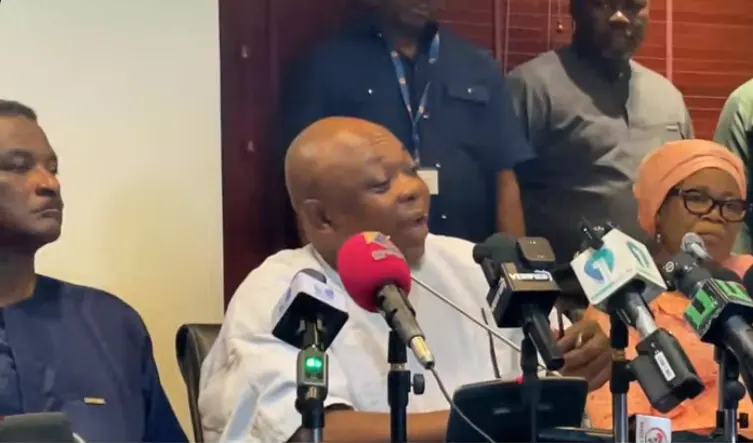
The Majority Leader in Ghana's Parliament, James Agalga, has emphasized the need for enhanced collaboration among security and law enforcement agencies to tackle the growing complexity of drug trafficking networks in the country. On September 24, 2026, he addressed a press conference, highlighting the importance of a unified approach to identify, investigate, and dismantle these networks.
According to Agalga, the fight against drug trafficking cannot be effectively handled by a single institution. He stressed that various agencies, including the Narcotics Control Commission, the Ghana Police Service, the Ghana Immigration Service, and the Ports and Harbour Authority, must work together, sharing intelligence and coordinating their operations to disrupt and dismantle narcotics trafficking networks.
The Majority caucus in Parliament has urged all relevant security and law enforcement agencies to increase cooperation and present a united front against the emergence of drug networks in Ghana. This call to action comes as the country faces challenges in combating the narcotics trade, with the Majority caucus attributing some of these challenges to the under-resourcing of the Narcotics Control Commission under the current administration.
Agalga highlighted that the response to drug trafficking must involve multiple institutions responsible for border security, intelligence gathering, investigations, prosecution, port operations, and asset recovery. These institutions must complement each other's efforts rather than operate separately, as no single state institution has the capacity to tackle the entire drug trafficking chain on its own.
The Majority Leader also called for sustained cooperation among the various agencies as part of efforts to address the drug menace. He emphasized that continued and concerted inter-agency corporation is crucial in the nation's struggle against drug trafficking. This call for sustained cooperation comes as Ghana investigates recent cases of drug trafficking, including through its ports.
In related developments, the government has been urged to take urgent action against drug trafficking, with the Ghana Catholic Bishops' Conference demanding a comprehensive approach to address the issue. Additionally, there have been reports of increased drug trafficking arrests and prosecutions, with the Majority Leader assuring that more are expected.
The issue of drug trafficking in Ghana has also sparked discussions about the country's drug enforcement system, with some analysts describing it as too fragmented. There are concerns that this fragmentation poses significant challenges in effectively combating drug trafficking networks. The government's approach to tackling the issue has also been questioned, with some critics arguing that it needs to be more proactive in addressing the root causes of the problem.
Key points
- The Majority Leader in Ghana's Parliament, James Agalga, has called for stronger collaboration among security agencies to combat drug trafficking networks in the country.
- The fight against drug trafficking in Ghana cannot be effectively handled by a single institution, according to Agalga.
- The Majority caucus has attributed some of Ghana's challenges in combating the narcotics trade to the under-resourcing of the Narcotics Control Commission under the current administration.